


Global Zinc Citrate Market Size, Share and Report Analysis By Product (Zinc Citrate Dihydrate, Zinc Citrate Trihydrate, Others), By Form (Powder, Tablets, Capsules, Liquid), By Grade (Pharmaceutical Grade, Food Grade, Industrial Grade), By Application (Pharmaceuticals, Food and Beverages, Cosmetics, Agriculture, Others) , By Region and Companies - Industry Segment Outlook, Market Assessment, Competition Scenario, Trends and Forecast 2025-2035
- Published date: Mar 2026
- Report ID: 180031
- Number of Pages: 289
- Format:
-
keyboard_arrow_up
Quick Navigation
Report Overview
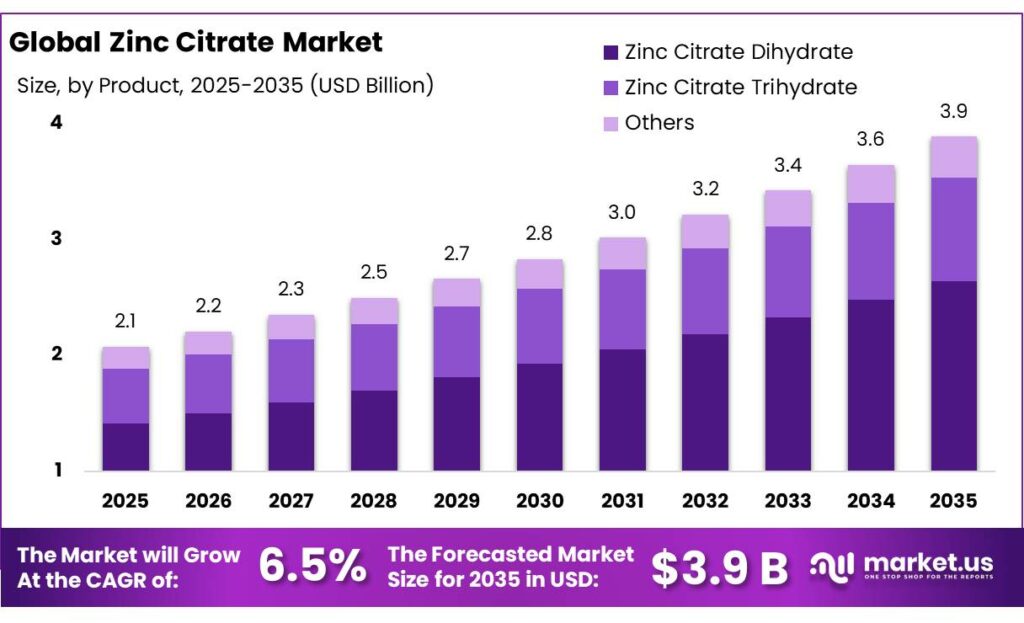
The Global Zinc Citrate Market is expected to be worth around USD 3.9 Billion by 2035, up from USD 2.1 Billion in 2025, at a CAGR of 6.5% from 2026 to 2035. The North America segment maintained 41.8%, supporting a Zinc Citrate value of USD 0.8 Bn.
Zinc citrate is an organic zinc salt widely used as a functional ingredient in food, nutraceutical, and pharmaceutical formulations due to its high bioavailability and stability. It is commonly applied as a dietary zinc source in nutritional supplements, fortified foods, and oral-care products such as toothpaste and mouthwash. Zinc itself is an essential trace mineral required for human metabolism and plays a role in over 300 enzymatic reactions in the body, supporting immune function, growth, and cellular repair.
- According to the National Institutes of Health (NIH) and global nutrition guidelines, the recommended dietary allowance for zinc is about 11 mg per day for adult men and 8 mg per day for adult women, reflecting the importance of adequate zinc intake for maintaining metabolic functions and immunity.
From an industrial perspective, zinc citrate forms part of the broader zinc compounds sector, which supplies materials to food processing, pharmaceuticals, cosmetics, and dietary supplement manufacturers. Nutritional authorities indicate that adult dietary zinc intake generally ranges between 14–20 mg per day globally, highlighting the regular consumption of zinc-containing compounds in daily diets and supplements. Additionally, public health nutrition guidelines recommend approximately 11 mg/day for adult men and 8 mg/day for adult women, reinforcing the continuous demand for zinc-based ingredients used in fortified foods and supplements.
The growth of the zinc citrate industry is strongly supported by increasing awareness of micronutrient deficiencies worldwide. Global nutrition research indicates that nearly two billion people are affected by zinc deficiency, particularly in developing regions where diets rely heavily on cereal-based foods with limited micronutrient diversity. This nutritional challenge has encouraged international health organizations and governments to promote food fortification programs. For example, research supported by global nutrition agencies highlights that fortifying staple foods with zinc is considered an effective strategy to improve population zinc status, especially in developing countries.
Regulatory frameworks and safety standards established by international organizations also shape the industrial landscape. The Institute of Medicine and several health authorities set the tolerable upper intake level for adults at 40 mg of zinc per day, ensuring safe consumption levels in fortified foods and supplements.
Government initiatives and global nutrition programs also play a significant role in expanding the industry. Several countries have adopted food-fortification strategies to address micronutrient deficiencies in populations. Large-scale fortification programs targeting staple foods such as wheat and flour are increasingly incorporating zinc to improve dietary intake. Despite these initiatives, studies indicate that approximately 736 million people still experience inadequate zinc intake in countries with zinc deficiency concerns, demonstrating the continued need for zinc supplementation and fortified food products.
Key Takeaways
- Zinc Citrate Market is expected to be worth around USD 3.9 Billion by 2035, up from USD 2.1 Billion in 2025, at a CAGR of 6.5%.
- Zinc Citrate Dihydrate held a dominant market position, capturing more than a 68.3% share of the overall zinc citrate market.
- Tablets held a dominant market position, capturing more than a 39.4% share.
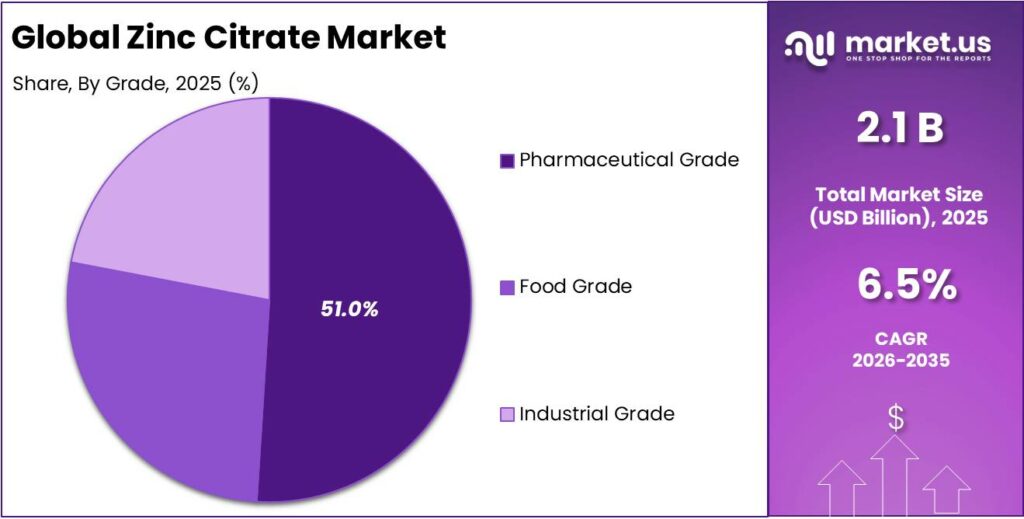
- Pharmaceutical Grade held a dominant market position, capturing more than a 51.1% share.
- Pharmaceuticals held a dominant market position, capturing more than a 34.7% share in the zinc citrate market.
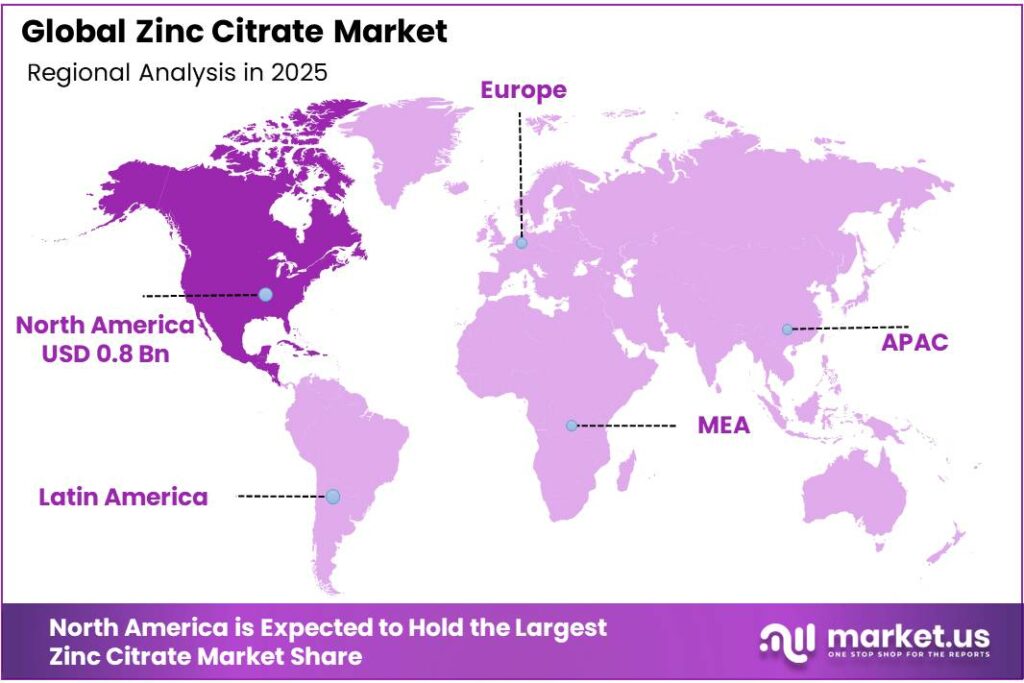
- North America emerged as the dominating regional market for zinc citrate, accounting for 41.8% of the global share and reaching a value of about USD 0.8 billion.
By Product Analysis
Zinc Citrate Dihydrate dominates with 68.3% due to stability and wide supplement usage
In 2024, Zinc Citrate Dihydrate held a dominant market position, capturing more than a 68.3% share of the overall zinc citrate market. The strong presence of this segment is mainly linked to its high stability, better absorption characteristics, and compatibility with a wide range of applications. Zinc citrate dihydrate is widely used in dietary supplements, pharmaceutical tablets, oral health products, and fortified food formulations. Manufacturers often prefer this form because it dissolves efficiently and provides a reliable source of zinc in nutritional products. In addition, the compound offers good shelf stability, which makes it suitable for large-scale production of nutraceutical capsules, chewable tablets, and powdered drink mixes.
By Form Analysis
Tablets dominate with 39.4% due to convenient daily supplement consumption
In 2024, Tablets held a dominant market position, capturing more than a 39.4% share in the zinc citrate market by form. This leading position is mainly linked to the widespread use of tablet-based supplements in the nutraceutical and pharmaceutical industries. Tablets are commonly preferred by manufacturers and consumers because they are easy to produce, simple to store, and convenient for daily intake. Zinc citrate tablets are widely sold as dietary supplements that support immune health, metabolism, and overall nutritional balance. Their stable formulation also allows producers to maintain consistent dosage levels, which is an important factor in vitamin and mineral supplementation products.
By Grade Analysis
Pharmaceutical Grade dominates with 51.1% driven by strict quality and medical use
In 2024, Pharmaceutical Grade held a dominant market position, capturing more than a 51.1% share in the zinc citrate market by grade. This strong position is mainly supported by the increasing demand for high-purity ingredients used in pharmaceutical and nutraceutical products. Pharmaceutical grade zinc citrate is produced under strict quality standards to ensure safety, consistency, and accurate mineral dosage. Because of these requirements, it is widely used in medicinal supplements, therapeutic formulations, and clinical nutrition products. Healthcare manufacturers prefer this grade since it meets regulatory guidelines and maintains reliable purity levels for human consumption.
By Application Analysis
Pharmaceuticals dominate with 34.7% due to growing therapeutic zinc supplement use
In 2024, Pharmaceuticals held a dominant market position, capturing more than a 34.7% share in the zinc citrate market by application. This strong presence is mainly supported by the growing use of zinc-based ingredients in medicinal supplements and therapeutic formulations. Zinc citrate is widely used in pharmaceutical products because it provides a bioavailable source of zinc, an essential mineral required for immune function, enzyme activity, and cellular repair. Pharmaceutical manufacturers commonly include zinc citrate in tablets, capsules, and combination mineral supplements designed to support immune health, nutritional balance, and recovery from zinc deficiency.
Key Market Segments
By Product
- Zinc Citrate Dihydrate
- Zinc Citrate Trihydrate
- Others
By Form
- Powder
- Tablets
- Capsules
- Liquid
By Grade
- Pharmaceutical Grade
- Food Grade
- Industrial Grade
By Application
- Pharmaceuticals
- Food and Beverages
- Cosmetics
- Agriculture
- Others
Emerging Trends
Growing Trend of Zinc-Fortified Functional Foods and Nutrition Products
One of the most visible recent trends shaping the zinc citrate industry is the increasing development of zinc-fortified functional foods and nutrition products. Around the world, food manufacturers and health organizations are focusing more on products that support immunity, growth, and general wellness.
Zinc plays a critical role in these functions, and as awareness grows, food companies are incorporating zinc compounds such as zinc citrate into fortified cereals, beverages, nutrition powders, and dietary supplements. This shift reflects a broader movement in the global food industry toward preventive health and nutrient-enriched products that provide more than basic nutrition.
The demand for zinc-fortified foods is strongly linked to the widespread presence of zinc deficiency across the global population. According to global nutrition research, about 17.3% of the world’s population is at risk of inadequate zinc intake, largely due to diets that rely heavily on staple grains with lower zinc absorption. This nutritional gap has pushed governments and food producers to develop fortified products that help people meet their daily micronutrient needs. Zinc citrate is often used for this purpose because it offers good stability and bioavailability, making it suitable for large-scale food manufacturing.
International health organizations have also contributed to this trend through recommendations and nutrition programs. The World Health Organization (WHO) has supported zinc supplementation and fortification strategies to improve public health outcomes, particularly in children and vulnerable populations. For example, WHO guidelines recommend 20 mg of zinc per day for children during short-term therapeutic supplementation, highlighting the mineral’s importance in improving recovery from illnesses such as diarrheal disease.
- Daily dietary requirements for zinc emphasize the need for consistent intake through food and supplements. Nutrition guidelines indicate that adults typically require about 11 mg of zinc per day for men and 8 mg per day for women to maintain normal metabolic and immune functions.
Drivers
Rising Global Zinc Deficiency Increasing Demand for Zinc Citrate
One of the major driving factors supporting the growth of zinc citrate across food, pharmaceutical, and nutraceutical industries is the rising global concern about zinc deficiency and the growing efforts by governments and international nutrition organizations to address micronutrient malnutrition. Scientific assessments based on national food supply data indicate that around 17.3% of the global population is at risk of inadequate zinc intake, highlighting a significant nutritional gap that must be addressed through supplements and fortified foods.
The scale of this nutritional challenge is substantial. Research published in global nutrition studies suggests that nearly two billion individuals worldwide are at risk of health problems linked to zinc deficiency, particularly in regions where diets are dominated by cereal-based foods that contain lower bioavailable zinc. Countries in South Asia, Sub-Saharan Africa, and parts of Central America show some of the highest prevalence levels due to dietary patterns and limited access to zinc-rich foods such as meat, seafood, and dairy products.
International food and health organizations have also played a major role in shaping policies aimed at improving zinc intake. The World Health Organization (WHO) has recommended the addition of zinc to staple foods such as wheat and maize flour in order to combat micronutrient deficiencies in developing countries. Food fortification programs led by public health agencies and global nutrition initiatives are increasingly being adopted as cost-effective solutions for addressing mineral deficiencies at a population level.
Large-scale food fortification initiatives are already showing measurable results in several regions. Research evaluating global nutrition strategies indicates that improved fortification programs could reduce the prevalence of inadequate zinc intake by up to 50% worldwide when implemented effectively across staple food supply chains.
Restraints
Strict Safety Limits and Risk of Excess Zinc Intake
One important restraining factor affecting the growth of zinc citrate and other zinc-based ingredients is the strict safety limits associated with zinc consumption. While zinc is an essential micronutrient for immune function and cellular growth, health authorities emphasize that excessive intake can create health risks. Because zinc citrate is widely used in dietary supplements, pharmaceutical products, and fortified foods, manufacturers must carefully follow regulatory intake limits.
Global health organizations have clearly defined recommended intake levels and upper safety limits for zinc consumption. According to the World Health Organization (WHO) and nutrition authorities, the normal dietary requirement for zinc is roughly 6.7–15 mg per day for adults, depending on diet and physiological needs. This amount is considered sufficient to support immune health, metabolism, and enzyme activity.
One of the key regulatory guidelines used globally is the tolerable upper intake level for zinc. The U.S. National Institutes of Health (NIH) and other international health authorities set the upper safe intake level for adults at about 40 mg of zinc per day from all sources including food, water, and supplements. This limit exists because excessive zinc intake may interfere with the absorption of other important minerals such as copper and iron.
Another regulatory perspective comes from the European Food Safety Authority (EFSA), which sets an even lower upper intake level of around 25 mg per day for adults to minimize potential health risks associated with long-term high zinc consumption. Such strict safety limits require food and supplement manufacturers to carefully design formulations that deliver adequate nutrition without exceeding recommended thresholds.
Opportunity
Expansion of Food Fortification Programs Creating Opportunity for Zinc Citrate
One of the most promising growth opportunities for zinc citrate lies in the rapid expansion of food fortification and nutritional improvement programs around the world. Governments, international health organizations, and food producers are increasingly focusing on micronutrient fortification to address widespread nutrient deficiencies in populations. Zinc is considered one of the most important minerals for human health because it supports immune function, growth, and metabolic processes.
- However, inadequate intake of zinc remains a major nutritional challenge globally. Research from global nutrition initiatives shows that around 17% of the world’s population is at risk of inadequate zinc intake, highlighting a significant gap in daily nutritional consumption.
The scale of this nutritional problem is large and has encouraged governments and international food organizations to introduce fortified food programs that include essential minerals such as zinc. According to global nutrition research, nearly two billion people worldwide suffer from zinc deficiency, particularly in developing regions where diets rely heavily on cereal-based foods with lower mineral absorption.
These deficiencies are associated with serious health concerns such as impaired immunity, delayed growth in children, and increased susceptibility to infections. Because of these health risks, international organizations including the World Health Organization (WHO) and the Food and Agriculture Organization (FAO) have encouraged the use of micronutrient fortification in staple foods such as wheat flour, maize flour, and rice.
Large-scale fortification programs supported by governments also provide strong growth potential. Studies analyzing global food fortification policies indicate that more than 40 countries recognize zinc deficiency as a public health issue, and many of these countries have already implemented mandatory or voluntary fortification of staple foods.
- In nations where such programs are active, the addition of zinc to cereal grains and processed foods has helped improve mineral intake across populations. At the same time, researchers estimate that about 1.13 billion people still have inadequate zinc intake globally, which indicates that significant opportunities remain for expanding zinc fortification programs.
Regional Insights
North America Leads the Zinc Citrate Market with 41.8% Share Valued at USD 0.8 Bn
North America emerged as the dominating regional market for zinc citrate, accounting for 41.8% of the global share and reaching a value of about USD 0.8 billion. The region’s strong position is largely supported by high consumer awareness of nutritional supplements, well-established pharmaceutical industries, and the widespread presence of functional food products enriched with essential minerals.
In countries such as the United States and Canada, zinc-based supplements are commonly consumed to support immune health and overall nutrition, which directly contributes to the demand for zinc citrate used in tablets, capsules, and fortified foods. Health and nutrition organizations emphasize the importance of zinc in immune response and metabolic processes, making it a widely recognized micronutrient in preventive healthcare products.
Dietary trends and nutritional patterns in North America also influence the demand for zinc supplementation. National nutrition surveys show that the average dietary zinc intake in U.S. adults is around 12.3 mg per day, obtained from natural foods and fortified products. While this level meets the recommended intake for many individuals, health studies still indicate that about 12% of the U.S. population may not consume enough zinc, creating ongoing demand for mineral supplements and fortified food products.
Key Regions and Countries Insights
- North America
- US
- Canada
- Europe
- Germany
- France
- The UK
- Spain
- Italy
- Rest of Europe
- Asia Pacific
- China
- Japan
- South Korea
- India
- Australia
- Rest of APAC
- Latin America
- Brazil
- Mexico
- Rest of Latin America
- Middle East & Africa
- GCC
- South Africa
- Rest of MEA
Key Players Analysis
Jost Chemical Co., headquartered in St. Louis, Missouri, USA, is a specialty chemical manufacturer serving pharmaceutical, food, and nutrition industries. The company has over 40 years of manufacturing experience and produces 250+ high-purity specialty chemical products that comply with international standards such as USP, EP, and FCC. Its chemicals are distributed across more than 60 countries globally, supporting applications in pharmaceuticals, biotechnology, and nutrition supplements. The company operates under strict quality systems including FDA-registered and FSSC 22000-certified manufacturing facilities, ensuring consistent purity for mineral salts like zinc compounds.
Global Calcium is a pharmaceutical ingredient and mineral salts manufacturer headquartered in Bangalore, India, originally established in 1979. The company operates 14 manufacturing plants spread across more than 40 acres of production facilities and employs over 1,400 trained staff members. Its product portfolio includes 150+ pharmaceutical and mineral products, with 25 USDMF registrations and 100+ regulatory DMFs supporting global supply chains. Global Calcium exports its specialty mineral salts, APIs, and nutritional ingredients to 80 countries worldwide, serving industries such as pharmaceuticals, nutraceuticals, and food fortification.
Founded in 1997, American Elements is a U.S.-based advanced materials manufacturer headquartered in Los Angeles, California. The company develops and supplies more than 35,000 advanced material products, including metal compounds, catalysts, and specialty chemical salts used in pharmaceuticals and industrial applications. It operates production and research facilities in several regions including the United States, Mexico, China, and the United Kingdom. The firm employs roughly 200+ professionals globally and generates estimated annual revenue of around USD 17 million. Its materials portfolio supports sectors such as nanotechnology, electronics, life sciences, and specialty chemicals including zinc compounds.
Top Key Players Outlook
- American Elements
- Global Calcium
- Jost Chemical Co.
- Seidler Chemical Co., Inc.
- NOAH Technologies Corporation
- L.C. Industries, Inc.
- Nutraceutix
Report Scope
Report Features Description Market Value (2025) USD 2.1 Bn Forecast Revenue (2035) USD 3.9 Bn CAGR (2026-2035) 6.5% Base Year for Estimation 2025 Historic Period 2020-2024 Forecast Period 2026-2035 Report Coverage Revenue Forecast, Market Dynamics, Competitive Landscape, Recent Developments Segments Covered By Product (Zinc Citrate Dihydrate, Zinc Citrate Trihydrate, Others), By Form (Powder, Tablets, Capsules, Liquid), By Grade (Pharmaceutical Grade, Food Grade, Industrial Grade), By Application (Pharmaceuticals, Food and Beverages, Cosmetics, Agriculture, Others) Regional Analysis North America – US, Canada; Europe – Germany, France, The UK, Spain, Italy, Rest of Europe; Asia Pacific – China, Japan, South Korea, India, Australia, Singapore, Rest of APAC; Latin America – Brazil, Mexico, Rest of Latin America; Middle East & Africa – GCC, South Africa, Rest of MEA Competitive Landscape American Elements, Global Calcium, Jost Chemical Co., Seidler Chemical Co., Inc., NOAH Technologies Corporation, L.C. Industries, Inc., Nutraceutix Customization Scope Customization for segments, region/country-level will be provided. Moreover, additional customization can be done based on the requirements. Purchase Options We have three licenses to opt for: Single User License, Multi-User License (Up to 5 Users), Corporate Use License (Unlimited User and Printable PDF) 
-
-
- American Elements
- Global Calcium
- Jost Chemical Co.
- Seidler Chemical Co., Inc.
- NOAH Technologies Corporation
- L.C. Industries, Inc.
- Nutraceutix
Our Clients

- 180031
- Mar 2026






