


Global White Mushroom Market Size, Share, And Enhanced Productivity By Type (Button Mushroom, Oyster Mushroom, Lion's Mane Mushroom, Other), By Form (Fresh Mushroom, Processed Mushroom (Canned/Jarred, Frozen, Dried, Powdered)), By Grade (Standard, Premium), By Application (Culinary and Food Services, Health and Nutraceuticals, Retail, Others), By Distribution Channel (Supermarkets/Hypermarkets, Convenience Stores, Others), By Region and Companies - Industry Segment Outlook, Market Assessment, Competition Scenario, Trends, and Forecast 2025-2034
- Published date: March 2026
- Report ID: 181783
- Number of Pages: 218
- Format:
-
keyboard_arrow_up
Quick Navigation
Report Overview
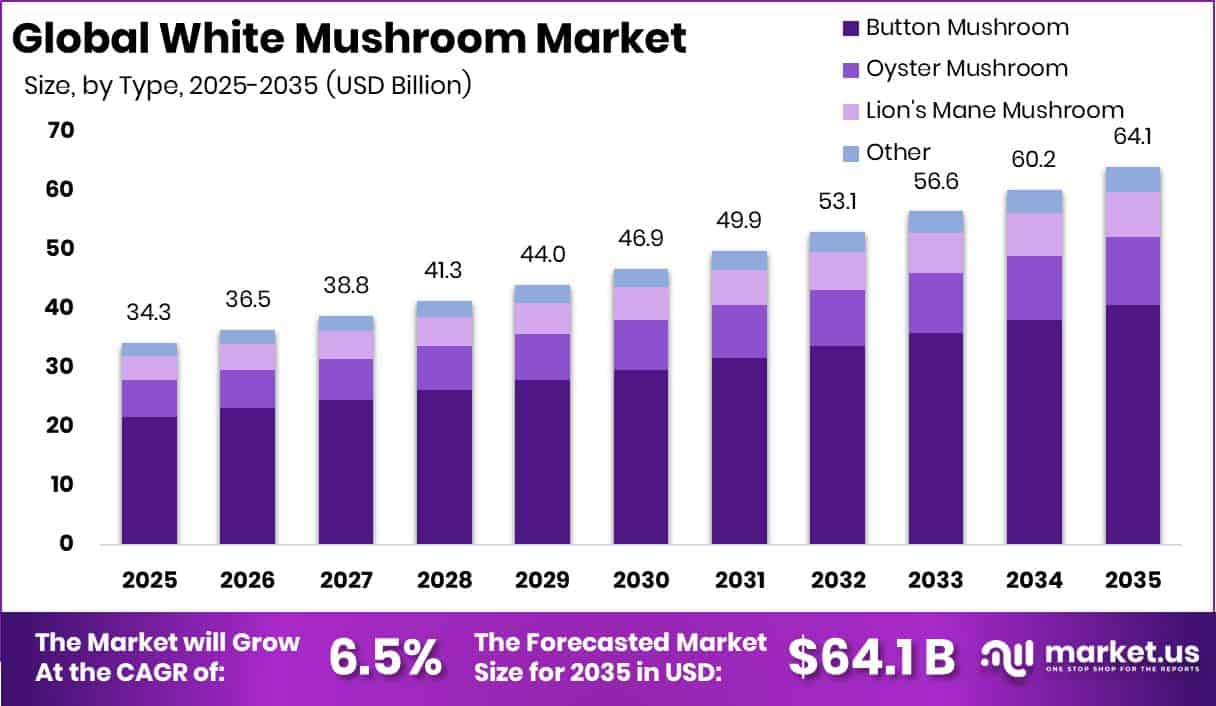
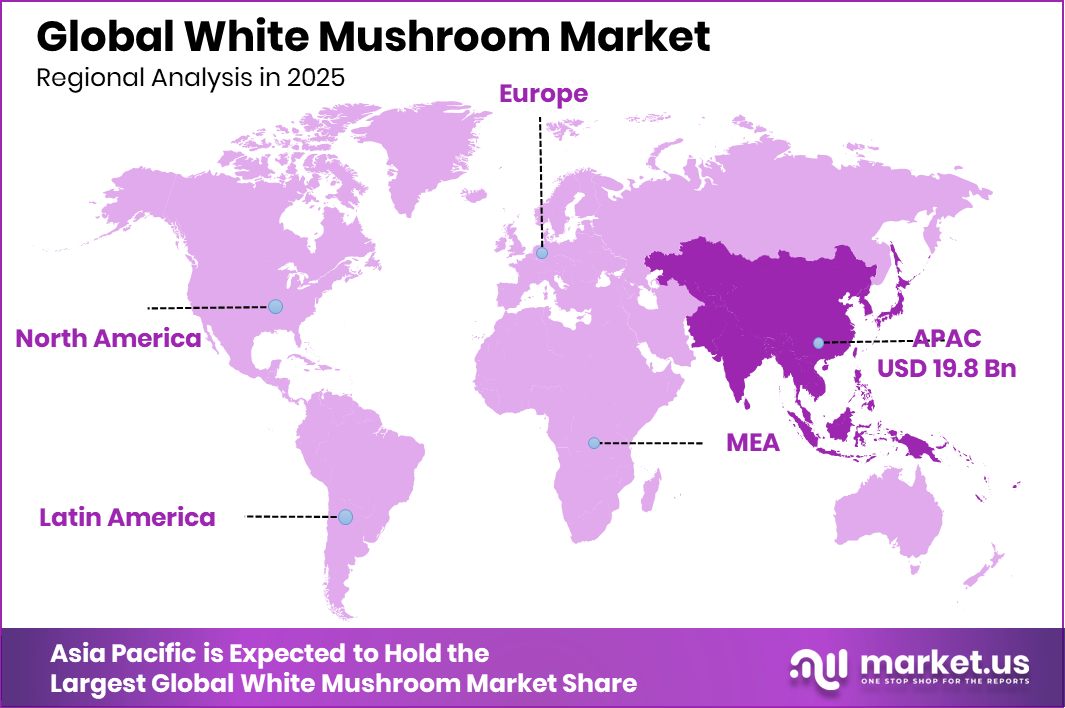
The Global White Mushroom Market is expected to be worth around USD 64.1 billion by 2034, up from USD 34.2 billion in 2024, and is projected to grow at a CAGR of 6.5% from 2025 to 2034. The white mushroom market in the Asia Pacific accounts for 44.6%, totaling USD 19.8 Bn.
White mushrooms are edible fungi widely consumed for their mild taste, soft texture, and nutritional value. Common varieties include button, oyster, lion’s mane, and other specialty types. They are used in fresh and processed forms across daily meals, offering vitamins, minerals, and a natural umami flavor. Their versatility allows them to be included in simple home cooking as well as more complex culinary preparations.
The White Mushroom Market refers to the global production, distribution, and consumption of these mushrooms across different segments. It is structured by type, form, grade, application, and distribution channel, ranging from fresh standard mushrooms sold in supermarkets to premium and processed varieties used in food services and health-focused products. The market reflects a balance between everyday consumption and emerging specialty uses.
Growth is supported by increasing interest in healthy and plant-based foods. Consumers are gradually shifting toward natural ingredients, which has strengthened the role of mushrooms in diets. Demand is also rising due to their affordability and wide availability through supermarkets and convenience stores, making them accessible to a broad consumer base.
Opportunities are expanding through innovation and investment. Singrow secured $4.5M Series A to scale seed breeding and vertical farming, while a $7M grant supports new crop protection methods. Chinova Bioworks raised $6M Series A funding, including AgFunder backing, to develop mushroom-based preservatives like Chiber. Additionally, 4AG Robotics raised $29M Series B to advance automated harvesting, highlighting ongoing technological progress in the sector.
- In 2025, Phillips Mushroom Farms maintained its position as a leading grower of specialty mushrooms, emphasizing consistent production and quality improvement. The company continued investing in advanced farming practices and product consistency to meet steady demand in fresh mushroom supply. This reflects its long-term strategy of strengthening cultivation and supply capabilities in the mushroom industry.
Key Takeaways
- The Global White Mushroom Market is expected to be worth around USD 64.1 billion by 2034, up from USD 34.2 billion in 2024, and is projected to grow at a CAGR of 6.5% from 2025 to 2034.
- The White Mushroom Market is led by button mushrooms, contributing 63.4% of total demand globally.
- Fresh mushrooms dominate the White Mushroom Market, accounting for 76.9% due to consumer preference.
- Standard grade products hold 69.3% share in the White Mushroom Market across various industries.
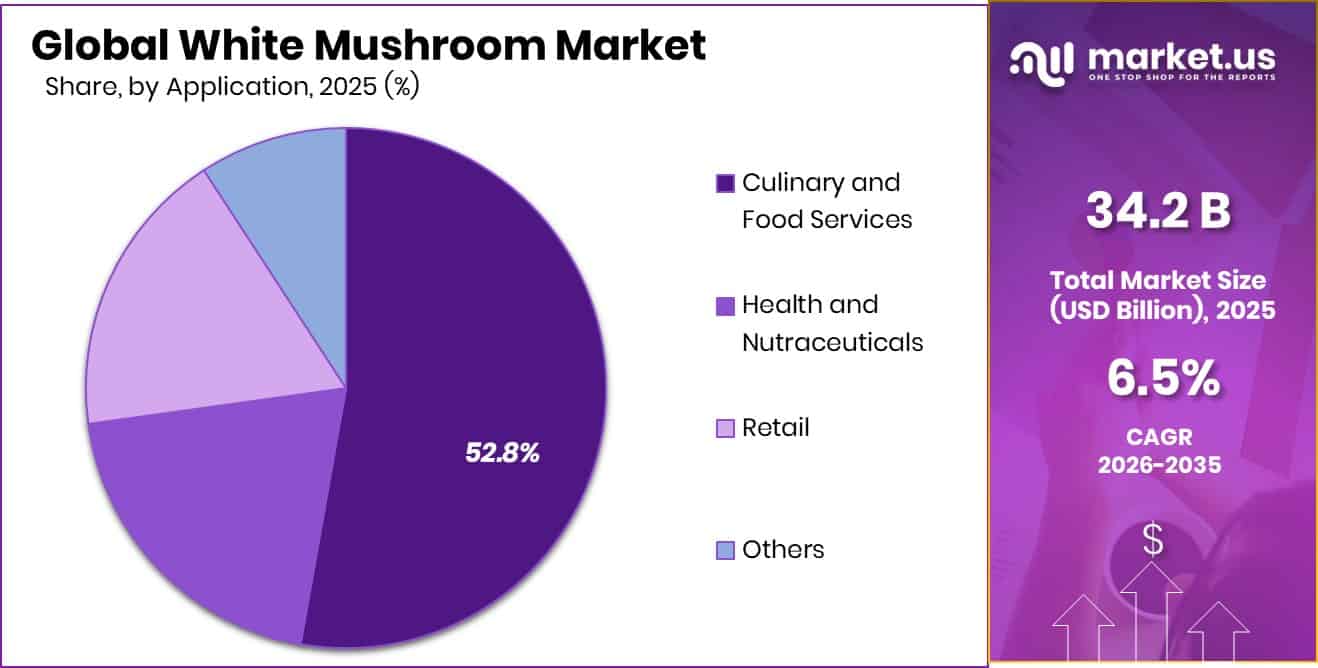
- Culinary and food services drive 52.8% demand within the White Mushroom Market worldwide.
- Supermarkets and hypermarkets lead distribution in the White Mushroom Market with a 56.2% share.
- In the Asia Pacific, White Mushroom Market holds 44.6%, valued at USD 19.8 Bn.
By Type Analysis
The White Mushroom Market is dominated by button mushrooms, accounting for 63.4%.
In 2025, the White Mushroom Market continues to be strongly driven by button mushrooms, which account for 63.4% of total consumption due to their affordability, mild flavor, and versatility in everyday cooking.
Consumers increasingly prefer button mushrooms because they are easy to incorporate into a wide range of cuisines, from traditional home meals to modern recipes. Their consistent availability and relatively lower price compared to exotic mushroom varieties make them a staple across both urban and rural households.
Additionally, food service providers favor button mushrooms for their uniform size and predictable cooking behavior, which helps maintain consistency in dishes. This dominance reflects stable consumer habits and the ongoing demand for familiar, accessible food ingredients worldwide.
By Form Analysis
Fresh mushrooms lead the White Mushroom Market, contributing a strong 76.9%.
In 2025, fresh mushrooms dominate the White Mushroom Market with a 76.9% share, reflecting a strong consumer preference for natural, minimally processed foods. Fresh mushrooms are widely perceived as healthier and more nutritious, retaining their original taste, texture, and moisture content.
Households and food service providers alike prefer fresh varieties for their superior quality and immediate usability in cooking. The increasing awareness around clean eating and fresh produce has further strengthened this trend.
Retailers also prioritize fresh mushroom displays due to their visual appeal, which attracts customers and boosts impulse purchases. The growth of efficient cold chain logistics has made it easier to distribute fresh mushrooms, ensuring longer shelf life and better availability across regions.
By Grade Analysis
Standard grade products hold 69.3% share in the White Mushroom Market.
In 2025, standard grade mushrooms lead the White Mushroom Market with a 69.3% share, driven by their balance between quality and cost-effectiveness. These mushrooms meet the general expectations of consumers in terms of appearance, taste, and usability, without the premium pricing of higher-grade variants.
Standard grade mushrooms are widely used in both household cooking and commercial kitchens, where consistency and affordability are key considerations. Food businesses, especially mid-scale restaurants and catering services, rely heavily on this category to maintain profit margins while delivering satisfactory quality.
The dominance of this segment highlights how most consumers prioritize practicality over premium aesthetics, reinforcing the importance of value-driven purchasing decisions in the market.
By Application Analysis
Culinary and food services drive 52.8% demand in the White Mushroom Market.
In 2025, culinary and food services applications account for 52.8% of the White Mushroom Market, emphasizing the ingredient’s essential role in the global food industry. Restaurants, hotels, catering services, and quick-service outlets rely heavily on white mushrooms due to their adaptability across cuisines and cooking styles. Their ability to enhance flavor without overpowering dishes makes them a preferred ingredient in soups, sauces, salads, and main courses.
The growth of dining-out culture and the expansion of food delivery services have further boosted demand in this segment. Additionally, chefs appreciate mushrooms for their texture and umami profile, which adds depth to vegetarian and non-vegetarian dishes alike, making them indispensable in professional kitchens.
By Distribution Channel Analysis
Supermarkets and hypermarkets dominate distribution with 56.2% in the White Mushroom Market.
In 2025, supermarkets and hypermarkets dominate the White Mushroom Market distribution channels with a 56.2% share, supported by their wide reach and consumer convenience. These retail formats offer a diverse range of mushroom products, including fresh, packaged, and occasionally processed options, all under one roof. Consumers prefer supermarkets due to their reliability, standardized quality, and the ability to physically inspect fresh produce before purchase.
Attractive in-store displays and promotional offers further encourage buying decisions. Additionally, urbanization and changing shopping habits have increased footfall in organized retail outlets. The presence of proper storage facilities in supermarkets ensures product freshness, making them the most trusted and preferred point of purchase for white mushrooms.
Key Market Segments
By Type
- Button Mushroom
- Oyster Mushroom
- Lion’s Mane Mushroom
- Other
By Form
- Fresh Mushroom
- Processed Mushroom
- Canned/Jarred
- Frozen
- Dried
- Powdered
By Grade
- Standard
- Premium
By Application
- Culinary and Food Services
- Health and Nutraceuticals
- Retail
- Others
By Distribution Channel
- Supermarkets/Hypermarkets
- Convenience Stores
- Others
Driving Factors
Rising demand for plant-based diets
The White Mushroom Market is benefiting from the steady rise in plant-based eating habits, as consumers look for natural and nutritious food alternatives. Mushrooms are increasingly used as meat substitutes due to their texture and flavor, making them popular in both home cooking and food services. This shift is further supported by innovation in controlled farming environments, improving supply and consistency.
Tupu’s $3.2M funding for highly efficient indoor mushroom production highlights how companies are scaling production to meet this dietary shift, ensuring better yield, quality, and year-round availability in response to growing plant-based demand.
Increasing consumption of fresh mushrooms
Fresh mushrooms continue to see strong consumption due to their perceived health benefits and culinary flexibility. Consumers prefer fresh produce for its natural taste and minimal processing, which aligns with clean eating habits. Retail expansion and improved cold chain logistics have made fresh mushrooms more accessible across regions. Their usage in everyday meals, quick recipes, and restaurant dishes supports consistent demand growth. As more households include mushrooms in daily diets, the market continues to expand steadily, supported by convenience, affordability, and the ability to integrate easily into both traditional and modern cuisines.
Restraining Factors
Short shelf life limits storage
One of the key challenges in the White Mushroom Market is the limited shelf life of fresh mushrooms, which affects storage, transportation, and retail handling. Mushrooms are highly perishable and require controlled environments to maintain quality, increasing operational costs across the supply chain. Losses due to spoilage can impact both producers and retailers. Infarm’s Series C funding, reaching $270M, alongside its expansion into mushrooms, reflects efforts to improve indoor farming and reduce supply chain inefficiencies. However, maintaining freshness during distribution remains a constraint, particularly in regions with less developed cold storage infrastructure.
Price fluctuations in mushroom production
Production costs in the White Mushroom Market can vary due to factors such as raw material availability, labor, energy, and climate conditions. These fluctuations often influence final pricing, making it difficult for producers to maintain stable margins. Variability in input costs, especially for compost and controlled growing environments, adds pressure on pricing structures. As a result, both small and large-scale producers face challenges in balancing affordability with profitability. These price variations can also impact consumer purchasing behavior, particularly in price-sensitive markets where consistent pricing plays an important role in demand stability.
Growth Opportunity
Expansion in health nutraceutical applications
The use of mushrooms in health and nutraceutical products presents a strong growth opportunity for the White Mushroom Market. Mushrooms are increasingly recognized for their functional properties, leading to their inclusion in supplements, powders, and fortified foods. This shift expands their role beyond traditional culinary use into wellness-focused applications. Technological advancements are supporting this transition, as seen with 4AG Robotics raising $17.5M to improve harvesting efficiency. Enhanced production capabilities help meet the rising demand for mushrooms in health-oriented products, opening new revenue streams and encouraging product diversification across the market.
Growing adoption of vertical farming
Vertical farming is creating new opportunities by enabling controlled, efficient, and space-saving mushroom cultivation. This method allows year-round production with better resource management, making it especially useful in urban areas. The White Mushroom Market benefits from this approach as it ensures a consistent supply and reduces dependency on seasonal factors. Broader agri-food investments, such as Micropep raising $29M, Oceano Fresco securing $18M, and Juicy Marbles innovating plant-based solutions, reflect a wider shift toward advanced food production systems. These developments indirectly support mushroom cultivation technologies and encourage scalable, sustainable farming practices.
Latest Trends
Increasing focus on organic mushrooms
There is a growing shift toward organic mushrooms as consumers prioritize chemical-free and sustainably grown food. Organic varieties are gaining shelf space in retail stores and attracting health-conscious buyers willing to pay a premium for quality. This trend is influencing farming practices, encouraging producers to adopt cleaner cultivation methods. Wider investment activity in sustainable agriculture, such as Mondelez supporting cocoa technology and the launch of a $350M regenerative agriculture fund, reflects broader industry momentum. These developments align with the increasing demand for organic mushrooms, reinforcing sustainability as a key trend shaping the market.
Automation in mushroom harvesting technology
Automation is becoming an important trend in improving efficiency and reducing labor dependency in mushroom production. Advanced robotics and smart farming tools are being introduced to streamline harvesting and maintain consistency in quality. These technologies help address labor shortages while increasing productivity and precision. As producers adopt automated solutions, operational efficiency improves across cultivation and post-harvest processes. The integration of such technologies is gradually transforming traditional farming methods, enabling scalable production and supporting the growing global demand for mushrooms in both fresh and processed forms.
Regional Analysis
Asia Pacific dominates White Mushroom Market with 44.6% share, reaching USD 19.8 Bn.
The White Mushroom Market demonstrates varied regional dynamics across North America, Europe, Asia Pacific, the Middle East & Africa, and Latin America, shaped by consumption patterns and distribution structures. Among these, Asia Pacific emerges as the dominating region, accounting for 44.6% of the global market, with a total valuation of USD 19.8 Bn. This leadership is primarily supported by strong consumption demand, established cultivation practices, and widespread integration of mushrooms into daily diets.
North America represents a mature market characterized by steady demand driven by organized retail and food service sectors. Europe follows closely, supported by high consumption levels and a well-developed supply chain network. Meanwhile, the Middle East & Africa region is gradually expanding, supported by increasing urbanization and evolving dietary preferences.
Latin America also shows moderate growth potential, driven by improving distribution channels and rising awareness of mushroom consumption. Overall, while all regions contribute to market expansion, Asia Pacific clearly leads in both market share and value, reinforcing its dominant position in the global White Mushroom Market landscape.
Key Regions and Countries
- North America
- US
- Canada
- Europe
- Germany
- France
- The UK
- Spain
- Italy
- Rest of Europe
- Asia Pacific
- China
- Japan
- South Korea
- India
- Australia
- Rest of APAC
- Latin America
- Brazil
- Mexico
- Rest of Latin America
- Middle East & Africa
- GCC
- South Africa
- Rest of MEA
Key Players Analysis
In 2025, Phillips Mushroom Farms continues to strengthen its position through a focused approach to quality cultivation and product consistency. The company’s emphasis on fresh mushrooms and value-added offerings reflects its ability to align with evolving consumer preferences for natural and versatile ingredients. Its long-standing expertise in mushroom farming supports operational efficiency and reliable supply, making it a dependable contributor within the global landscape. By maintaining strong relationships across distribution channels, Phillips Mushroom Farms demonstrates resilience and adaptability in meeting steady demand.
The Giorgi Companies, Inc. shows a diversified operational structure that supports its role in the White Mushroom Market. Its integrated approach, combining production, processing, and distribution, enables better control over product quality and supply continuity. This structure allows the company to respond effectively to varying customer requirements across retail and food service segments. The Giorgi Companies’ ability to manage scale while maintaining consistency highlights its strategic positioning and reinforces its relevance in a competitive environment.
Bonduelle Group brings a broader food industry perspective, leveraging its expertise in processed and packaged foods. The company’s capabilities in product innovation and global distribution provide an added advantage in extending mushroom offerings across multiple formats. Its established brand presence and structured supply chain contribute to consistent product availability. Bonduelle’s strategic alignment with convenience-driven consumption trends positions it as a key participant shaping product accessibility and format diversification within the market.
Top Key Players in the Market
- Phillips Mushroom Farms
- The Giorgi Companies, Inc.
- Bonduelle Group
- Basciani Foods
- CMP Mushrooms
- Costa Group
- Drinkwater Mushrooms
- Eurochamp
- Fujian Yuxing
- Greenyard
- GUAN’S MUSHROOM
- Metolius Valley Inc.
- Highline Mushrooms
- Okechamp S.A.
- Monterey Mushrooms, Inc.
Recent Developments
- In July 2025, Giorgi Mushroom Co., part of The Giorgi Companies, acquired majority ownership in L.F. Lambert Spawn Co., a company specializing in mushroom spawn (seed) production. This move helps improve supply chain strength and supports better mushroom cultivation quality. The acquisition also combines expertise from both companies to enhance production efficiency and innovation.
- In October 2024, Bonduelle launched a 3-year transformation plan called “Transform to win.” This program focuses on improving business performance, strengthening brands, and increasing innovation in plant-based food products, including processed mushrooms. The company aims to enhance efficiency and expand its product offerings in packaged vegetable categories.
Report Scope
Report Features Description Market Value (2025) USD 34.2 Billion Forecast Revenue (2035) USD 64.1 Billion CAGR (2026-2035) 6.5% Base Year for Estimation 2025 Historic Period 2020-2024 Forecast Period 2026-2035 Report Coverage Revenue Forecast, Market Dynamics, Competitive Landscape, Recent Developments Segments Covered By Type (Button Mushroom, Oyster Mushroom, Lion’s Mane Mushroom, Other), By Form (Fresh Mushroom, Processed Mushroom (Canned/Jarred, Frozen, Dried, Powdered)). By Grade (Standard, Premium), By Application (Culinary and Food Services, Health and Nutraceuticals, Retail, Others), By Distribution Channel (Supermarkets/Hypermarkets, Convenience Stores, Others) Regional Analysis North America – US, Canada; Europe – Germany, France, The UK, Spain, Italy, Rest of Europe; Asia Pacific – China, Japan, South Korea, India, Australia, Singapore, Rest of APAC; Latin America – Brazil, Mexico, Rest of Latin America; Middle East & Africa – GCC, South Africa, Rest of MEA Competitive Landscape Phillips Mushroom Farms, The Giorgi Companies, Inc., Bonduelle Group, Basciani Foods, CMP Mushrooms, Costa Group, Drinkwater Mushrooms, Eurochamp, Fujian Yuxing, Greenyard, GUAN’S MUSHROOM, Metolius Valley Inc., Highline Mushrooms, Okechamp S.A., Monterey Mushrooms, Inc. Customization Scope Customization for segments, region/country-level will be provided. Moreover, additional customization can be done based on the requirements. Purchase Options We have three licenses to opt for: Single User License, Multi-User License (Up to 5 Users), Corporate Use License (Unlimited User and Printable PDF) 
-
-
- Phillips Mushroom Farms
- The Giorgi Companies, Inc.
- Bonduelle Group
- Basciani Foods
- CMP Mushrooms
- Costa Group
- Drinkwater Mushrooms
- Eurochamp
- Fujian Yuxing
- Greenyard
- GUAN'S MUSHROOM
- Metolius Valley Inc.
- Highline Mushrooms
- Okechamp S.A.
- Monterey Mushrooms, Inc.
Our Clients

- 181783
- March 2026






