


Global Stained Glass Market Size, Share, And Enhanced Productivity By Type (Cathedral, Opalescent, Others), By End Use (Commercial, Residential, Others), By Region and Companies - Industry Segment Outlook, Market Assessment, Competition Scenario, Trends, and Forecast 2025-2034
- Published date: January 2026
- Report ID: 173491
- Number of Pages: 351
- Format:
-
keyboard_arrow_up
Quick Navigation
Report Overview
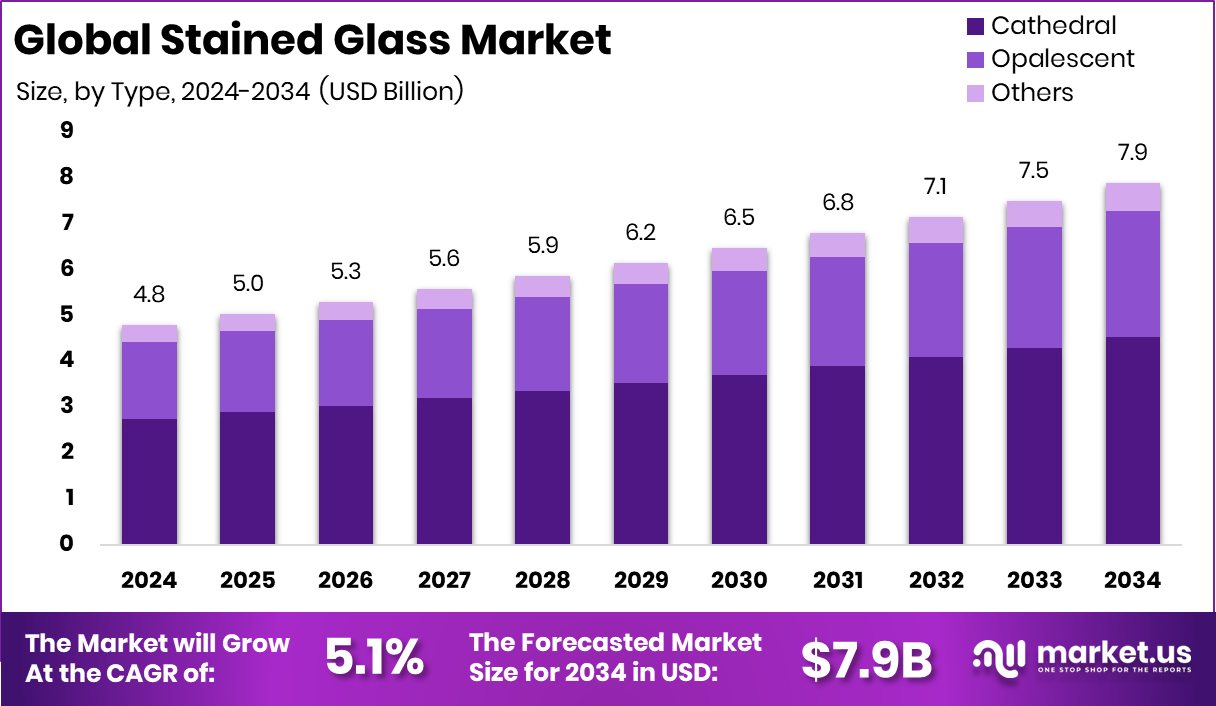
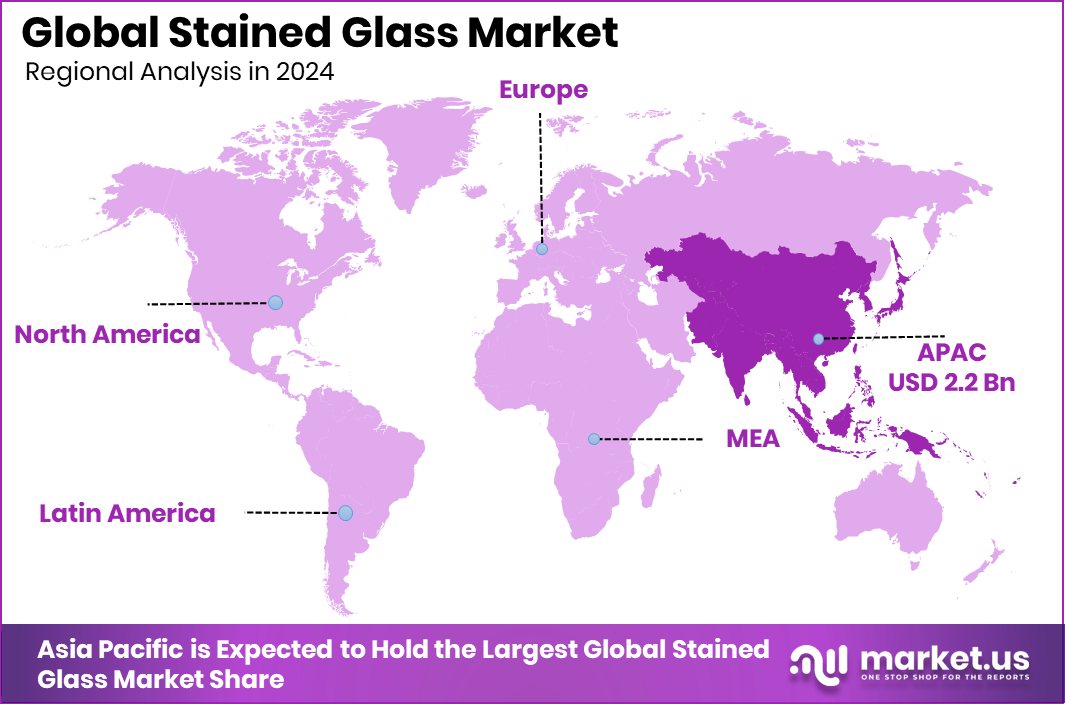
The Global Stained Glass Market is expected to be worth around USD 7.9 billion by 2034, up from USD 4.8 billion in 2024, and is projected to grow at a CAGR of 5.1% from 2025 to 2034. With 45.80% and USD 2.2 Bn, Asia Pacific dominated regional demand in 2024.
Stained glass is a decorative form of colored glass used to create artistic windows, panels, and architectural features. It is made by adding metal oxides to molten glass, giving it rich colors and light-filtering qualities. Traditionally used in churches and historic buildings, stained glass is now also popular in homes, museums, and public spaces because it combines art, light, and storytelling in a lasting form.
The stained glass market refers to the production, restoration, installation, and maintenance of stained glass for religious, residential, and cultural buildings. It includes new creations as well as restoration work for aging structures. The market is shaped by heritage preservation, architectural design trends, and the need to protect historical artwork for future generations.
One major growth factor is public and institutional funding for restoration projects. St. Alphonsus Liguori “Rock” Church received a $500,000 grant for stained glass restoration, while a historic abbey secured a £1 million cash boost for essential repairs. These funds directly support skilled artisans and material demand.
Demand is also driven by efforts to preserve cultural identity. A historic church in north St. Louis received a $500,000 grant to revive its stained glass windows, and The Stained Glass Museum in Ely was awarded over £90,000 to support conservation and public education.
The opportunity ahead lies in continued heritage investment and community support. Notre Dame Church in Ogdensburg received a $36,500 grant for stained glass restoration, showing that even smaller projects sustain steady market activity and long-term craftsmanship value.
Key Takeaways
- The Global Stained Glass Market is expected to be worth around USD 7.9 billion by 2034, up from USD 4.8 billion in 2024, and is projected to grow at a CAGR of 5.1% from 2025 to 2034.
- Cathedral type dominates the stained glass market, holding 57.3% share due to heritage restorations worldwide.
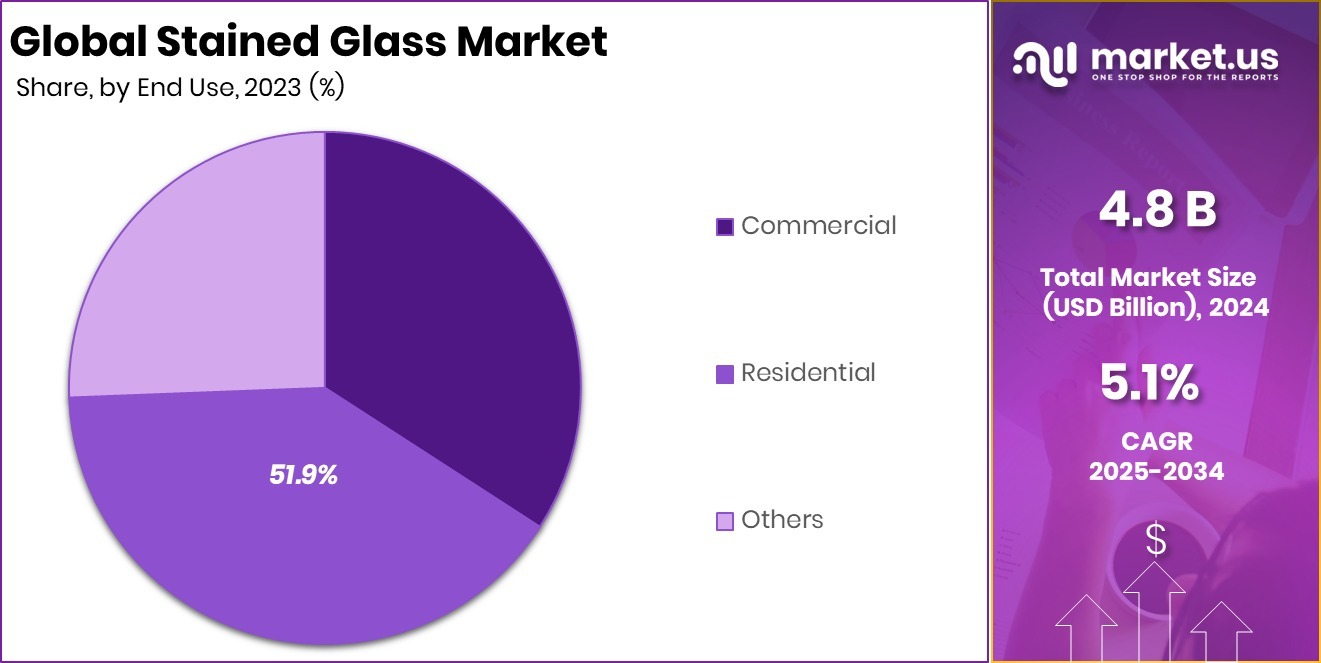
- Residential end use leads the stained glass market with 51.9% share driven by décor demand.
- Asia Pacific Stained Glass Market reached USD 2.2 Bn valuation in 2024 region.
By Type Analysis
Cathedral stained glass dominates the Stained Glass Market with 57.3% share worldwide
In 2024, the Stained Glass Market saw strong momentum from the Cathedral type, which held a dominant 57.3% share by type. This segment continues to benefit from long-standing demand in churches, heritage buildings, and restoration projects where artistic value and historical accuracy matter most. Cathedral stained glass is valued for its hand-crafted appeal, detailed imagery, and ability to filter natural light in a symbolic way.
Growing investments in preserving cultural landmarks and faith-based architecture across Europe and parts of North America supported steady demand. In addition, tourism-driven renovations of old cathedrals and monuments increased replacement and refurbishment activities. Skilled craftsmanship, premium pricing, and long product life cycles further strengthened the cathedral segment’s leading position within the stained glass market.
By End Use Analysis
Residential applications lead the Stained Glass Market by end use at 51.9%.
In 2024, the Residential end-use segment accounted for 51.9% of the Stained Glass Market, reflecting growing interest in decorative and personalized home interiors. Homeowners increasingly use stained glass in windows, doors, skylights, and partitions to enhance aesthetics while maintaining privacy. Rising disposable income and demand for custom home designs supported this trend, especially in urban housing and luxury villas.
Renovation projects also played a key role, as stained glass offers a unique way to upgrade older homes without major structural changes. Designers favor stained glass for its color richness and ability to complement both traditional and modern styles. As home décor spending remains resilient, residential applications continue to drive consistent market demand.
Key Market Segments
By Type
- Cathedral
- Opalescent
- Others
By End Use
- Commercial
- Residential
- Others
Driving Factors
Heritage Restoration Funding Drives Stained Glass Demand
Public and community funding for historic restoration is a major driving force in the stained glass market. In many cities, aging churches and landmark buildings require careful window restoration to preserve history and identity. St. Alphonsus Liguori “Rock” Church received a $500,000 grant specifically to restore its stained glass windows, helping skilled artisans continue traditional craftsmanship.
Similarly, Wicker Park Lutheran Church secured a $250,000 grant to repair and protect its historic stained glass installation. These projects create steady demand for restoration materials, expert labor, and custom glasswork. Beyond visual beauty, restored stained glass improves building safety and long-term usability. As communities value cultural preservation, such grants directly support sustained market activity and encourage continued investment in stained glass restoration services.
Restraining Factors
High Restoration Complexity Limits Faster Market Expansion
Despite funding support, the stained glass market faces restraints due to the complexity and time required for preservation work. Restoration demands skilled artisans, long project timelines, and careful handling of fragile materials. A historic Black church in St. Louis received a $500,000 grant for preservation, yet such projects often progress slowly due to detailed documentation, approvals, and conservation standards.
Limited availability of trained craftspeople can delay execution, increasing costs and stretching budgets. Even with funding, some restoration efforts must be phased over years. This complexity restricts how quickly projects can be completed and limits the number of sites addressed at once. As a result, market growth remains steady but controlled, shaped by labor capacity and technical challenges rather than demand alone.
Growth Opportunity
Large-Scale Community Grants Open New Restoration Opportunities
Growth opportunities in the stained glass market are expanding through wider community-based funding programs. Recently, 30 Historic Black Churches received $8.5M in grants, creating strong momentum for restoration and preservation activities across multiple locations. This scale of funding allows stained glass work to move beyond isolated projects into broader regional programs.
Each restored church requires assessment, custom glass repair, and long-term maintenance planning. These grants also help train new artisans and support local workshops, strengthening future supply capabilities. As more institutions qualify for similar programs, stained glass restoration gains a stable pipeline of projects. This collective investment approach opens long-term opportunities for consistent demand while preserving cultural heritage on a wider scale.
Latest Trends
Scientific Research Enhances Modern Stained Glass Techniques
Innovation is becoming an important trend in the stained glass market, supported by academic research funding. Rhodes College was awarded a $180,000 National Science Foundation grant for chemistry research, which can indirectly support advances in glass composition, durability, and color stability.
Scientific studies help improve resistance to weathering, pollution, and temperature changes—key issues for long-standing stained glass installations. These improvements allow restored windows to last longer with less maintenance.
Research-driven techniques also support safer materials and more consistent results. As science and craftsmanship work together, stained glass evolves beyond tradition alone, blending heritage with modern material understanding to improve long-term performance and sustainability.
Regional Analysis
In 2024, Asia Pacific led the Stained Glass Market with 45.80% share region.
The Stained Glass Market shows clear regional variation, shaped by construction activity, cultural heritage, and design preferences. Asia Pacific dominated the global landscape, holding a leading 45.80% share and reaching a market value of USD 2.2 Bn, supported by strong demand from religious architecture, residential construction, and large-scale restoration projects. Countries across this region continue to integrate stained glass into temples, churches, and premium housing, reinforcing its leadership position.
Europe follows as a mature and tradition-driven market, where stained glass remains closely tied to cathedral restoration, heritage conservation, and tourism-linked renovations, especially in historic cities. North America reflects stable demand, driven by residential remodeling, artistic installations, and selective church refurbishments that favor customized stained glass designs.
In Middle East & Africa, adoption is gradual, supported by cultural buildings and niche luxury projects that emphasize decorative craftsmanship. Meanwhile, Latin America represents an emerging market, where religious institutions and urban renewal projects sustain moderate but consistent interest. Together, these regions highlight a market balanced between heritage preservation and evolving architectural aesthetics.
Key Regions and Countries
- North America
- US
- Canada
- Europe
- Germany
- France
- The UK
- Spain
- Italy
- Rest of Europe
- Asia Pacific
- China
- Japan
- South Korea
- India
- Australia
- Rest of APAC
- Latin America
- Brazil
- Mexico
- Rest of Latin America
- Middle East & Africa
- GCC
- South Africa
- Rest of MEA
Key Players Analysis
Coatings by Sandberg plays a specialized but influential role in the global stained glass market. The company is widely associated with surface coatings and finishing solutions that enhance durability, color stability, and weather resistance of stained glass installations. Its relevance is strongest in restoration and premium architectural projects, where long service life and visual consistency are critical. By focusing on material performance rather than mass production, the company aligns well with high-value, craftsmanship-driven demand.
Bullseye Glass Co. remains a cornerstone supplier for artists, studios, and architectural designers. The company’s strength lies in its broad portfolio of colored glass sheets and compatibility across artistic techniques. In 2024, Bullseye’s position is reinforced by continued demand from custom stained glass projects, educational institutions, and independent artisans. Its consistent quality standards support repeat usage, especially in markets where artistic expression and bespoke designs dominate over volume-driven applications.
Meanwhile, CASCADE METALS supports the stained glass ecosystem through essential metal components used in framing and structural reinforcement. The company’s importance is functional rather than decorative, enabling structural integrity and long-term installation reliability. Its steady role reflects ongoing replacement, repair, and new-build requirements across residential, religious, and commercial stained glass projects globally.
Top Key Players in the Market
- Coatings by Sandberg
- Bullseye Glass Co.
- CASCADE METALS
- Diamond Tech.
- Taizhou Wanda Stained Glass Co.,Ltd.
- AANRAKU GLASS STUDIOS
- Kokomo Opalescent Glass Co.
- Creators Stained Glass
- Pendle Stained Glass Ltd
- Armstrong Glass Company
Recent Developments
- In 2025, Diamond Tech Crafts added several new stained glass kits and creative tools to its product line, including stained glass kits like Highland Cow, Raindrops, Monstera Leaf, and more, which expands choices for stained glass hobbyists and artists. These items appear under “New Arrivals” on the company’s official site, showcasing fresh offerings in their stained glass range.
- In September 2024, Taizhou Wanda Stained Glass Co., Ltd. took part in Glasstec 2024, a major international glass trade show held in Düsseldorf, Germany. At this event, the company showcased its stained glass products and engaged with global buyers and industry visitors, helping to build international visibility and business contacts.
Report Scope
Report Features Description Market Value (2024) USD 4.8 Billion Forecast Revenue (2034) USD 7.9 Billion CAGR (2025-2034) 5.1% Base Year for Estimation 2024 Historic Period 2020-2023 Forecast Period 2025-2034 Report Coverage Revenue Forecast, Market Dynamics, Competitive Landscape, Recent Developments Segments Covered By Type (Cathedral, Opalescent, Others), By End Use (Commercial, Residential, Others) Regional Analysis North America – US, Canada; Europe – Germany, France, The UK, Spain, Italy, Rest of Europe; Asia Pacific – China, Japan, South Korea, India, Australia, Singapore, Rest of APAC; Latin America – Brazil, Mexico, Rest of Latin America; Middle East & Africa – GCC, South Africa, Rest of MEA Competitive Landscape Coatings by Sandberg, Bullseye Glass Co., CASCADE METALS, Diamond Tech., Taizhou Wanda Stained Glass Co.,Ltd., AANRAKU GLASS STUDIOS, Kokomo Opalescent Glass Co., Creators Stained Glass, Pendle Stained Glass Ltd, Armstrong Glass Company Customization Scope Customization for segments, region/country-level will be provided. Moreover, additional customization can be done based on the requirements. Purchase Options We have three licenses to opt for: Single User License, Multi-User License (Up to 5 Users), Corporate Use License (Unlimited User and Printable PDF) 
-
-
- Coatings by Sandberg
- Bullseye Glass Co.
- CASCADE METALS
- Diamond Tech.
- Taizhou Wanda Stained Glass Co.,Ltd.
- AANRAKU GLASS STUDIOS
- Kokomo Opalescent Glass Co.
- Creators Stained Glass
- Pendle Stained Glass Ltd
- Armstrong Glass Company
Our Clients

- 173491
- January 2026






