


Global Soil Fumigants Market Size, Share, And Enhanced Productivity By Form (Solid, Liquid, Gaseous), By Туре (Methyl Bromide, Chloropicrin, Methyl lodide, Dimethyl Disulfide, Others), By Region and Companies - Industry Segment Outlook, Market Assessment, Competition Scenario, Trends, and Forecast 2026-2035
- Published date: March 2026
- Report ID: 180875
- Number of Pages: 362
- Format:
-
keyboard_arrow_up
Quick Navigation
Report Overview
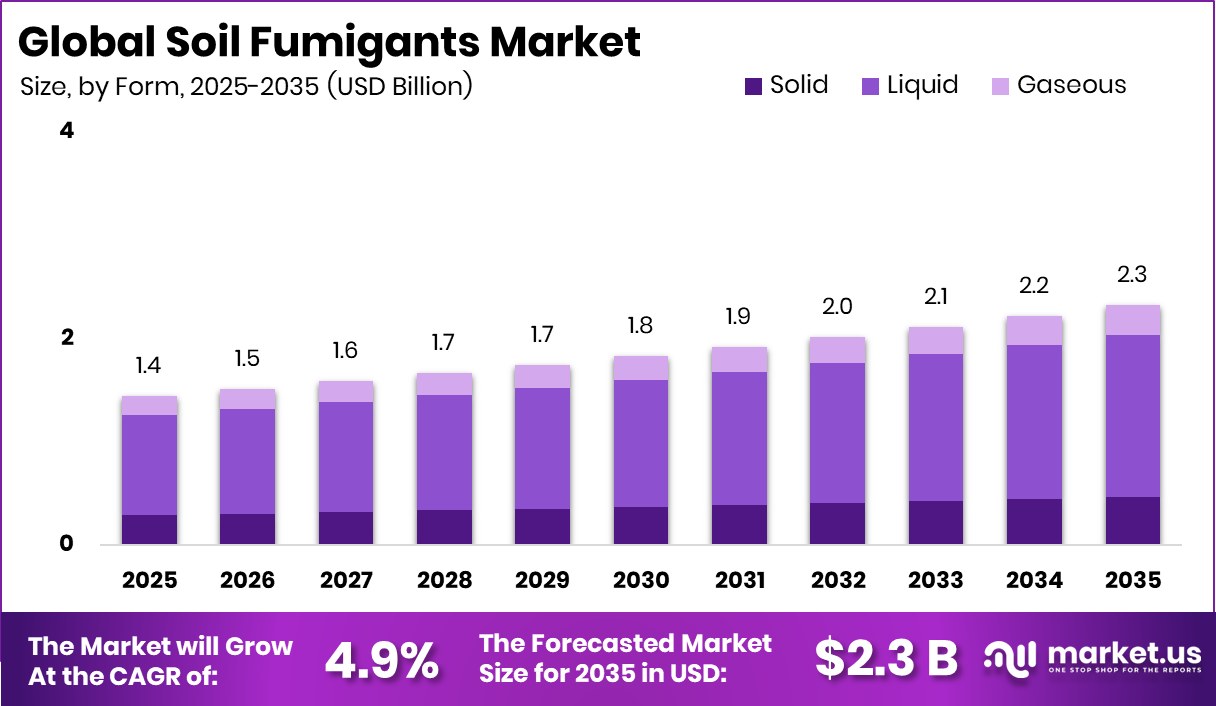
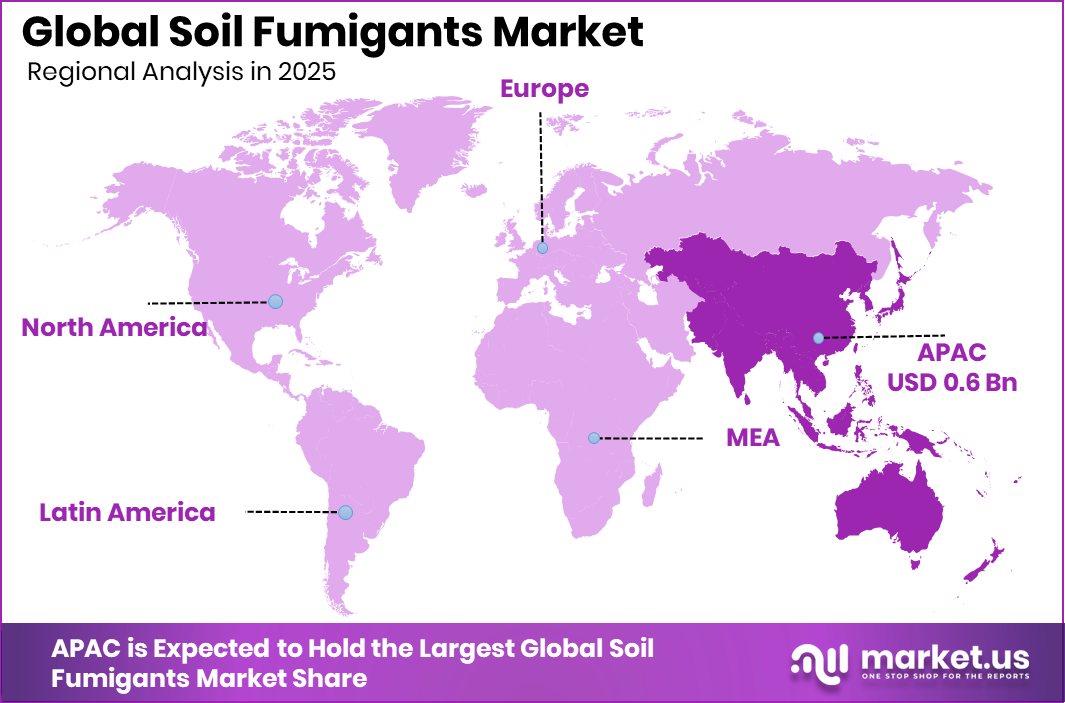
The Global Soil Fumigants Market is expected to be worth around USD 2.3 billion by 2035, up from USD 1.4 billion in 2025, and is projected to grow at a CAGR of 4.9% from 2026 to 2035. The Asia Pacific region held 47.3% of the soil fumigants market, valued at USD 0.6 Bn.
Soil fumigants are chemical substances used in agriculture to control harmful organisms present in the soil before planting crops. These substances are applied to the soil in forms such as solid, liquid, or gaseous formulations and work by penetrating the soil to eliminate pests, nematodes, fungi, bacteria, and weed seeds. By disinfecting the soil, fumigants help create a cleaner environment for crop roots to grow, which supports healthier plant development and better yields. Common fumigant types include methyl bromide, chloropicrin, methyl iodide, dimethyl disulfide, and other specialized compounds used for targeted soil treatment.
The Soil Fumigants Market refers to the global trade and supply of products designed to treat soil and control soil-borne pests in agricultural fields. This market includes fumigants sold in solid, liquid, and gaseous forms and is influenced by farming practices, crop protection needs, and soil management requirements. Agricultural producers use these products to improve soil conditions and protect crop productivity. Growing attention to soil quality and efficient pest control continues to shape the development and demand for soil fumigation solutions in modern agriculture.
One of the major factors supporting the development of the soil fumigants market is the increasing focus on improving crop productivity and soil health. Agricultural authorities and governments are investing in programs that support high-value crop production and soil management practices. For example, the USDA announced over $243 million in grants for specialty crops, encouraging farmers to adopt improved agricultural inputs and soil treatment practices.
In addition, climate-related agricultural initiatives, such as Egypt mobilizing €688 million from the Global Green Bonds Initiative to support the National Climate Change Strategy 2050, highlight the growing emphasis on sustainable farming and soil management.
Demand for soil fumigants continues to rise as farmers seek effective ways to manage soil-borne pests that threaten crop yields. Modern farming systems, particularly those producing vegetables, fruits, and other high-value crops, require reliable soil treatment before planting. However, regulatory oversight and safety concerns also influence the use of fumigation products. For instance, Terminix paying $10 million over the illegal use of a dangerous pesticide demonstrates how enforcement and regulations shape responsible pesticide and fumigant use across agricultural and pest control industries.
Opportunities in the soil fumigants market are emerging through innovation in agricultural technologies and increased investment in sustainable crop solutions. New agricultural startups and technology-focused organizations are investing in improved soil treatment approaches and smarter farming inputs. For example, Copia Agro and Food Technologies Fund raising $27 million reflects growing investor interest in agricultural technologies that support efficient crop protection and soil health solutions. Such developments are expected to encourage new product innovation and expand the role of soil fumigation within modern agricultural systems.
Key Takeaways
- The Global Soil Fumigants Market is expected to be worth around USD 2.3 billion by 2035, up from USD 1.4 billion in 2025, and is projected to grow at a CAGR of 4.9% from 2026 to 2035.
- Liquid form dominates the soil fumigants market with a 67.4% share due to easy application and effectiveness.
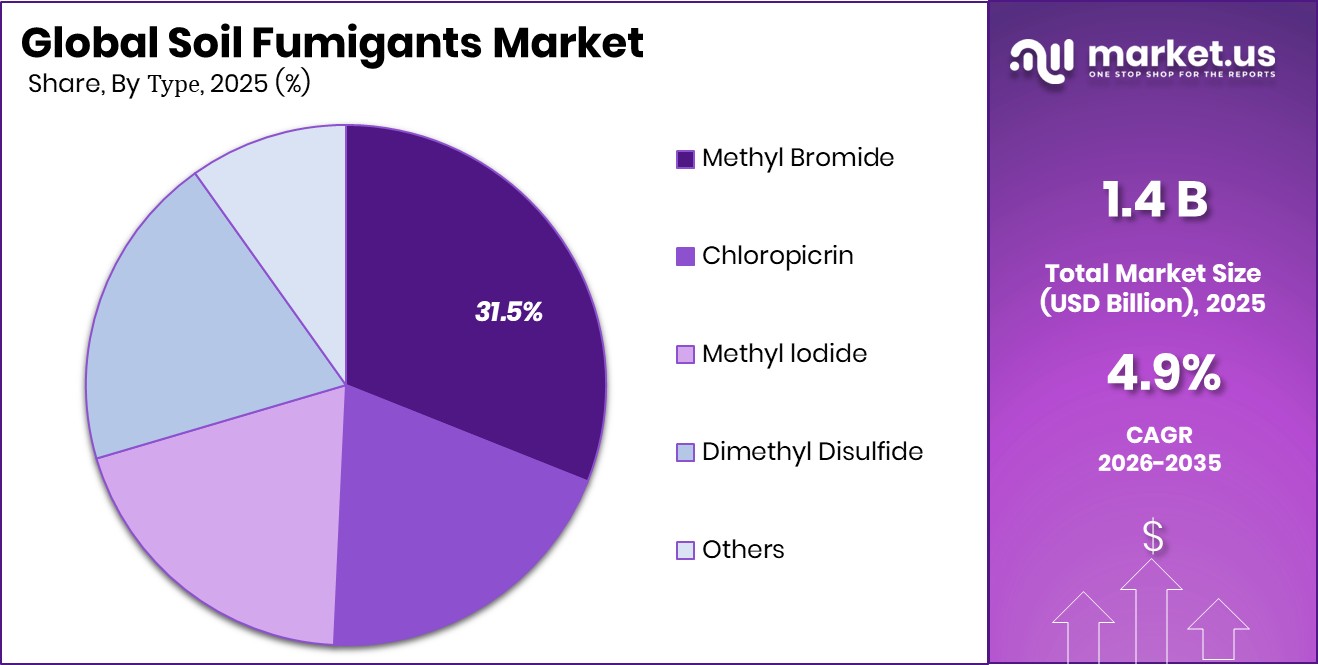
- The methyl bromide type holds a 31.5% share in the soil fumigants market, driven by effective pest control.
- In the Asia Pacific region, the soil fumigants market accounted for 47.3%, totaling USD 0.6 Bn regionally.
By Form Analysis
Liquid formulations dominate the soil fumigants market with a 67.4% share globally today.
In 2025, the liquid segment held about 67.4% of the Soil Fumigants Market, reflecting its widespread adoption across commercial agriculture. Liquid fumigants are preferred because they are easier to apply through drip irrigation systems and soil injection equipment, allowing farmers to achieve deeper and more uniform soil penetration. This form enables efficient control of soil-borne pests, nematodes, fungi, and weed seeds, which significantly improves crop productivity.
Liquid formulations also offer faster dispersion in the soil profile compared with solid or gaseous alternatives, making them suitable for large-scale vegetable, fruit, and plantation crops. Increasing mechanization in farming and the rising demand for high-yield agricultural production continue to support the dominance of liquid fumigants, especially in regions focusing on intensive cultivation and soil health management.
By Type Analysis
Methyl Bromide holds 31.5% share within the global Soil Fumigants Market.
In 2025, methyl bromide accounted for nearly 31.5% of the Soil Fumigants Market, maintaining a notable share due to its strong effectiveness in controlling a broad spectrum of soil pests and pathogens. Farmers value methyl bromide for its rapid action and ability to penetrate soil layers, making it highly effective in preparing fields before planting high-value crops such as strawberries, tomatoes, and ornamental plants.
Despite regulatory restrictions in several countries because of environmental concerns, its controlled and limited use continues in certain agricultural systems where alternatives provide lower efficiency. Research institutions and agricultural producers are also focusing on improved application methods to minimize emissions while maintaining pest control performance. These factors continue to sustain the relevance of methyl bromide within specific segments of the global soil fumigation industry.
Key Market Segments
By Form
- Solid
Liquid
Gaseous
By Туре
- Methyl Bromide
- Chloropicrin
- Methyl iodide
- Dimethyl Disulfide
- Others
Driving Factors
Rising demand for higher agricultural productivity
The Soil Fumigants Market is influenced by the increasing need to improve agricultural productivity and maintain soil quality for better crop yields. Farmers are focusing on soil treatment solutions that help reduce pests, diseases, and weeds before planting, ensuring healthier crop development. As global food demand continues to grow, effective soil management practices are becoming an important part of modern farming.
Soil fumigants play a role in supporting crop protection by preparing the soil for high-value crops such as fruits and vegetables. Government programs are also encouraging better pest management practices in agriculture. For example, the USDA/NIFA awarded $9.4 million for pest management programs, supporting research and agricultural practices that help farmers control pests and improve crop productivity, which indirectly supports the relevance of soil fumigation solutions.
Restraining Factors
Strict regulations on chemical fumigant usage
The Soil Fumigants Market also faces limitations due to strict regulations surrounding the use of chemical fumigation products. Environmental concerns, human health risks, and soil sustainability issues have led authorities in many regions to closely regulate the application of certain fumigants. Farmers and agricultural businesses are required to follow strict guidelines for the safe handling and application of these substances, which can sometimes limit their adoption.
At the same time, governments continue to support safer and more sustainable agricultural practices. For instance, the USDA announced over $243 million in grants awarded to specialty crops, which promotes improved farming techniques and responsible pest management approaches. Such initiatives highlight the shift toward controlled chemical usage while encouraging safer soil treatment solutions in agriculture.
Growth Opportunity
Development of eco-friendly soil fumigation solutions
The Soil Fumigants Market is witnessing growing opportunities with the development of eco-friendly and sustainable soil treatment solutions. Farmers and agricultural stakeholders are increasingly interested in alternatives that can control soil-borne pests while reducing environmental impact. Research into biological and low-toxicity fumigation solutions is gaining attention as the industry looks for more sustainable approaches to soil management.
In global agriculture, trade restrictions and crop losses also highlight the importance of maintaining healthy soil conditions. For example, the report “Hibiscus: Nigeria loses $112.78 million due to Mexico’s ban” reflects how crop health, pest control, and quality standards can influence agricultural trade. Such developments encourage farmers and agricultural systems to adopt better soil protection methods, creating opportunities for improved soil fumigation technologies.
Latest Trends
Growing shift toward sustainable soil treatments
A key trend shaping the Soil Fumigants Market is the increasing shift toward sustainable soil treatment practices that focus on efficiency, safety, and environmental responsibility. Agricultural systems are gradually integrating improved technologies and safer application methods to manage soil pests while maintaining long-term soil health. This trend is supported by broader technological advancements and investment in protective solutions that address chemical exposure risks in agricultural environments.
For instance, Avon Protection secured a £38 million gas mask contract from the UK Ministry of Defence, highlighting ongoing innovation in protective equipment designed to handle hazardous gases and chemicals. Such developments reflect the broader focus on safety and responsible chemical management, which also influences how soil fumigants are handled and applied within modern agricultural practices.
Regional Analysis
Asia Pacific dominated the soil fumigants market with a 47.3% share, reaching a USD 0.6 Bn value.
The Soil Fumigants Market demonstrates varied regional dynamics across North America, Europe, Asia Pacific, the Middle East & Africa, and Latin America, reflecting differences in agricultural intensity, crop patterns, and soil management practices.
Asia Pacific dominates the global soil fumigant market with a 47.3% share, valued at USD 0.6 Bn, supported by extensive agricultural activity and increasing demand for higher crop productivity. Countries across the region continue to adopt soil fumigation techniques to control pests, pathogens, and weeds, particularly in high-value horticulture and vegetable cultivation.
North America represents a mature market with consistent demand for soil fumigants due to advanced farming practices and widespread adoption of soil treatment methods before planting commercial crops. Europe maintains steady market participation, driven by regulated agricultural inputs and the need to protect soil quality and crop yields.
Meanwhile, Latin America is gradually expanding its use of soil fumigation solutions in commercial farming operations, particularly as farmers seek to improve crop yields and combat soil-borne pests and diseases. The Middle East & Africa region is witnessing the gradual adoption of soil fumigants as agricultural modernization and soil management awareness continue to increase across key farming areas.
Key Regions and Countries
- North America
- US
- Canada
- Europe
- Germany
- France
- The UK
- Spain
- Italy
- Rest of Europe
- Asia Pacific
- China
- Japan
- South Korea
- India
- Australia
- Rest of APAC
- Latin America
- Brazil
- Mexico
- Rest of Latin America
- Middle East & Africa
- GCC
- South Africa
- Rest of MEA
Key Players Analysis
In 2025, Bayer AG continues to hold a strong position in the Soil Fumigants Market through its established agricultural science portfolio and extensive global presence. The company’s strategic focus on crop protection solutions enables it to support farmers in improving soil health and managing pests that affect agricultural productivity. Bayer’s experience in developing integrated agricultural inputs strengthens its role in delivering soil treatment technologies that align with modern farming requirements. Its broad operational footprint and strong distribution network allow the company to maintain consistent engagement with growers across major agricultural regions, reinforcing its influence in soil fumigation solutions and sustainable crop management practices.
China National Chemical Corp. Ltd. remains a significant participant in the Soil Fumigants Market, supported by its large-scale chemical manufacturing capabilities and diversified agricultural chemical operations. The company benefits from its strong domestic presence and expanding reach across international agricultural markets. By leveraging its manufacturing infrastructure and product development capabilities, the organization contributes to the availability of soil fumigation products used in pest and pathogen management. Its role in the agricultural chemicals sector supports farmers seeking reliable soil treatment solutions that help protect crop yields and maintain soil productivity in intensive farming systems.
Corteva Inc. continues to strengthen its role in the Soil Fumigants Market through its dedicated focus on agricultural innovation and crop protection technologies. The company’s expertise in seed and crop protection solutions allows it to integrate soil management approaches with broader agricultural productivity strategies. Corteva’s emphasis on research and farmer-focused solutions helps support the development of effective soil treatment products aimed at controlling soil-borne pests and diseases. Through its global agricultural network and commitment to advancing farming practices, the company maintains a notable presence in supporting sustainable soil management and improved crop performance.
Top Key Players in the Market
- Bayer AG
- China National Chemical Corp. Ltd.
- Corteva Inc.
- Detia Degesch GmbH
- Douglas Products
- Draslovka Services Pty Ltd.
- Eastman Chemical Co.
- Ecotec Fumigation
- Imtrade CropScience
- Isagro Spa
- Lanxess AG
- UPL Ltd.
Recent Developments
- In April 2024, Bayer AG, a global company working in agriculture and crop protection solutions, signed an agreement with AlphaBio Control to obtain exclusive rights for a new biological insecticide for arable crops. The product is designed to help farmers manage pests affecting crops like cereals and oilseed rape and is expected to support sustainable pest control solutions.
- In March 2024, China National Chemical Corp. Ltd. works in chemicals and agrochemical products for agriculture and crop protection. Through its agricultural business structure, the company continues expanding crop protection technologies and product development activities linked with its global agrochemical operations, such as Syngenta. This strengthens its capability to supply solutions for pest and soil management in the farming system.
Report Scope
Report Features Description Market Value (2025) USD 1.4 Billion Forecast Revenue (2035) USD 2.3 Billion CAGR (2026-2035) 4.9% Base Year for Estimation 2025 Historic Period 2020-2024 Forecast Period 2026-2035 Report Coverage Revenue Forecast, Market Dynamics, Competitive Landscape, Recent Developments Segments Covered By Form (Solid, Liquid, Gaseous), By Type (Methyl Bromide, Chloropicrin, Methyl iodide, Dimethyl Disulfide, Others) Regional Analysis North America – US, Canada; Europe – Germany, France, The UK, Spain, Italy, Rest of Europe; Asia Pacific – China, Japan, South Korea, India, Australia, Singapore, Rest of APAC; Latin America – Brazil, Mexico, Rest of Latin America; Middle East & Africa – GCC, South Africa, Rest of MEA Competitive Landscape Bayer AG, China National Chemical Corp. Ltd., Corteva Inc., Detia Degesch GmbH, Douglas Products, Draslovka Services Pty Ltd., Eastman Chemical Co., Ecotec Fumigation, Imtrade CropScience, Isagro Spa, Lanxess AG, UPL Ltd. Customization Scope Customization for segments, region/country-level will be provided. Moreover, additional customization can be done based on the requirements. Purchase Options We have three licenses to opt for: Single User License, Multi-User License (Up to 5 Users), Corporate Use License (Unlimited User and Printable PDF) 
-
-
- Bayer AG
- China National Chemical Corp. Ltd.
- Corteva Inc.
- Detia Degesch GmbH
- Douglas Products
- Draslovka Services Pty Ltd.
- Eastman Chemical Co.
- Ecotec Fumigation
- Imtrade CropScience
- Isagro Spa
- Lanxess AG
- UPL Ltd.
Our Clients

- 180875
- March 2026






