


Global Jigsaw Puzzle Market Size, Share, Growth Analysis By Material (Paperboard/Cardboard, Wood, Metal, Plastic, Others), By Number of Pieces (500 Pieces or Less, 500-1000 Pieces, 1000-1500 Pieces, 1500-2000 Pieces, More than 2000 Pieces), By End-User (Children, Adult), By Distribution Channel (Online, Offline), By Region and Companies - Industry Segment Outlook, Market Assessment, Competition Scenario, Statistics, Trends and Forecast 2025-2034
- Published date: Jan 2026
- Report ID: 173515
- Number of Pages: 228
- Format:
-
keyboard_arrow_up
Quick Navigation
Report Overview
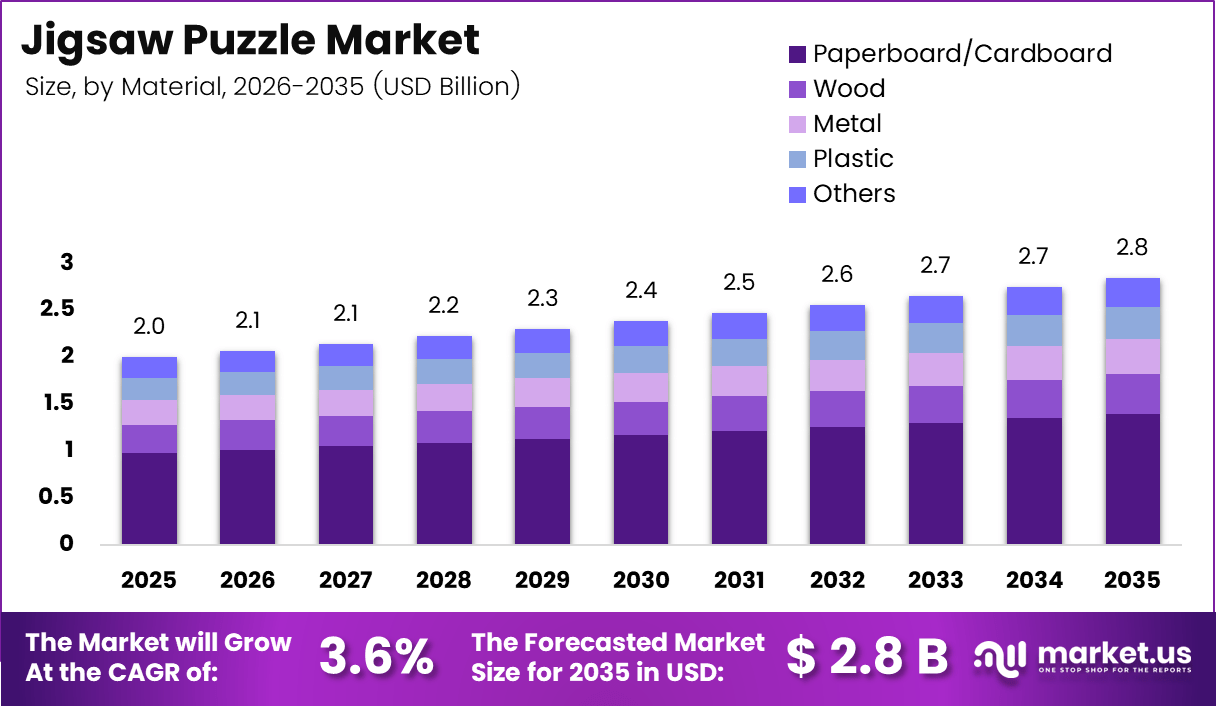
The Global Jigsaw Puzzle Market size is expected to be worth around USD 2.8 billion by 2035, from USD 2.0 billion in 2025, growing at a CAGR of 3.6% during the forecast period from 2026 to 2035.
The Jigsaw Puzzle Market represents the organized ecosystem of designing, manufacturing, distributing, and retailing interlocking picture-based puzzles for leisure, education, and cognitive development. It serves children, adults, seniors, and institutions seeking structured, screen-free engagement. Increasing lifestyle stress, indoor entertainment demand, and learning-oriented play continue strengthening its relevance globally.
The jigsaw puzzle segment operates as both a recreational product and a cognitive wellness solution. It supports memory enhancement, concentration, and problem-solving while aligning with modern preferences for mindful activities. As a result, demand continues expanding across households, educational environments, and therapeutic settings.
Market growth remains stable as consumers increasingly favor affordable, reusable, and mentally stimulating leisure products. Transitioning purchase behavior shows puzzles gaining acceptance as long-term hobbies rather than one-time entertainment. Consequently, themed collections, personalization, and repeat engagement formats strengthen customer retention and transactional value.
Opportunities further arise from government-supported education and wellness programs. Public initiatives increasingly promote hands-on learning tools and cognitive development aids within schools and senior care facilities. At the same time, regulatory frameworks emphasize child safety, material compliance, and sustainability, driving adoption of certified boards and non-toxic components.
Product innovation plays a critical role in shaping consumer satisfaction. According to manufacturer technology disclosures, precision-cutting systems ensure unique interlocking for every piece, even within complex formats. Puzzle complexity now ranges from 300 pieces for beginners to challenges exceeding 40320 pieces for advanced enthusiasts.
Digital engagement trends continue reinforcing category visibility. According to online content analytics, expert puzzle-solving videos consistently attract more than 2,00,000 views, reflecting strong community interest. Educational assortments commonly include 500, 1000, and 1500-piece options, alongside larger-piece formats designed for easier handling.
Size-based preferences highlight clear consumer behavior patterns. According to retail performance observations, 50 x 70 cm puzzles dominate demand in the US due to balanced difficulty. Meanwhile, 40 x 55 cm formats achieve higher satisfaction rankings, while larger 65 x 95 cm puzzles appeal to immersive-experience seekers.
Piece-count segmentation also influences pricing dynamics. According to retail benchmarking insights, 1000-piece puzzles remain the most popular choice, while 300 and 500-piece formats suit time-conscious users. Notably, 200-piece puzzles command higher average prices, while under 50-piece options primarily target children and casual solvers.
Key Takeaways
- The global Jigsaw Puzzle Market is projected to grow from USD 2.0 billion in 2025 to USD 2.8 billion by 2035, expanding at a 3.6% CAGR.
- Paperboard/Cardboard leads the material segment with a dominant share of 67.9%, reflecting strong demand for affordable and mass-market puzzles.
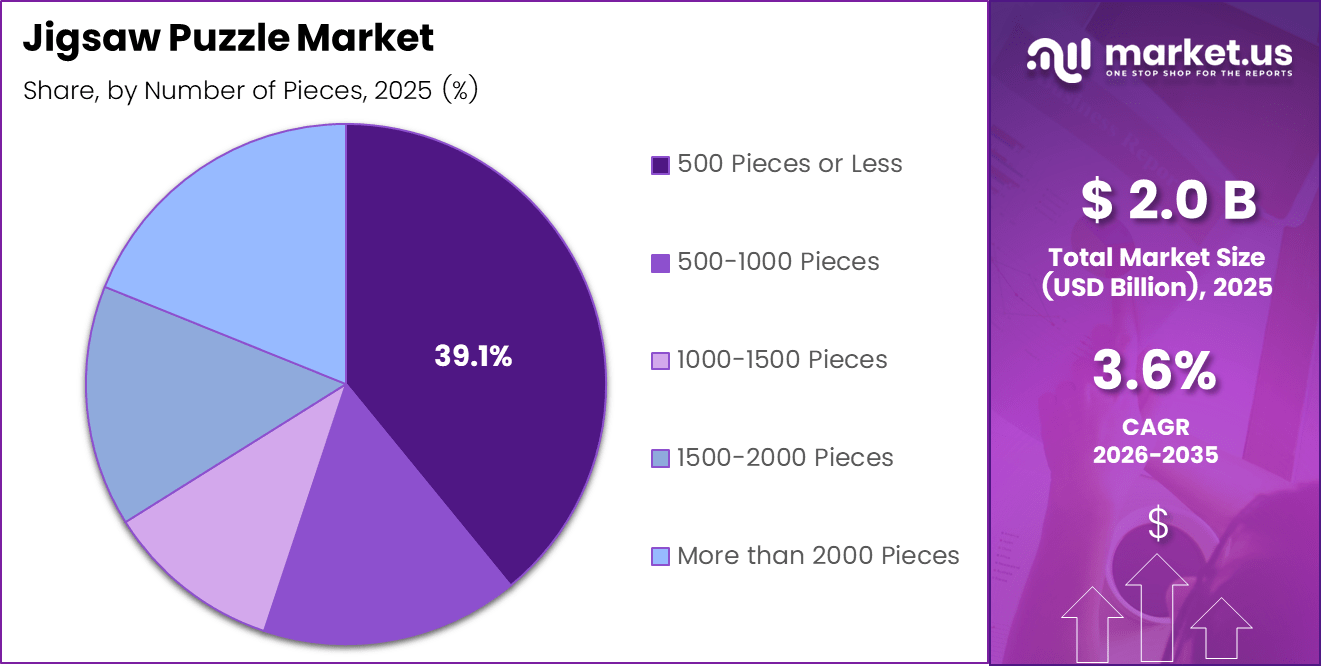
- Puzzles with 500 pieces or less represent the largest piece-count segment, accounting for 39.1% of total demand.
- Adults form the largest end-user group, contributing a significant 71.4% share of the overall market.
- Offline distribution channels dominate sales with a market share of 59.3%, supported by in-store purchasing preferences.
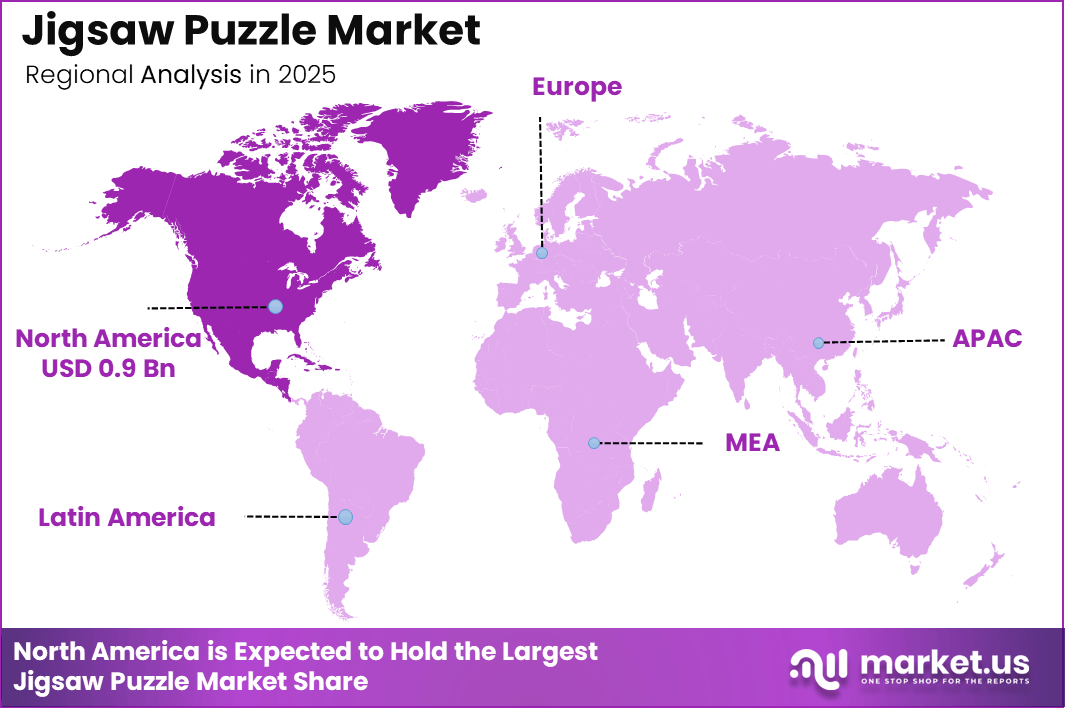
- North America remains the leading region, holding 45.2% of the global market and valued at USD 0.9 billion.
By Material Analysis
Paperboard/Cardboard dominates with 67.9% due to affordability, ease of printing, and mass-market suitability.
In 2025, Paperboard/Cardboard held a dominant market position in the By Material Analysis segment of the Jigsaw Puzzle Market, with a 67.9% share. This material benefits from lightweight handling, smooth interlocking, and vibrant image reproduction. As a result, manufacturers prioritize it for family, educational, and promotional puzzles.
Wood-based jigsaw puzzles cater to premium and educational preferences. These puzzles emphasize durability, tactile quality, and long-term reuse. As demand for eco-conscious and heirloom-style toys grows, wooden puzzles maintain steady relevance, especially among parents and collectors seeking long-lasting play value.
Metal jigsaw puzzles address niche audiences focused on novelty and challenge. Their rigid structure and unique finish differentiate them from traditional formats. Consequently, metal puzzles attract enthusiasts looking for complex assembly experiences and visually striking end results.
Plastic puzzles focus on durability and moisture resistance. These attributes support repeated use, especially in children-oriented environments. Plastic materials also enable specialized shapes and 3D formats, expanding functional variety within the overall jigsaw puzzle landscape.
Other materials include foam and hybrid composites. These options support portability and child safety. As experimentation continues, such materials gradually contribute to diversification without displacing mainstream material preferences.
By Number of Pieces Analysis
500 Pieces or Less dominates with 39.1% driven by accessibility and shorter completion time.
In 2025, 500 Pieces or Less held a dominant market position in the By Number of Pieces Analysis segment of the Jigsaw Puzzle Market, with a 39.1% share. This category appeals to beginners and casual users. Faster completion enhances satisfaction and repeat purchase frequency.
500–1000 pieces puzzles bridge casual and enthusiast segments. They offer moderate complexity while remaining approachable. As skill levels increase, consumers often transition into this range, making it a stable and widely adopted category.
1000–1500 pieces puzzles target experienced users seeking longer engagement. These puzzles encourage patience and focus. Consequently, they are popular among hobbyists who value extended leisure activities and detailed visual outcomes.
1500–2000 pieces puzzles emphasize challenge and endurance. They are frequently chosen for collaborative or extended sessions. This segment benefits from gifting occasions where complexity enhances perceived value.
More than 2000 pieces puzzles represent advanced difficulty. These puzzles appeal to dedicated enthusiasts who prioritize accomplishment and display potential over speed of completion.
By End-User Analysis
Adult dominates with 71.4% supported by rising interest in stress-relief activities.
In 2025, Adult held a dominant market position in the By End-User Analysis segment of the Jigsaw Puzzle Market, with a 71.4% share. Adults increasingly use puzzles for relaxation and mindfulness. This trend reinforces consistent demand across casual and premium categories.
Children-oriented puzzles emphasize learning and motor skill development. Bright visuals and simple formats support engagement. Parents continue to prefer puzzles as screen-free entertainment, sustaining steady demand within this user group.
By Distribution Channel Analysis
Offline dominates with 59.3% due to tactile purchasing preferences.
In 2025, Offline held a dominant market position in the By Distribution Channel Analysis segment of the Jigsaw Puzzle Market, with a 59.3% share. Physical stores allow consumers to assess quality and imagery directly, supporting confident purchase decisions.
Online channels expand product accessibility and variety. Digital platforms enable easy comparison and home delivery. As convenience improves, online sales continue to complement traditional retail rather than fully replacing it.
Key Market Segments
By Material
- Paperboard/Cardboard
- Wood
- Metal
- Plastic
- Others
By Number of Pieces
- 500 Pieces or Less
- 500-1000 Pieces
- 1000-1500 Pieces
- 1500-2000 Pieces
- More than 2000 Pieces
By End-User
- Children
- Adult
By Distribution Channel
- Online
- Offline
Drivers
Rising Consumer Preference for Screen-Free Recreational and Cognitive Engagement Activities Drives Market Growth
Consumers increasingly seek activities that reduce screen time and support mental focus, which positions jigsaw puzzles as a simple and effective option. Analysts observe that puzzles offer a calm, hands-on experience that contrasts with fast-paced digital entertainment.
This shift supports steady demand across homes looking for offline leisure that feels meaningful and productive. Jigsaw puzzles also encourage concentration, memory, and problem-solving, which aligns with growing awareness around cognitive health.
The rising popularity of family-oriented and intergenerational activities further supports market growth. Puzzles allow children, adults, and seniors to participate together, creating shared experiences without technical barriers. Families often view puzzles as affordable indoor entertainment that promotes bonding. In addition, demand for stress-relief and mindfulness-based leisure continues to expand.
Many consumers use puzzles to relax after work or manage daily stress, supporting repeat engagement. Educational and skill-development uses across age groups also add momentum, as puzzles help improve spatial skills, patience, and learning outcomes in both children and adults.
Restraints
Declining Attention Span and Time Constraints from Digital Entertainment Limit Market Expansion
A key restraint in the jigsaw puzzle market relates to competition from digital entertainment options. Streaming platforms, mobile games, and social media consume a large share of leisure time, reducing willingness to invest hours in completing puzzles. Analysts note that shorter attention spans make it harder for some consumers to commit to multi-session puzzle activities, especially among younger age groups.
Practical issues also affect repeat purchases. Storage concerns arise as completed puzzles require space, which limits buying frequency for urban households. Durability challenges, such as bent boards or faded prints, can reduce satisfaction over time.
Piece loss remains another common concern, as missing pieces prevent puzzle completion and discourage repurchase. These issues collectively influence purchasing decisions, particularly for large or high-piece-count puzzles, and may slow adoption among new or occasional users.
Growth Factors
Premiumization Through Custom and Personalized Puzzle Offerings Creates New Growth Paths
Growth opportunities increasingly come from premium and customized puzzle products. Personalized images, limited-edition designs, and artist collaborations allow brands to charge higher prices while meeting demand for unique experiences. Analysts see strong potential in therapeutic and senior care settings, where puzzles support cognitive wellness and social engagement.
Integration into care programs expands institutional demand beyond retail consumers. E-commerce growth also opens new opportunities. Direct-to-consumer platforms and subscription models improve product discovery and encourage recurring revenue through themed or monthly puzzle deliveries. Corporate gifting and team-building programs present another avenue, as organizations seek creative, inclusive activities that support collaboration.
Educational institutions also contribute to growth by using puzzles as teaching tools. These combined channels broaden the customer base and reduce reliance on seasonal sales.
Emerging Trends
Rising Adoption of Eco-Friendly and Sustainable Puzzle Materials Shapes Market Trends
Sustainability has emerged as a major trend, with increasing use of recycled cardboard, plant-based inks, and plastic-free packaging. Consumers value environmentally responsible products, which influences brand selection and loyalty. Art-based, photography, and pop-culture licensed puzzles are also gaining popularity, driven by visual appeal and collector interest.
Another trend involves growth in large-format and high-piece-count puzzles that target experienced users seeking challenge and long engagement. These products often command premium pricing and encourage hobbyist communities.
Social trends also support market visibility, as puzzle-themed events, online communities, and competitive challenges gain traction. Analysts note that shared progress posts and group competitions help keep puzzles relevant, blending traditional play with modern social interaction.
Regional Analysis
North America Dominates the Jigsaw Puzzle Market with a Market Share of 45.2%, Valued at USD 0.9 Billion
North America holds a dominant position in the jigsaw puzzle market, accounting for a 45.2% share and a market value of USD 0.9 billion. The region benefits from strong consumer awareness of screen-free leisure activities and a well-established culture of indoor recreational hobbies. High disposable income levels and widespread adoption of educational and mindfulness-based products further support demand. Seasonal gifting trends and strong penetration across family and adult consumer groups continue to reinforce market stability in the region.
Europe Jigsaw Puzzle Market Trends
Europe represents a mature and steadily growing market driven by long-standing puzzle culture and strong interest in cognitive and artistic leisure products. Consumers in the region show high preference for quality, design-focused, and educational puzzles, supporting consistent demand across age groups. Indoor entertainment remains popular due to climatic conditions and lifestyle patterns. Sustainability awareness also encourages continued engagement with traditional, physical puzzle formats.
Asia Pacific Jigsaw Puzzle Market Trends
Asia Pacific is emerging as a high-growth region, supported by expanding middle-class populations and rising interest in educational toys. Urban households increasingly adopt puzzles as tools for skill development and family bonding. Growing e-commerce penetration improves accessibility to a wide variety of puzzle formats. The region also benefits from increasing awareness of stress-relief and mindful leisure activities.
Middle East and Africa Jigsaw Puzzle Market Trends
The Middle East and Africa market remains at a developing stage, with demand concentrated in urban and higher-income areas. Educational use and family-oriented indoor entertainment drive gradual adoption. Expanding retail infrastructure and rising exposure to global lifestyle trends support market growth. However, awareness and accessibility remain uneven across countries.
Latin America Jigsaw Puzzle Market Trends
Latin America shows moderate growth, supported by increasing demand for affordable indoor recreational products. Families view jigsaw puzzles as cost-effective entertainment that encourages social interaction. Improving distribution networks and growing interest in educational play contribute to market expansion. Economic sensitivity continues to influence purchasing frequency and product selection.
U.S Jigsaw Puzzle Market Trends
The U.S market demonstrates strong standalone performance due to high household penetration of puzzles as leisure and educational products. Consumers increasingly use puzzles for relaxation, mental wellness, and family engagement. Demand remains supported by gifting occasions and growing interest in premium and large-format puzzles. Stable consumer spending on hobby products sustains long-term market activity.
Key Regions and Countries
North America
- US
- Canada
Europe
- Germany
- France
- The UK
- Spain
- Italy
- Rest of Europe
Asia Pacific
- China
- Japan
- South Korea
- India
- Australia
- Rest of APAC
Latin America
- Brazil
- Mexico
- Rest of Latin America
Middle East & Africa
- GCC
- South Africa
- Rest of MEA
Key Jigsaw Puzzle Company Insights
In 2025, Ravensburger AG continues to set the benchmark for quality and brand trust in the jigsaw puzzle category, supported by strong design consistency and broad theme variety. The company’s focus on premium experiences, from fit and finish to visual storytelling, helps it sustain pricing strength and repeat purchases across both families and adult hobbyists.
Buffalo Holding Corp. positions itself well through wide assortment coverage and steady retail visibility that supports volume-driven growth. Its portfolio approach across difficulty levels and popular imagery helps capture both entry-level buyers and frequent puzzlers, while also benefiting from seasonal gifting cycles and impulse-led purchases.
Clementoni SPA stands out for combining puzzle demand with learning value, which aligns well with education-focused buying behavior. The brand’s emphasis on age-appropriate formats and skill-building themes supports strong traction in children-focused segments, while its broader entertainment positioning keeps it relevant for households seeking screen-free activities.
Ceaco remains competitive by leaning into accessible price points and mass-market appeal, which supports strong throughput in high-traffic sales channels. Its focus on variety, recognizable artwork styles, and frequent refresh of offerings helps maintain shelf relevance and encourages repeat buying among casual and mid-frequency consumers.
Top Key Players in the Market
- Ravensburger AG
- Buffalo Holding Corp.
- Clementoni SPA
- Ceaco
- Master Pieces
- Athesia Kalenderverlag GmbH
- Anatolian Puzzle
- USA Cobble Hill Puzzles
- Springbok Puzzles
- Bluebird Puzzle
Recent Developments
- In August 2024, Puzzel announced the acquisition of SupWiz, an enterprise-grade omnichannel conversational AI platform, strengthening its capabilities in AI-driven customer experience. This move enables Puzzel to help enterprises further unlock the growing potential of conversational AI for enhanced CX delivery.
- In March 2024, Tillo completed the acquisition of Jigsaw Business Solutions, expanding its embedded rewards and incentives platform globally. The deal enhances Tillo’s offering in gift card and incentive management, supporting programs for more than 20 major retailers worldwide.
Report Scope
Report Features Description Market Value (2025) USD 2.0 billion Forecast Revenue (2035) USD 2.8 billion CAGR (2026-2035) 3.6% Base Year for Estimation 2025 Historic Period 2020-2024 Forecast Period 2026-2035 Report Coverage Revenue Forecast, Market Dynamics, Competitive Landscape, Recent Developments Segments Covered By Material (Paperboard/Cardboard, Wood, Metal, Plastic, Others), By Number of Pieces (500 Pieces or Less, 500-1000 Pieces, 1000-1500 Pieces, 1500-2000 Pieces, More than 2000 Pieces), By End-User (Children, Adult), By Distribution Channel (Online, Offline) Regional Analysis North America (US and Canada), Europe (Germany, France, The UK, Spain, Italy, and Rest of Europe), Asia Pacific (China, Japan, South Korea, India, Australia, and Rest of APAC), Latin America (Brazil, Mexico, and Rest of Latin America), Middle East & Africa (GCC, South Africa, and Rest of MEA) Competitive Landscape Ravensburger AG, Buffalo Holding Corp., Clementoni SPA, Ceaco, Master Pieces, Athesia Kalenderverlag GmbH, Anatolian Puzzle, USA Cobble Hill Puzzles, Springbok Puzzles, Bluebird Puzzle Customization Scope Customization for segments, region/country-level will be provided. Moreover, additional customization can be done based on the requirements. Purchase Options We have three licenses to opt for: Single User License, Multi-User License (Up to 5 Users), Corporate Use License (Unlimited User and Printable PDF) 
-
-
- Ravensburger AG
- Buffalo Holding Corp.
- Clementoni SPA
- Ceaco
- Master Pieces
- Athesia Kalenderverlag GmbH
- Anatolian Puzzle
- USA Cobble Hill Puzzles
- Springbok Puzzles
- Bluebird Puzzle
Our Clients

- 173515
- Jan 2026






