


Global Antiseptic Bathing Products Market Size, Share, Growth Analysis By Product (CHG Bath Towels and Wipes, CHG Solutions, Antiseptics Bathing Solutions, Antiseptics Wipes, Others), By Application (Intensive Care Units, Surgical Wards, Medical Wards, Others), By Region and Companies - Industry Segment Outlook, Market Assessment, Competition Scenario, Statistics, Trends and Forecast 2026-2035
- Published date: March 2026
- Report ID: 182153
- Number of Pages: 239
- Format:
-
keyboard_arrow_up
Quick Navigation
Report Overview
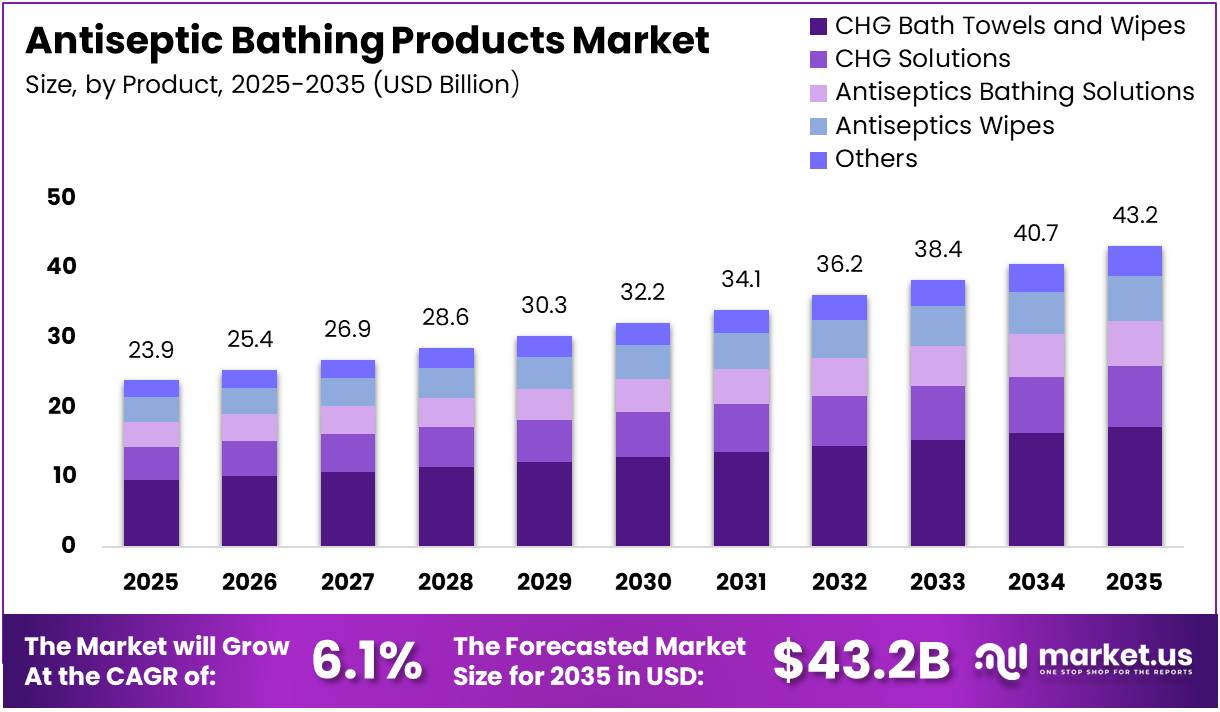
The Global Antiseptic Bathing Products Market size is expected to be worth around USD 43.2 Billion by 2035 from USD 23.9 Billion in 2025, growing at a CAGR of 6.1% during the forecast period 2026 to 2035.
Antiseptic bathing products are personal and clinical care solutions designed to reduce microbial load on the skin surface. They include skin antiseptic products such as chlorhexidine-based wipes, towels, solutions, and other antibacterial formulations. These products are widely used in hospitals, intensive care units, and at-home hygiene routines to prevent infections and improve overall skin safety.
The market is experiencing consistent growth driven by heightened hygiene awareness following the global pandemic. Consumers and healthcare providers alike are prioritizing infection prevention as a core health practice. Additionally, the expansion of healthcare infrastructure in emerging economies is creating new demand for professional antiseptic bathing products.
Opportunities in this market are expanding rapidly, particularly in developing nations where awareness about hygiene-related diseases is rising. The growing demand for dermatologically safe and herbal formulations presents a strong innovation pathway. Moreover, the rise of e-commerce platforms has significantly improved product accessibility for both consumers and healthcare institutions.
Regulatory bodies across North America and Europe have reinforced guidelines around hospital hygiene and infection control, directly supporting antiseptic bathing protocols. Government-backed initiatives to reduce healthcare-associated infections are encouraging hospitals to invest in standardized bathing programs. Consequently, regulatory compliance is becoming a key procurement driver in clinical settings.
According to PMC (National Institutes of Health), up to 20–30% of ICU patients acquire at least one healthcare-associated infection (HAI) during their stay, driving the routine adoption of antiseptic bathing in critical care. Furthermore, research published in PubMed indicates that daily chlorhexidine bathing reduces bloodstream infections by 29% in ICU patients.
According to PMC research, chlorhexidine bathing in high-risk hospital populations can reduce CLABSI risk by up to 56%. Additionally, studies from VA Research show that bathing patients daily with an antiseptic solution reduces infections by nearly 30%. These findings strongly validate the clinical effectiveness of antiseptic bathing products across hospital environments.
Key Takeaways
- The global Antiseptic Bathing Products Market is valued at USD 23.9 Billion in 2025 and is projected to reach USD 43.2 Billion by 2035.
- The market is growing at a CAGR of 6.1% during the forecast period 2026 to 2035.
- By Product, CHG Bath Towels and Wipes hold the dominant position with a market share of 37.8% in 2025.
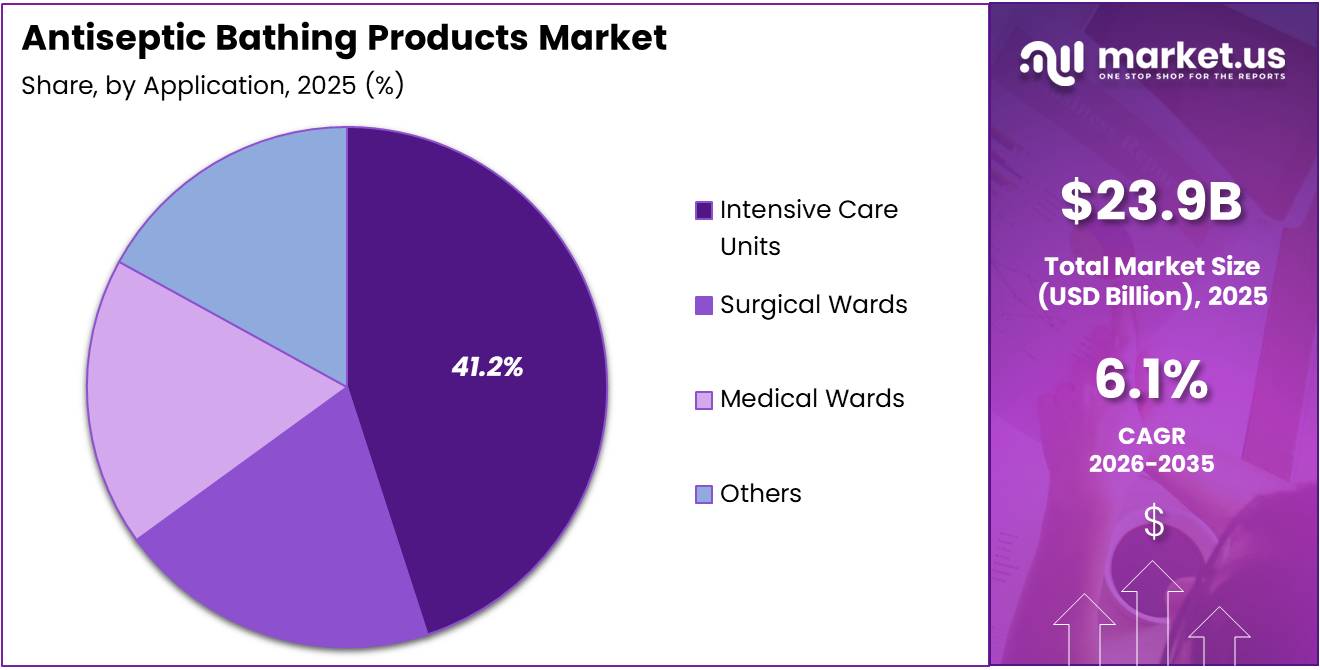
- By Application, Intensive Care Units lead the segment with a market share of 41.2% in 2025.
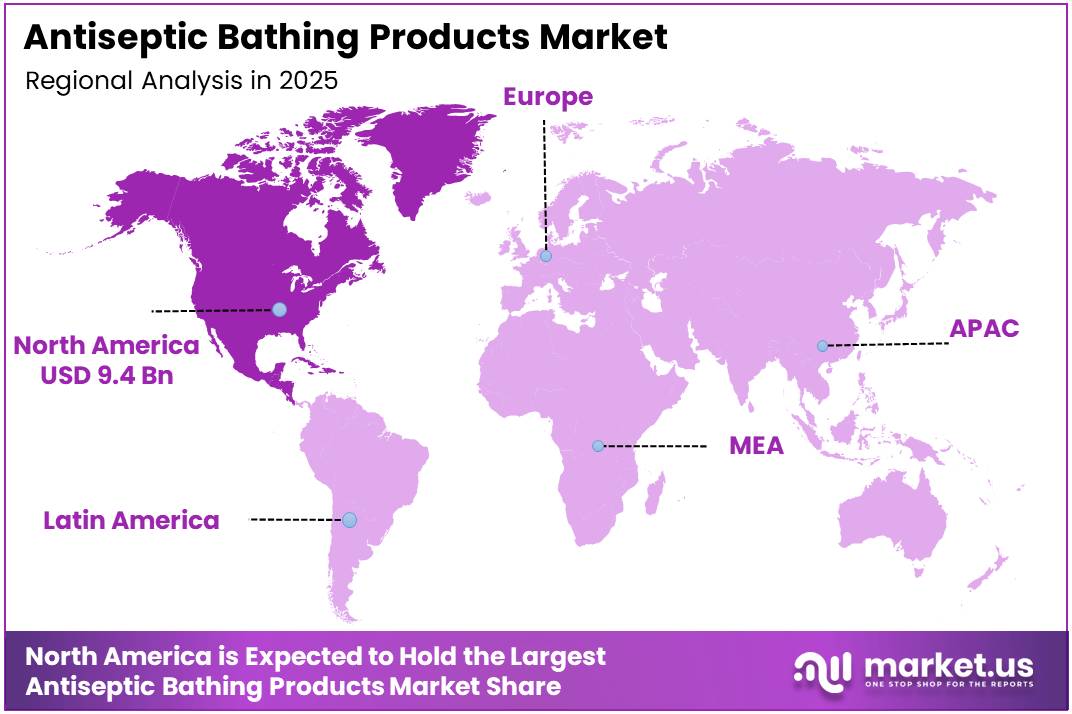
- North America dominates the global market with a share of 39.70%, valued at USD 9.4 Billion in 2025.
By Product Analysis
CHG Bath Towels and Wipes dominate with 37.8% due to their convenience and clinical effectiveness in infection prevention.
In 2025, CHG Bath Towels and Wipes held a dominant market position in the By Product segment of the Antiseptic Bathing Products Market, with a 37.8% share. These products are widely used in clinical settings due to their pre-saturated convenience, ease of use, and proven effectiveness in reducing skin-surface microbial load before surgical and critical care procedures.
CHG Solutions represent a critical product category used for patient bathing in intensive care and pre-surgical preparation. These liquid antiseptic formulations are commonly applied with wash cloths or disposable materials. Moreover, their broad-spectrum antimicrobial properties make them a preferred choice for infection control teams in hospital environments globally.
Antiseptics Bathing Solutions serve a dual function in both clinical and personal care segments. These formulations are used for full-body washing to reduce bacterial presence on skin. Additionally, growing consumer demand for daily hygiene products is encouraging manufacturers to develop gentler, skin-friendly versions suitable for regular home use.
Antiseptics Wipes are gaining significant traction due to their portability, no-rinse application, and convenience for quick hygiene needs. They are commonly used in both household and clinical settings. Consequently, their growing use in post-operative care and emergency hygiene scenarios is contributing to their steady market growth globally.
Others category includes specialized antiseptic bathing products such as antiseptic shampoos, body sprays, and foam-based formulations. These products cater to niche but growing use cases. Furthermore, innovation in delivery formats and packaging is expanding the scope of this category, particularly in homecare and long-term care facility segments.
By Application Analysis
Intensive Care Units dominate with 41.2% due to the critical need for daily infection control protocols in high-risk patient settings.
In 2025, Intensive Care Units held a dominant market position in the By Application segment of the Antiseptic Bathing Products Market, with a 41.2% share. ICUs require consistent daily antiseptic bathing protocols to prevent healthcare-associated infections. Moreover, the high vulnerability of ICU patients makes infection control a critical and non-negotiable clinical priority.
Surgical Wards represent a key application area where pre-operative antiseptic bathing is considered standard practice. Cleansing patients before surgery significantly reduces the risk of surgical site infections. Additionally, regulatory guidelines from healthcare authorities mandate pre-surgical bathing protocols, which continue to drive steady product adoption in this segment.
Medical Wards are increasingly adopting antiseptic bathing as part of routine patient care to minimize cross-contamination and reduce infection risks. These wards handle a large number of general patients with varying health conditions. Consequently, the regular use of antiseptic wipes and solutions in medical wards is steadily contributing to broader market growth.
Others segment includes application settings such as rehabilitation centers, long-term care facilities, and home care environments. These settings are seeing increased antiseptic product use as patient populations expand. Moreover, aging demographics and growing chronic disease management needs are driving demand for easy-to-use antiseptic bathing solutions in non-hospital care environments.
Key Market Segments
By Product
- CHG Bath Towels and Wipes
- CHG Solutions
- Antiseptics Bathing Solutions
- Antiseptics Wipes
- Others
By Application
- Intensive Care Units
- Surgical Wards
- Medical Wards
- Others
Drivers
Rising Hygiene Awareness and Infection Prevention Drive Global Antiseptic Bathing Products Market Growth
The post-pandemic era has significantly changed consumer behavior, with personal hygiene becoming a top priority for households worldwide. People are now more conscious of infection prevention in daily routines. Consequently, demand for antiseptic bathing products for regular home use has grown considerably across both urban and rural markets.
Rising cases of skin infections, communicable diseases, and bacterial outbreaks are pushing consumers to adopt daily antiseptic bathing habits. Healthcare professionals increasingly recommend antibacterial bathing solutions for at-risk individuals. Moreover, this trend is particularly visible in tropical and densely populated regions where skin-related infections remain a persistent public health concern.
Strong retail penetration is another key growth driver for this market. Antiseptic bathing products are now readily available across supermarkets, pharmacies, and online platforms. Additionally, the rapid growth of e-commerce has enabled manufacturers to reach a wider consumer base, improving product visibility and accelerating purchase decisions across diverse income groups.
Restraints
Chemical Safety Concerns and Natural Alternatives Restrain Antiseptic Bathing Products Market Growth
A growing segment of consumers is becoming cautious about chemical-based antiseptic products due to concerns over skin irritation, allergic reactions, and long-term dermatological effects. This shift is particularly strong among parents of young children and individuals with sensitive skin. Therefore, manufacturers are under pressure to reformulate products with milder, safer ingredients.
The availability of natural and organic bathing alternatives is gradually reducing consumer dependence on traditional antiseptic products. Plant-based soaps, herbal body washes, and natural and organic personal care products are gaining market share. Consequently, this competition from natural alternatives is limiting growth potential of conventional antiseptic bathing product categories, particularly in the consumer retail segment.
Regulatory scrutiny around certain antiseptic ingredients has also created barriers to product development and market entry. Compliance with evolving safety standards requires significant investment in research and reformulation. However, companies that successfully adapt to these requirements are likely to gain stronger consumer trust and differentiated market positioning over time.
Growth Factors
Innovation in Formulation and Multifunctional Benefits Drive Antiseptic Bathing Products Market Growth
The development of herbal and dermatologically tested antiseptic formulations is opening new avenues for growth in this market. Consumers increasingly prefer products that combine clinical effectiveness with skin-friendly ingredients. Consequently, manufacturers investing in plant-based and hypoallergenic antiseptic ranges are capturing a broader consumer audience and expanding their product portfolios effectively.
Demand for antiseptic products specifically designed for sensitive and baby skin segments is growing rapidly. Parents are seeking gentle yet effective bathing products that protect infants from infections without causing irritation. Moreover, the premiumization of baby care products globally is creating a lucrative niche for specially formulated antiseptic bathing solutions in this segment.
The integration of multifunctional benefits into antiseptic bathing products is a strong growth opportunity. Consumers now expect products that combine antibacterial protection with moisturizing, fragrance, and skin nourishment benefits. Additionally, this shift toward all-in-one personal care solutions is encouraging brands to innovate continuously, driving premium product launches and higher average selling prices in the market.
Emerging Trends
Plant-Based Innovation and Sustainable Practices Shape the Future of the Antiseptic Bathing Products Market
Plant-based and Ayurvedic antiseptic bathing solutions are gaining strong consumer interest, particularly in markets with high wellness awareness. Traditional herbal ingredients such as neem, turmeric, and tea tree oil are now being integrated into modern antiseptic formulations. Moreover, this trend is resonating strongly across South and Southeast Asia, where Ayurvedic personal care has deep cultural roots.
Sustainability is reshaping packaging and product development strategies across the antiseptic bathing products market. Brands are now investing in biodegradable packaging, refillable formats, and reduced-plastic solutions to meet the expectations of eco-conscious consumers. Consequently, companies adopting green manufacturing practices are also gaining a competitive advantage in markets where environmental standards and consumer scrutiny are high.
A growing number of consumers are shifting toward daily preventive skincare routines that include antibacterial bathing products as a core element. This behavioral trend is supported by health and wellness influencers promoting antiseptic bathing as a proactive measure. Therefore, the convergence of personal care and preventive health is creating new market opportunities for antiseptic product brands.
Regional Analysis
North America Dominates the Antiseptic Bathing Products Market with a Market Share of 39.70%, Valued at USD 9.4 Billion
North America dominates the global Antiseptic Bathing Products Market, accounting for a market share of 39.70%, with a valuation of approximately USD 9.4 Billion in 2025. The region benefits from strong healthcare infrastructure, high hygiene awareness, and well-established clinical protocols. Additionally, the widespread adoption of antiseptic bathing in ICUs and surgical settings continues to drive steady regional demand.
Europe Antiseptic Bathing Products Market Trends
Europe holds a significant share of the global Antiseptic Bathing Products Market, supported by stringent healthcare regulations and strong hospital hygiene standards across the region. Countries such as Germany, France, and the UK are key markets. Moreover, increasing demand for eco-friendly and dermatologically safe antiseptic formulations is shaping product development strategies across Europe.
Asia Pacific Antiseptic Bathing Products Market Trends
Asia Pacific is witnessing rapid growth in the Antiseptic Bathing Products Market, driven by rising hygiene awareness, expanding healthcare infrastructure, and growing urban populations. India and China are key demand centers in this region. Additionally, increasing disposable incomes and growing awareness of infection prevention are accelerating consumer adoption of antiseptic bathing products across the region.
Middle East and Africa Antiseptic Bathing Products Market Trends
The Middle East and Africa market for antiseptic bathing products is growing steadily, supported by improving healthcare systems and rising awareness of hygiene-related diseases. Government investments in public health infrastructure across GCC countries are boosting hospital-grade antiseptic product adoption. Consequently, multinational brands are increasingly targeting this region with specialized product offerings tailored to local needs.
Latin America Antiseptic Bathing Products Market Trends
Latin America represents an emerging market for antiseptic bathing products, with growth driven by increasing public health initiatives and rising awareness of personal hygiene. Brazil and Mexico are the leading markets in this region. However, economic challenges and limited healthcare access in certain areas continue to moderate the pace of growth across Latin America.
Key Regions and Countries
North America
- US
- Canada
Europe
- Germany
- France
- The UK
- Spain
- Italy
- Rest of Europe
Asia Pacific
- China
- Japan
- South Korea
- India
- Australia
- Rest of APAC
Latin America
- Brazil
- Mexico
- Rest of Latin America
Middle East & Africa
- GCC
- South Africa
- Rest of MEA
Key Company Insights
Ecolab is a global leader in infection prevention and hygiene solutions, with a strong presence across hospital and institutional care settings. The company offers a comprehensive range of antiseptic bathing products, including chlorhexidine-based formulations used in critical care environments. Its focus on science-backed solutions and strategic hospital partnerships continues to reinforce its leadership position in the antiseptic bathing products market.
BD (Becton, Dickinson and Company) is a prominent player in the medical technology space with a dedicated portfolio of infection prevention and patient hygiene products. The company provides chlorhexidine gluconate-based bathing solutions widely used in ICU and pre-surgical settings. Furthermore, BD’s strong distribution network and clinical research capabilities make it a trusted partner for hospitals and healthcare systems globally.
3M is a diversified healthcare and technology company with a well-established presence in the infection control segment. Its antiseptic bathing product line includes CHG-based wipes and solutions designed for use in high-risk clinical settings. Additionally, 3M’s continued investment in research and development enables it to consistently bring innovative antiseptic hygiene solutions to the global healthcare market, strengthening its competitive position.
The Clorox Company is recognized for its broad portfolio of disinfecting and antiseptic hygiene products used in both consumer and professional segments. The company has invested significantly in expanding its healthcare-grade product range to meet growing clinical demand. Consequently, its wide retail presence and strong brand equity position it as a key participant in the antiseptic bathing products market.
Key Players
- Ecolab
- BD
- 3M
- The Clorox Company
- Medline Industries, LP.
- Reckitt Benckiser Group PLC
- Perrigo Company plc
- Johnson & Johnson Services, Inc.
- KCWW
- Bio-Cide International, Inc.
Recent Developments
- May 2025 – Mölnlycke Health Care announced the acquisition of P.G.F. Industry Solutions GmbH, the manufacturer of Granudacyn, a specialized range of solutions for wound cleansing and moisturising. This strategic acquisition strengthens Mölnlycke’s wound care and antiseptic product portfolio across key global markets.
- June 2025 – Medline Industries signed a Prime Vendor agreement to supply The Ohio State University Wexner Medical Center with a broad range of medical and hygiene products. This agreement reinforces Medline’s position as a preferred supplier for large-scale academic medical institutions across the United States.
Report Scope
Report Features Description Market Value (2025) USD 23.9 Billion Forecast Revenue (2035) USD 43.2 Billion CAGR (2026-2035) 6.1% Base Year for Estimation 2025 Historic Period 2020-2024 Forecast Period 2026-2035 Report Coverage Revenue Forecast, Market Dynamics, Competitive Landscape, Recent Developments Segments Covered By Product (CHG Bath Towels and Wipes, CHG Solutions, Antiseptics Bathing Solutions, Antiseptics Wipes, Others), By Application (Intensive Care Units, Surgical Wards, Medical Wards, Others) Regional Analysis North America (US and Canada), Europe (Germany, France, The UK, Spain, Italy, and Rest of Europe), Asia Pacific (China, Japan, South Korea, India, Australia, and Rest of APAC), Latin America (Brazil, Mexico, and Rest of Latin America), Middle East & Africa (GCC, South Africa, and Rest of MEA) Competitive Landscape Ecolab, BD, 3M, The Clorox Company, Medline Industries LP., Reckitt Benckiser Group PLC, Perrigo Company plc, Johnson & Johnson Services Inc., KCWW, Bio-Cide International Inc. Customization Scope Customization for segments, region/country-level will be provided. Moreover, additional customization can be done based on the requirements. Purchase Options We have three licenses to opt for: Single User License, Multi-User License (Up to 5 Users), Corporate Use License (Unlimited User and Printable PDF)  Antiseptic Bathing Products MarketPublished date: March 2026add_shopping_cartBuy Now get_appDownload Sample
 -
-
- Ecolab
- BD
- 3M
- The Clorox Company
- Medline Industries, LP.
- Reckitt Benckiser Group PLC
- Perrigo Company plc
- Johnson & Johnson Services, Inc.
- KCWW
- Bio-Cide International, Inc.
Our Clients

- 182153
- March 2026






