


Global Alcohol-Based Disinfectants Market Size, Share and Report Analysis By Product (N- Propyl Alcohol, Methyl Alcohol, Ethyl Alcohol, Isopropyl Alcohol, Others), By Usage Form (Spray, Gel, Wipes, Liquid), By Application (Residential, Commercial, Industrial), By Region and Companies - Industry Segment Outlook, Market Assessment, Competition Scenario, Trends and Forecast 2025-2035
- Published date: Mar 2026
- Report ID: 180036
- Number of Pages: 358
- Format:
-
keyboard_arrow_up
Quick Navigation
Report Overview
The Global Alcohol-Based Disinfectants Market is expected to be worth around USD 8.9 Billion by 2035, up from USD 3.2 Billion in 2025, at a CAGR of 10.7% from 2026 to 2035. The North America segment maintained 39.2%, supporting a Alcohol-Based Disinfectants value of USD 1.2 Bn.
Alcohol-based disinfectants, particularly alcohol-based hand sanitizers and surface disinfectants, play an essential role in modern infection prevention systems across healthcare, food processing, hospitality, and public environments. These disinfectants primarily contain ethanol, isopropyl alcohol, or n-propanol as active ingredients and are widely recognized for their rapid antimicrobial activity.
- According to the Centers for Disease Control and Prevention, alcohol-based sanitizers containing 60%–95% alcohol are highly effective at killing many types of germs and pathogens, making them a preferred hygiene solution when soap and water are not available. In industrial and healthcare environments, these disinfectants are commonly formulated with ethanol concentrations around 70%–80%, often combined with glycerol or hydrogen peroxide to improve skin tolerance and stability.
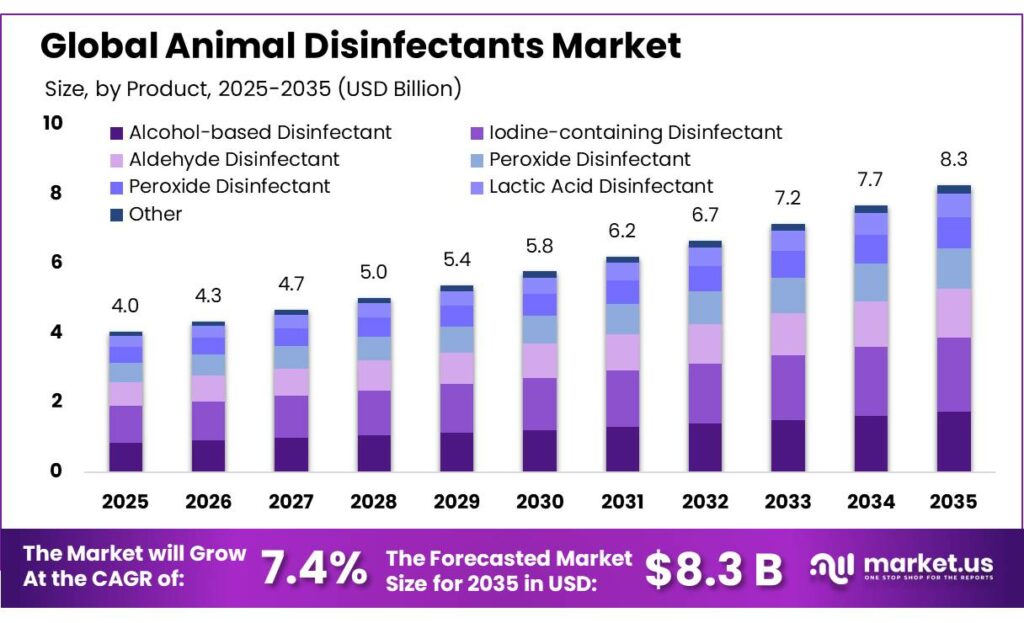
Research studies reported that during early pandemic periods, hand sanitizer sales in several regions increased between 300% and 470% compared with previous years, reflecting a dramatic surge in demand across healthcare facilities, public transport systems, and consumer retail channels. These formulations typically include 80% ethanol or 75% isopropyl alcohol, along with 1.45% glycerol and 0.125% hydrogen peroxide, ensuring strong antimicrobial performance while maintaining safety in large-scale production environments.
Government initiatives and public health programs are also shaping industrial demand. Many national health agencies adopted hand hygiene strategies aligned with WHO recommendations, particularly after infectious disease outbreaks highlighted the role of sanitation in preventing cross-contamination. Regulatory frameworks increasingly require hygiene compliance across industries such as pharmaceuticals, biotechnology, and food manufacturing.
- Product quality standards are being strengthened to ensure disinfectants contain the recommended alcohol concentration. Studies examining sanitizer quality found that about 69% of tested products complied with the WHO recommended alcohol concentration range of 60%–95%, demonstrating ongoing regulatory monitoring and product standardization efforts.
Key Takeaways
- Alcohol-Based Disinfectants Market is expected to be worth around USD 8.9 Billion by 2035, up from USD 3.2 Billion in 2025, at a CAGR of 10.7%.
- Ethyl Alcohol held a dominant market position, capturing more than a 44.1% share in the Alcohol-Based Disinfectants market.
- Liquid held a dominant market position, capturing more than a 39.4% share in the Alcohol-Based Disinfectants market.
- Commercial held a dominant market position, capturing more than a 49.6% share in the Alcohol-Based Disinfectants market.
- North America emerged as the leading regional market in the Alcohol-Based Disinfectants industry, accounting for around 39.2% of the global share with a value of approximately USD 1.2 billion.
By Product Analysis
Ethyl Alcohol leads Alcohol-Based Disinfectants market with 44.1% share
In 2024, Ethyl Alcohol held a dominant market position, capturing more than a 44.1% share in the Alcohol-Based Disinfectants market. The segment’s strong presence is largely supported by its broad use in healthcare hygiene products, surface disinfectants, and hand sanitizers. Ethyl alcohol is widely preferred because it acts quickly against bacteria and viruses while remaining relatively safe for frequent human contact. Hospitals, laboratories, food processing facilities, and pharmaceutical manufacturing units rely heavily on disinfectants based on ethyl alcohol to maintain strict sanitation standards.
In 2025, the demand for ethyl alcohol formulations continued to remain strong as healthcare institutions and public spaces maintained higher hygiene protocols established after global health emergencies. Another reason behind the segment’s dominance is its easy availability through large-scale fermentation and bio-ethanol production industries, which helps maintain stable supply for disinfectant manufacturers.
By Usage Form Analysis
Liquid form dominates usage with 39.4% due to easy application and wider sanitation use
In 2024, Liquid held a dominant market position, capturing more than a 39.4% share in the Alcohol-Based Disinfectants market. This form is widely used across hospitals, laboratories, food processing units, and commercial facilities because it is easy to apply and spreads quickly over surfaces. Liquid disinfectants are commonly used for cleaning medical equipment, countertops, floors, and high-touch areas where rapid sanitation is required. Many healthcare institutions prefer liquid solutions as they can be sprayed, wiped, or diluted depending on the cleaning requirement.
In 2025, demand for liquid alcohol disinfectants continued to remain strong as organizations maintained strict hygiene routines in workplaces, restaurants, and public facilities. Another key advantage of the liquid form is its fast evaporation and effective coverage, which helps reduce microbial contamination without leaving heavy residue.
By Application Analysis
Commercial applications lead demand with 49.6% driven by strict hygiene practices
In 2024, Commercial held a dominant market position, capturing more than a 49.6% share in the Alcohol-Based Disinfectants market. This strong share is mainly supported by the growing need for hygiene and sanitation across commercial spaces such as offices, hotels, restaurants, shopping centers, airports, and public transportation facilities. Businesses are increasingly adopting alcohol-based disinfectants to maintain clean environments and reduce the spread of germs in high-traffic areas. These disinfectants are commonly used on surfaces like counters, door handles, payment machines, tables, and shared equipment where frequent contact occurs.
In 2025, demand from the commercial sector continued to grow as organizations strengthened workplace hygiene policies and cleaning routines. Hospitality and food service industries, in particular, rely on alcohol-based disinfectants to meet sanitation standards and ensure customer safety. In addition, facility management companies and cleaning service providers regularly use alcohol disinfectants for routine maintenance in large commercial buildings.
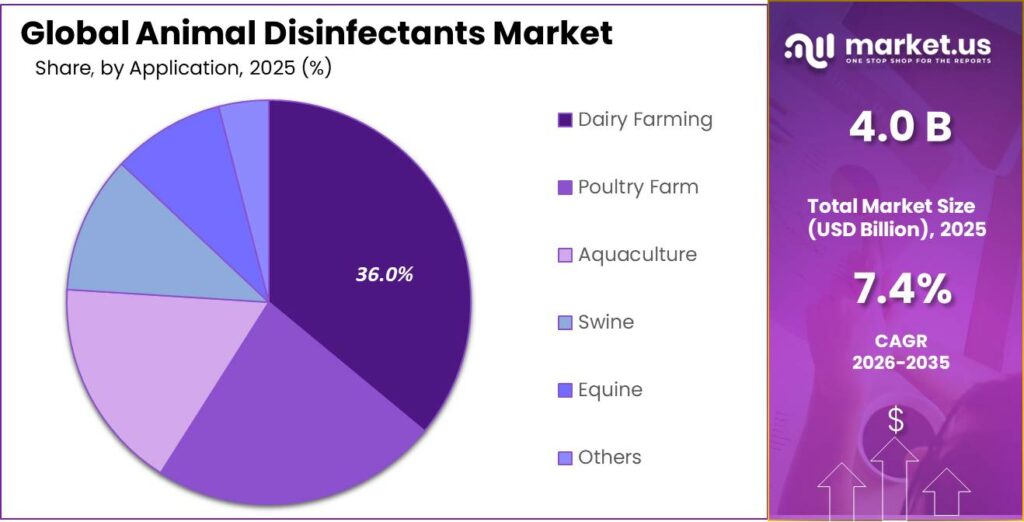
Key Market Segments
By Product
- N- Propyl Alcohol
- Methyl Alcohol
- Ethyl Alcohol
- Isopropyl Alcohol
- Others
By Usage Form
- Spray
- Gel
- Wipes
- Liquid
By Application
- Residential
- Commercial
- Hospitals
- Commercial buildings
- Schools
- Office Spaces
- Others
- Industrial
- Agricultural
- Food & Beverage
- Others
Emerging Trends
Increasing Adoption of Hygiene Culture and Hand Sanitizer Stations in Public and Food Environments
The growing attention to food safety is one of the main reasons behind this trend. According to the World Health Organization, unsafe food continues to be a major global health challenge. Each year, around 600 million people worldwide fall ill after consuming contaminated food, and approximately 420,000 deaths occur due to foodborne diseases. These numbers show how critical hygiene and sanitation practices are across the entire food supply chain.
Another important factor shaping this trend is the role of human contact in spreading foodborne pathogens. Research shows that improper hygiene among food handlers can be a major source of contamination. Studies have found that about 97% of foodborne illnesses in food service settings are linked to poor personal hygiene practices, particularly inadequate hand cleaning by workers handling food.
Health authorities also emphasize that disinfectant formulations must contain adequate alcohol concentration to be effective. The Centers for Disease Control and Prevention recommends that sanitizers contain between 60% and 95% alcohol to effectively kill germs.
Another aspect of this trend is the growing use of disinfectants in environments where water access is limited. In many regions, people still lack proper handwashing infrastructure. According to global hygiene data from UNICEF, about 2.3 billion people worldwide do not have access to a basic handwashing facility with water and soap at home.
Drivers
Rising Global Focus on Infection Prevention Drives Alcohol-Based Disinfectants Demand
One of the most important driving factors for alcohol-based disinfectants is the growing global emphasis on infection prevention and hygiene in healthcare and food-handling environments. Hospitals, clinics, food processing facilities, and public institutions are increasingly adopting strict sanitation protocols to reduce the spread of infectious diseases. Alcohol-based disinfectants, particularly hand rubs and surface sanitizers, have become essential tools in these hygiene programs because they can quickly eliminate bacteria, viruses, and other harmful microorganisms.
The World Health Organization (WHO) highlights that proper hand hygiene practices can prevent up to 50% of avoidable infections acquired during healthcare delivery. This statistic shows the enormous impact of simple hygiene measures such as alcohol-based hand rubs in protecting patients and healthcare workers from hospital-acquired infections. Because of this strong preventive effect, hospitals and medical facilities worldwide are investing more in alcohol-based disinfectant systems, including hand sanitizer dispensers at patient bedsides, entrances, and treatment rooms.
Another major driver comes from the measurable relationship between hygiene compliance and infection reduction. Clinical studies show that improving hand hygiene practices can significantly reduce hospital infections. In one long-term hospital study, increasing hygiene compliance was associated with a clear decline in infection cases, demonstrating the effectiveness of alcohol-based hand disinfectants in real healthcare settings. Data also shows that a 10% improvement in hand hygiene compliance can lead to around a 6% reduction in healthcare-associated infections, emphasizing how critical disinfectant usage is for infection control programs.
Restraints
Safety Risks and Flammability Concerns Limit Wider Use of Alcohol-Based Disinfectants
One of the major restraining factors for the Alcohol-Based Disinfectants industry is the growing concern over safety risks related to flammability, accidental ingestion, and chemical exposure. Alcohol, which is the main active ingredient in these disinfectants, is highly flammable and must be handled carefully during manufacturing, storage, and daily use.
Health organizations warn that alcohol-based sanitizers should always be kept away from open flames, sparks, or high heat sources because the alcohol vapors can ignite easily. The World Health Organization has clearly stated that all alcohol-based hand rub products are potentially flammable, which means hospitals, food facilities, and commercial workplaces must follow strict safety protocols when storing or using large volumes of these disinfectants.
Another concern affecting the industry is the risk of accidental ingestion and exposure, particularly among children. Data from the U.S. National Poison Data System reported about 65,000 ingestion incidents involving hand sanitizers between 2011 and 2014, many of which involved children accidentally swallowing the products. Such exposure can lead to alcohol poisoning or other health complications if the sanitizer contains high concentrations of ethanol or isopropyl alcohol.
Quality and contamination issues have also created regulatory challenges for manufacturers. Authorities such as the U.S. Food and Drug Administration (FDA) have warned that some sanitizer products may contain harmful substances or incorrect alcohol concentrations. In several cases, products labeled as ethanol-based disinfectants were found to contain methanol, a toxic alcohol that can cause serious health effects including blindness, nervous system damage, and even death if absorbed through the skin or ingested.
Opportunity
Expanding Food Safety Regulations and Hygiene Standards Create New Growth Opportunities
One of the most promising growth opportunities for the Alcohol-Based Disinfectants industry is the rapid expansion of food safety regulations and hygiene standards across the global food supply chain. Food production, processing, packaging, and distribution environments require strict sanitation practices to prevent contamination and protect public health.
Alcohol-based disinfectants are widely used in these settings because they can quickly kill microorganisms on hands, equipment, and surfaces without leaving residues that could affect food quality. As governments and international food organizations continue strengthening hygiene regulations, the demand for effective disinfectant solutions is expected to rise steadily across food manufacturing facilities, restaurants, and retail food services.
Food safety statistics highlight why sanitation solutions are becoming increasingly important worldwide. According to the World Health Organization (WHO), unsafe food leads to around 600 million cases of foodborne diseases every year globally and causes about 420,000 deaths annually. These illnesses occur due to contamination at various stages of food production, including processing, transportation, storage, and preparation.
The same WHO data also indicates that 30% of foodborne deaths occur among children under five years of age, demonstrating the seriousness of food safety risks and the need for strict hygiene measures. These large numbers push food regulators and companies to adopt stronger sanitation practices, including regular use of alcohol-based disinfectants in kitchens, food processing plants, and packaging facilities.
Daily food consumption patterns further illustrate the scale of the challenge. Global health reports show that about 1.6 million people fall ill every day from contaminated food, highlighting the widespread nature of food safety problems. Such statistics are prompting governments and industry regulators to introduce stricter hygiene guidelines for food handlers and processing environments. In many countries, regulatory frameworks now require routine surface sanitation and hand hygiene practices to prevent bacterial contamination.
Regional Insights
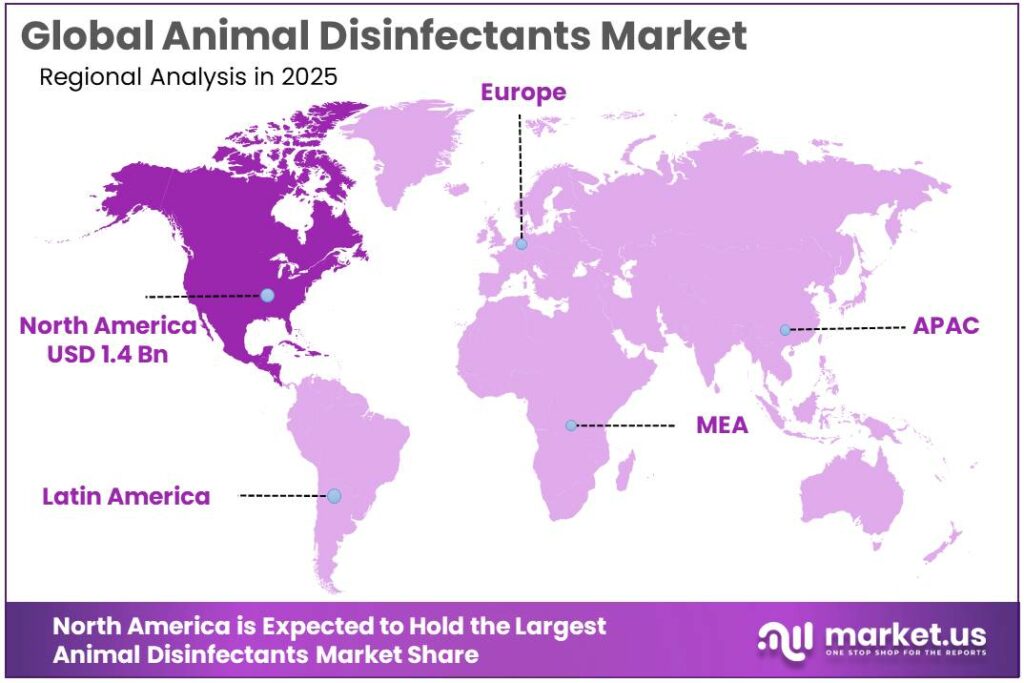
North America dominates the Alcohol-Based Disinfectants market with 39.2% share, valued at about USD 1.2 Bn
North America emerged as the leading regional market in the Alcohol-Based Disinfectants industry, accounting for around 39.2% of the global share with a value of approximately USD 1.2 billion. The region’s strong position is mainly supported by well-established healthcare infrastructure, strict hygiene regulations, and high awareness about infection prevention across hospitals, food processing facilities, and commercial environments.
Stepan Company is a U.S.-based specialty chemical manufacturer established in 1932 with headquarters in Illinois, United States. The company produces surfactants and chemical ingredients used in disinfectant and cleaning formulations. In 2024, Stepan generated approximately USD 2.3 billion in revenue and operates 20+ manufacturing facilities globally. Its product portfolio includes surfactants, polymers, and specialty chemicals used in sanitation products. The company serves customers in 80+ countries, supporting hygiene applications across industrial and institutional cleaning sectors.
In addition, the presence of advanced healthcare systems significantly contributes to product demand in North America. Healthcare facilities in the region follow strict infection-control protocols where alcohol-based disinfectants are used regularly for hand hygiene and surface cleaning. According to the Centers for Disease Control and Prevention (CDC), sanitizers containing 60% to 95% alcohol are considered effective in killing many types of germs, which supports their large-scale use in hospitals and public sanitation programs.
Key Regions and Countries Insights
- North America
- US
- Canada
- Europe
- Germany
- France
- The UK
- Spain
- Italy
- Rest of Europe
- Asia Pacific
- China
- Japan
- South Korea
- India
- Australia
- Rest of APAC
- Latin America
- Brazil
- Mexico
- Rest of Latin America
- Middle East & Africa
- GCC
- South Africa
- Rest of MEA
Key Players Analysis
Stepan Company is a U.S.-based specialty chemical manufacturer established in 1932 with headquarters in Illinois, United States. The company produces surfactants and chemical ingredients used in disinfectant and cleaning formulations. In 2024, Stepan generated approximately USD 2.3 billion in revenue and operates 20+ manufacturing facilities globally. Its product portfolio includes surfactants, polymers, and specialty chemicals used in sanitation products. The company serves customers in 80+ countries, supporting hygiene applications across industrial and institutional cleaning sectors.
3M is a multinational technology and manufacturing company founded in 1902 and headquartered in Minnesota, United States. The company provides medical, industrial, and consumer hygiene products including disinfectant solutions and cleaning technologies. In 2024, 3M generated revenue of nearly USD 32.7 billion and operates in 70+ countries with around 85,000 employees. Its healthcare and safety divisions supply sanitation products widely used in hospitals, laboratories, and commercial facilities across global markets.
Evonik Industries AG is a German specialty chemicals company founded in 2007 and headquartered in Essen, Germany. The company develops specialty ingredients used in disinfectants, cleaning agents, and hygiene products. In 2024, Evonik reported revenue of about EUR 15.3 billion and operates 100+ production facilities worldwide. The company employs around 33,000 people and serves customers in 100+ countries, focusing on specialty chemicals, additives, and industrial cleaning solutions.
Top Key Players Outlook
- Stepan Company
- Dow
- 3M
- DuPont
- Evonik Industries AG
- P&G
- SABIC
- The Clorox Company
- LANXESS
- Kao Corporation
Recent Industry Developments
In 2024, Stepan reported revenue of about USD 2.18 billion, with net income of roughly USD 50.4 million and Adjusted EBITDA near USD 187 million, showing steady profitability despite changes in raw-material pricing and global demand.
In 2024, Dow reported net sales of about USD 42.96 billion, reflecting its strong global presence in specialty chemicals and industrial materials.
Report Scope
Report Features Description Market Value (2025) USD 3.2 Bn Forecast Revenue (2035) USD 8.9 Bn CAGR (2026-2035) 10.7% Base Year for Estimation 2025 Historic Period 2020-2024 Forecast Period 2026-2035 Report Coverage Revenue Forecast, Market Dynamics, Competitive Landscape, Recent Developments Segments Covered By Product (N- Propyl Alcohol, Methyl Alcohol, Ethyl Alcohol, Isopropyl Alcohol, Others), By Usage Form (Spray, Gel, Wipes, Liquid), By Application (Residential, Commercial, Industrial) Regional Analysis North America – US, Canada; Europe – Germany, France, The UK, Spain, Italy, Rest of Europe; Asia Pacific – China, Japan, South Korea, India, Australia, Singapore, Rest of APAC; Latin America – Brazil, Mexico, Rest of Latin America; Middle East & Africa – GCC, South Africa, Rest of MEA Competitive Landscape Stepan Company, Dow, 3M, DuPont, Evonik Industries AG, P&G, SABIC, The Clorox Company, LANXESS, Kao Corporation Customization Scope Customization for segments, region/country-level will be provided. Moreover, additional customization can be done based on the requirements. Purchase Options We have three licenses to opt for: Single User License, Multi-User License (Up to 5 Users), Corporate Use License (Unlimited User and Printable PDF)  Alcohol-Based Disinfectants MarketPublished date: Mar 2026add_shopping_cartBuy Now get_appDownload Sample
 -
-
- Stepan Company
- Dow
- 3M
- DuPont
- Evonik Industries AG
- P&G
- SABIC
- The Clorox Company
- LANXESS
- Kao Corporation
Our Clients

- 180036
- Mar 2026






