


Global Agricultural Disinfectants Market Size, Share, And Enhanced Productivity By Type (Alcohols, Aldehydes, Hypochlorites and Halogens, Oxidizing Agents, Quaternary Ammonium Compounds Phenols, Others), By Form (Liquid, Powder, Others), By Application (Surface, Aerial, Water Sanitizing, Others), By End-Use Industry (Livestock Farms, Agricultural Farms), By Region and Companies - Industry Segment Outlook, Market Assessment, Competition Scenario, Trends, and Forecast 2025-2034
- Published date: March 2026
- Report ID: 181390
- Number of Pages: 235
- Format:
-
keyboard_arrow_up
Quick Navigation
Report Overview
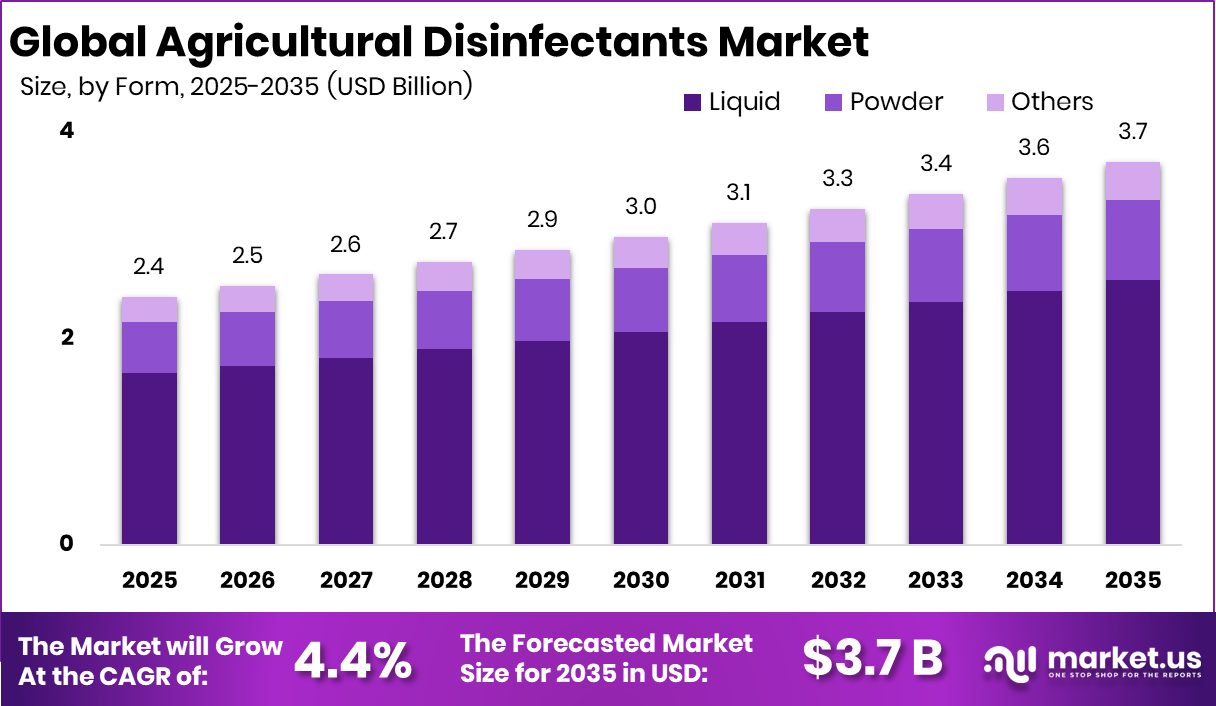
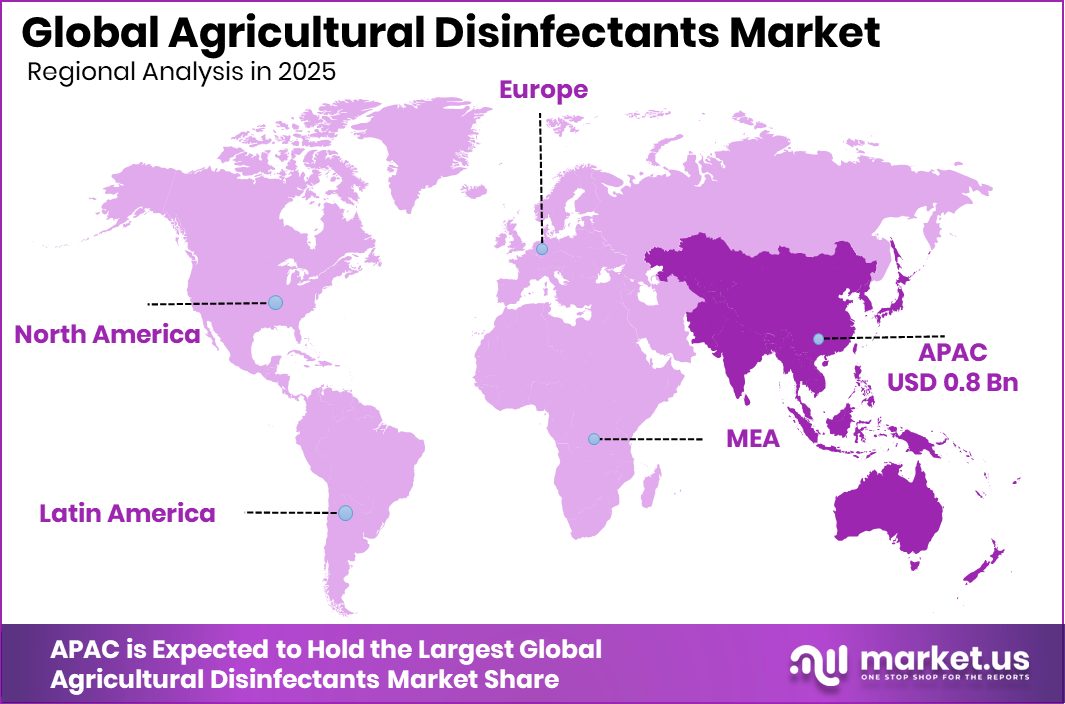
The Global Agricultural Disinfectants Market is expected to be worth around USD 3.7 billion by 2034, up from USD 2.4 billion in 2024, and is projected to grow at a CAGR of 4.4% from 2025 to 2034. The Agricultural Disinfectants Market in Asia Pacific captured 34.7% share, totaling approximately USD 0.8 billion.
Agricultural disinfectants are chemical or biological substances used to eliminate harmful microorganisms such as bacteria, viruses, fungi, and parasites in farming environments. These products help maintain hygiene across livestock housing, crop production areas, equipment, and water systems. Agricultural disinfectants come in several forms and chemical types, including alcohols, aldehydes, hypochlorites and halogens, oxidizing agents, quaternary ammonium compounds, phenols, and other specialized formulations. They are commonly available as liquid or powder products and are applied through surface cleaning, aerial spraying, and water sanitizing practices. Their primary purpose is to reduce disease transmission and maintain safe agricultural production conditions.
The Agricultural Disinfectants Market refers to the global commercial activity related to the production, distribution, and application of disinfectant products designed for agricultural use. These solutions are used across livestock farms and agricultural farms to maintain biosecurity and prevent contamination that can affect animal health, crop productivity, and overall farm efficiency. As farming systems become more structured and hygiene standards increase, the role of disinfectants in routine agricultural operations continues to expand.
One of the key growth factors for this market is the rising need for improved farm hygiene and disease control. Farmers are increasingly implementing sanitation practices to prevent the spread of infections among animals and crops. Government and institutional support for water purification and sanitation infrastructure also reflects the broader focus on hygiene management. For example, U.S. Rep. Scholten announced a $1 million investment to improve Grand Rapids water disinfection systems, while the State approved $966 million for the Houston water purification plant project. Such initiatives highlight growing investments in sanitation technologies that indirectly support agricultural disinfectant adoption.
Demand for agricultural disinfectants is also influenced by increasing awareness of safe food production and animal health management. Maintaining clean farm environments helps reduce contamination risks in the food supply chain and improves productivity. Several water purification initiatives further demonstrate the rising emphasis on sanitation technologies. Phoenix secured $179 million in federal funds for the North Gateway Advanced Water Purification Facility, while another announcement confirmed that Phoenix will receive nearly $180 million in federal funding to support the same advanced purification facility project. These developments highlight the broader demand for advanced disinfection and purification solutions.
Opportunities in the market are expanding with the development of new technologies that improve water and sanitation management. Innovation in purification systems and advanced chemistry is opening pathways for improved agricultural hygiene solutions. For instance, Slovakian-founded Xatoms raised €2.6 million to develop water purification technologies using AI and quantum chemistry, reflecting growing investment interest in next-generation sanitation technologies. Such advancements create opportunities for more efficient disinfection systems that can support modern agricultural operations and improve long-term farm biosecurity.
- In April 2025, Neogen Corporation, which develops biosecurity and disinfectant solutions for animal safety and agriculture, announced an agreement to sell its global cleaners and disinfectants business to Kersia Group. The deal was valued at $130 million, allowing the company to focus more on its core food and animal safety technologies.
Key Takeaways
- The Global Agricultural Disinfectants Market is expected to be worth around USD 3.7 billion by 2034, up from USD 2.4 billion in 2024, and is projected to grow at a CAGR of 4.4% from 2025 to 2034.
- In the Agricultural Disinfectants Market, hypochlorites and halogens account for 26.7% share by disinfectant type globally.
- In the Agricultural Disinfectants Market, liquid formulations dominate with a 69.2% share due to ease of application.
- In the Agricultural Disinfectants Market, surface applications hold 49.6% share for sanitation in farms and facilities.
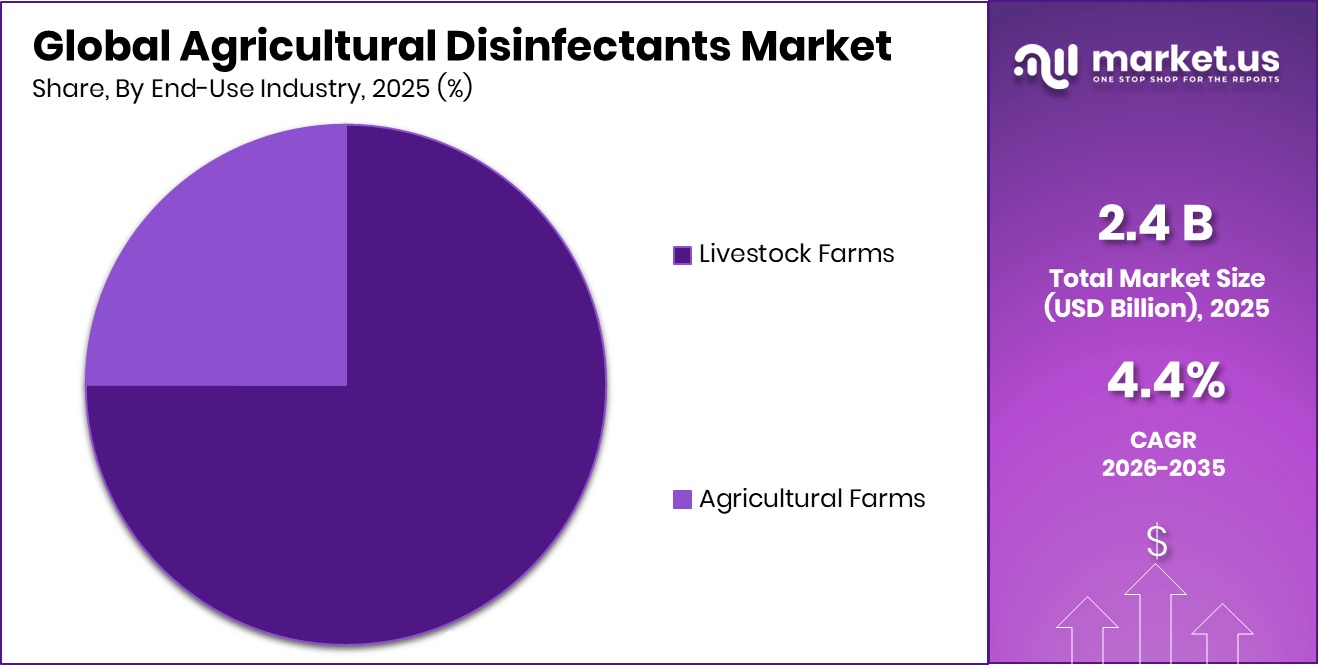
- In the Agricultural Disinfectants Market, livestock farms dominate end-use with a 69.1% share due to biosecurity needs.
- Asia Pacific held 34.7% of the Agricultural Disinfectants Market, with a valuation recorded at USD 0.8 billion.
By Type Analysis
Hypochlorites and halogens dominate the Agricultural Disinfectants Market, accounting for 26.7% share.
In 2025, the Agricultural Disinfectants Market saw hypochlorites and halogens emerge as a dominant product category, accounting for 26.7% of the total market share. These disinfectants are widely used across agricultural settings due to their strong antimicrobial properties and cost-effectiveness. Farmers and agricultural operators rely on these compounds to control the spread of bacteria, viruses, and fungi that can affect crops, livestock, and farm infrastructure. Their ability to rapidly eliminate pathogens makes them suitable for routine sanitation in barns, equipment, irrigation systems, and storage areas.
Additionally, hypochlorites and halogen-based formulations are relatively easy to apply and widely available, contributing to their strong adoption globally. The continued focus on biosecurity and disease prevention in modern farming practices is further driving the demand for these disinfectant types.
By Form Analysis
Liquid formulations lead the Agricultural Disinfectants Market, holding a dominant 69.2% share.
In 2025, liquid formulations dominated the Agricultural Disinfectants Market, capturing 69.2% of the total share. Liquid disinfectants are highly preferred because they are easy to apply, mix, and distribute across large agricultural areas. Farmers often use liquid solutions in spray systems, fogging equipment, and irrigation lines to ensure thorough coverage and effective pathogen control. These formulations allow quick dilution and rapid action against harmful microorganisms, making them suitable for both preventive and routine sanitation practices.
Liquid disinfectants are also compatible with various agricultural surfaces and equipment, which increases their practicality in daily farm operations. As farms continue to adopt more mechanized and efficient sanitation systems, the demand for liquid disinfectants remains strong due to their flexibility, effectiveness, and ease of large-scale application.
By Application Analysis
Surface applications represent 49.6% of the Agricultural Disinfectants Market usage globally.
In 2025, surface applications accounted for 49.6% of the Agricultural Disinfectants Market, reflecting the critical need to maintain hygiene across farm environments. Disinfecting surfaces such as barn floors, feeding equipment, storage areas, walls, and transport vehicles plays an essential role in preventing the spread of infectious diseases. Pathogens can easily survive on contaminated surfaces and spread rapidly among livestock or crops if not properly controlled.
As a result, farmers increasingly implement regular surface sanitation programs to protect animal health and maintain productivity. Surface disinfectants are designed to provide fast-acting microbial control while remaining safe for use in agricultural environments. The rising awareness about farm biosecurity and disease management is encouraging more consistent and systematic surface disinfection practices across the agricultural sector.
By End-Use Industry Analysis
Livestock farms dominate the Agricultural Disinfectants Market end-use industry with 69.1%.
In 2025, livestock farms represented the largest end-use segment in the Agricultural Disinfectants Market, accounting for 69.1% of the total demand. Maintaining hygiene in livestock facilities is essential to prevent outbreaks of infectious diseases that can significantly impact animal health and farm productivity. Disinfectants are commonly used in animal housing areas, milking equipment, feeding stations, and vehicles to reduce pathogen transmission.
With the growing global demand for meat, dairy, and other animal products, livestock producers are placing greater emphasis on biosecurity and sanitation measures. Government regulations and industry guidelines also encourage regular disinfection practices to maintain safe farming conditions. As a result, livestock farms continue to drive substantial demand for agricultural disinfectants worldwide.
Key Market Segments
By Type
- Alcohols
- Aldehydes
- Hypochlorites and Halogens
- Oxidizing Agents
- Quaternary Ammonium Compounds Phenols
- Others
By Form
- Liquid
- Powder
- Others
By Application
- Surface
- Aerial
- Water Sanitizing
- Others
By End-Use Industry
- Livestock Farms
- Agricultural Farms
Driving Factors
Rising farm biosecurity and hygiene awareness
Growing awareness about farm biosecurity and sanitation practices is a key factor supporting the development of the Agricultural Disinfectants Market. Farmers and agricultural operators are increasingly focusing on maintaining hygienic conditions across livestock housing, equipment, and water systems to prevent contamination and disease spread. Improved hygiene standards help protect animal health and maintain stable agricultural productivity. Investments in sanitation-related research also highlight the importance of effective disinfection systems in agricultural environments.
For example, a researcher at Michigan State University received a $2.1 million grant to study drinking water disinfection, reflecting increasing institutional focus on safe water treatment and hygiene technologies. Such initiatives contribute to a better understanding of disinfection practices, supporting broader adoption of disinfectant products and sanitation management strategies in agricultural settings.
Increasing livestock disease prevention requirements
The rising need to prevent infectious diseases among livestock populations is another important factor driving the Agricultural Disinfectants Market. Livestock producers rely on disinfectants to maintain clean housing conditions, reduce pathogen transmission, and protect animal productivity. Disease outbreaks can significantly affect farm output and food supply stability, which is why preventive hygiene measures have become more common in agricultural operations.
Governments and research organizations are also supporting innovation aimed at improving agricultural management and disease control. For instance, more than £14 million has been allocated through two new competition rounds to support research into innovative farming solutions. These initiatives encourage the development of improved agricultural technologies and practices, which can include enhanced sanitation methods and disinfectant use to maintain healthier livestock production environments.
Restraining Factors
High chemical disinfectant environmental concerns
Environmental concerns related to chemical disinfectants can influence the adoption of certain products within the Agricultural Disinfectants Market. Some disinfectant formulations may raise concerns about soil health, water contamination, or long-term environmental effects if used improperly. As awareness of sustainable farming practices grows, agricultural stakeholders are paying closer attention to the environmental impact of sanitation chemicals. This shift is encouraging greater interest in environmentally responsible agricultural technologies.
For example, Treetoscope raised $7 million in seed funding to develop smart drip irrigation systems, which aim to improve water management and agricultural efficiency. Developments such as these highlight the broader movement toward sustainable agricultural solutions, which may lead farmers to evaluate disinfectant products more carefully based on environmental considerations.
Strict regulatory approval for disinfectant chemicals
Regulatory requirements for disinfectant chemicals can create challenges for manufacturers and suppliers in the Agricultural Disinfectants Market. Agricultural sanitation products must meet strict safety, environmental, and effectiveness standards before they can be approved for commercial use. These regulatory processes are essential for protecting farmers, animals, and ecosystems, but they can also increase the time and cost associated with introducing new disinfectant formulations. Compliance with evolving agricultural and chemical safety standards requires extensive testing and documentation.
At the same time, investment activity continues to support innovation across agricultural technologies. For instance, Copia Agro and Food Technologies Fund raised $27 million to support agricultural and food system advancements. Such investments indicate ongoing efforts to strengthen agricultural technologies while maintaining responsible regulatory oversight.
Growth Opportunity
Expanding modern livestock farming infrastructure
The expansion of modern livestock farming infrastructure is creating new opportunities for the Agricultural Disinfectants Market. As livestock production systems become more organized and large-scale, maintaining hygiene and disease prevention becomes increasingly important. Modern farms often implement structured sanitation programs to protect animals, improve productivity, and maintain consistent production conditions. The development of agricultural infrastructure and farmer support programs is also helping strengthen farming systems globally.
For example, more than 1.5 million smallholder farmers and 500 agro-dealers are expected to benefit from a R246 million funding boost, which aims to improve agricultural capacity and farm management resources. Such initiatives help strengthen agricultural supply networks and infrastructure, indirectly supporting the need for improved hygiene practices and disinfectant solutions across livestock operations.
Increasing water and sanitation technology adoption
The growing focus on clean water systems in agricultural environments presents additional opportunities for the Agricultural Disinfectants Market. Water used in farming operations must be properly sanitized to reduce the spread of harmful microorganisms that can affect crops, livestock, and farm workers. As agricultural communities place greater emphasis on water quality and sanitation infrastructure, demand for effective disinfectant solutions may continue to expand. Government programs supporting farm communities also contribute to improved agricultural living and working conditions.
For example, Governor Hochul announced a $25 million initiative aimed at improving housing for farmworkers, which includes infrastructure improvements that can influence sanitation and water management systems. These developments highlight the broader focus on agricultural wellbeing and infrastructure, which can support improved hygiene and sanitation practices.
Latest Trends
Growing demand for eco-friendly disinfectants
A notable trend in the Agricultural Disinfectants Market is the increasing demand for environmentally responsible disinfectant products. Farmers and agricultural organizations are gradually seeking solutions that effectively control pathogens while minimizing environmental impact. This trend aligns with the broader movement toward sustainable agriculture and responsible resource management. Interest in environmental restoration and sustainable land management projects is also increasing globally.
For example, the Fens Peatland project received an £8 million Heritage Horizon Award to support environmental restoration and long-term ecosystem protection. Such initiatives demonstrate growing attention toward sustainability in land and environmental management. As environmental awareness expands within agricultural sectors, there is increasing interest in disinfectant products that align with sustainable farming practices while maintaining effective hygiene standards.
Adoption of automated farm sanitation systems
Automation is becoming an emerging trend in agricultural sanitation practices, influencing the Agricultural Disinfectants Market. Modern farming operations are increasingly integrating automated technologies to manage cleaning and disinfection processes more efficiently. Automated spraying systems, controlled sanitation equipment, and technology-supported farm management solutions help farmers maintain consistent hygiene standards across large agricultural facilities. These innovations are often connected with advanced agricultural infrastructure and technology-driven farming systems.
For instance, a vertical farm under construction in southeast Calgary received a $2.73 million grant from the Alberta government, supporting the development of advanced indoor farming infrastructure. Projects like this demonstrate how modern farming environments are evolving, and automated sanitation systems are likely to play a greater role in maintaining clean and controlled agricultural production conditions.
Regional Analysis
In 2025, Asia Pacific accounted for 34.7% share in Agricultural Disinfectants Market, reaching USD 0.8 billion.
The Agricultural Disinfectants Market demonstrates varied regional performance across North America, Europe, Asia Pacific, the Middle East & Africa, and Latin America, reflecting differences in agricultural practices, livestock production, and biosecurity standards. Among these regions, the Asia Pacific stands out as the dominating region, accounting for 34.7% of the global market with a valuation of USD 0.8 billion.
The region’s strong market position is supported by extensive agricultural activities, a large livestock population, and increasing awareness of farm hygiene and disease prevention. Countries across the Asia Pacific continue to emphasize sanitation measures in livestock farms and crop production systems to minimize pathogen transmission and improve productivity.
North America and Europe represent mature agricultural markets where disinfectant usage is driven by established biosecurity protocols, strict regulatory standards, and advanced farming infrastructure.
Meanwhile, Latin America and the Middle East & Africa are gradually expanding their adoption of agricultural disinfectants as livestock farming and commercial agriculture continue to develop. Growing emphasis on disease control, farm sanitation, and productivity improvements across these regions supports steady demand for agricultural disinfectant products globally, reinforcing the importance of hygiene management in modern agricultural operations.
Key Regions and Countries
- North America
- US
- Canada
- Europe
- Germany
- France
- The UK
- Spain
- Italy
- Rest of Europe
- Asia Pacific
- China
- Japan
- South Korea
- India
- Australia
- Rest of APAC
- Latin America
- Brazil
- Mexico
- Rest of Latin America
- Middle East & Africa
- GCC
- South Africa
- Rest of MEA
Key Players Analysis
In 2025, Lanxess AG continues to demonstrate a strong strategic position in the global Agricultural Disinfectants Market through its expertise in specialty chemicals and biosecurity solutions. The company’s capabilities in chemical formulation and antimicrobial technologies support the development of effective disinfectant products designed for agricultural environments. Its focus on innovation, product reliability, and regulatory compliance strengthens its presence among agricultural producers seeking consistent sanitation solutions. Lanxess AG’s ability to integrate advanced chemical technologies into agricultural hygiene products allows it to maintain a competitive advantage while addressing evolving farm sanitation needs.
Neogen Corporation plays a significant role in the agricultural disinfectants landscape by leveraging its strong focus on animal safety and biosecurity. The company’s portfolio reflects a commitment to protecting livestock health through hygiene-focused solutions that help reduce the risk of pathogen transmission in farm environments. Its approach combines scientific expertise with practical farm applications, supporting livestock producers in maintaining clean and controlled production conditions. Neogen Corporation’s emphasis on quality assurance and pathogen control strengthens its relevance in agricultural sanitation practices.
Nufarm Limited contributes to the Agricultural Disinfectants Market through its established presence in agricultural inputs and crop protection solutions. The company’s understanding of farming operations enables it to align disinfectant solutions with broader agricultural management practices. By supporting farmers with reliable chemical solutions that complement crop and livestock management, Nufarm Limited reinforces its role within agricultural supply chains. Its agricultural expertise and global distribution capabilities help maintain a steady presence in farm sanitation and hygiene-related applications.
Top Key Players in the Market
- Lanxess AG
- Neogen Corporation
- Nufarm Limited
- Stepan Company
- Zoetis Services LLC
- Ceva Sante Animale Group
- Corteva Agri Science
- Thymox Technology
- Entaco NV
- Bayer Cropscience AG
Recent Developments
- In October 2025, Corteva Agriscience announced a plan to separate its seed and crop protection businesses into two independent companies. The move aims to create focused organizations that can better develop agricultural technologies and crop protection products for farmers. One company will focus on crop protection solutions, while the other will concentrate on seed genetics and breeding technologies to improve crop productivity.
- In September 2025, Nufarm Limited, a company working in crop protection and agricultural technologies, expanded its collaboration with Moa Technology to advance the development of a novel agricultural chemistry solution. The partnership moved to the next phase of research to identify a lead candidate for future agricultural applications and regulatory preparation. This step supports innovation in agricultural chemical technologies used by farmers to manage crop health and improve farm productivity.
Report Scope
Report Features Description Market Value (2025) USD 2.4 Billion Forecast Revenue (2035) USD 3.7 Billion CAGR (2026-2035) 4.4% Base Year for Estimation 2025 Historic Period 2020-2024 Forecast Period 2026-2035 Report Coverage Revenue Forecast, Market Dynamics, Competitive Landscape, Recent Developments Segments Covered By Type (Alcohols, Aldehydes, Hypochlorites and Halogens, Oxidizing Agents, Quaternary Ammonium Compounds, Phenols, Others), By Form (Liquid, Powder, Others), By Application (Surface, Aerial, Water Sanitizing, Others), By End-Use Industry (Livestock Farms, Agricultural Farms) Regional Analysis North America – US, Canada; Europe – Germany, France, The UK, Spain, Italy, Rest of Europe; Asia Pacific – China, Japan, South Korea, India, Australia, Singapore, Rest of APAC; Latin America – Brazil, Mexico, Rest of Latin America; Middle East & Africa – GCC, South Africa, Rest of MEA Competitive Landscape Lanxess AG, Neogen Corporation, Nufarm Limited, Stepan Company, Zoetis Services LLC, Ceva Sante Animale Group, Corteva Agri Science, Thymox Technology, Entaco NV, Bayer Cropscience AG Customization Scope Customization for segments, region/country-level will be provided. Moreover, additional customization can be done based on the requirements. Purchase Options We have three licenses to opt for: Single User License, Multi-User License (Up to 5 Users), Corporate Use License (Unlimited User and Printable PDF)  Agricultural Disinfectants MarketPublished date: March 2026add_shopping_cartBuy Now get_appDownload Sample
 -
-
- Lanxess AG
- Neogen Corporation
- Nufarm Limited
- Stepan Company
- Zoetis Services LLC
- Ceva Sante Animale Group
- Corteva Agri Science
- Thymox Technology
- Entaco NV
- Bayer Cropscience AG
Our Clients

- 181390
- March 2026






