


Global Dermocosmetics Skin Care Products Market Size, Share, Growth Analysis By Active Ingredients (Vitamins, Retinoids, Peptides, Hyaluronic Acid, Combination, Others), By Skin Type (Combination Skin, Dry Skin, Oily Skin, Sensitive Skin, Normal Skin),By Application (Anti-aging (Moisturizer, Serum, Others), Skin Brightening (Cream & Moisturizer, Cleanser, Others), Hair & Scalp Care (Shampoo, Conditioner, Others), Baby Care (Cream & Moisturizer, Shampoo, Massage Oil, Others), Sun Care (Adult Sun Cream, Baby Sun Cream, After Sun, Others), Anti-Stretch Mark (Cream, Oil), Lip Care (Lip Balm, Lip Scrub, Others), Others), Region and Companies - Industry Segment Outlook, Market Assessment, Competition Scenario, Statistics, Trends and Forecast 2026-2035
- Published date: Feb 2026
- Report ID: 177420
- Number of Pages: 291
- Format:
-
keyboard_arrow_up
Quick Navigation
Report Overview
Global Dermocosmetics Skin Care Products Market size is expected to be worth around USD 122.6 Billion by 2035 from USD 58.4 Billion in 2025, growing at a CAGR of 7.7% during the forecast period 2026 to 2035.
Dermocosmetics represent a specialized category of skincare products that bridge cosmetic and pharmaceutical applications. These clinically validated formulations address specific dermatological concerns while providing cosmetic benefits. They are typically developed with dermatologist input and undergo rigorous testing to ensure safety and efficacy for various skin conditions.
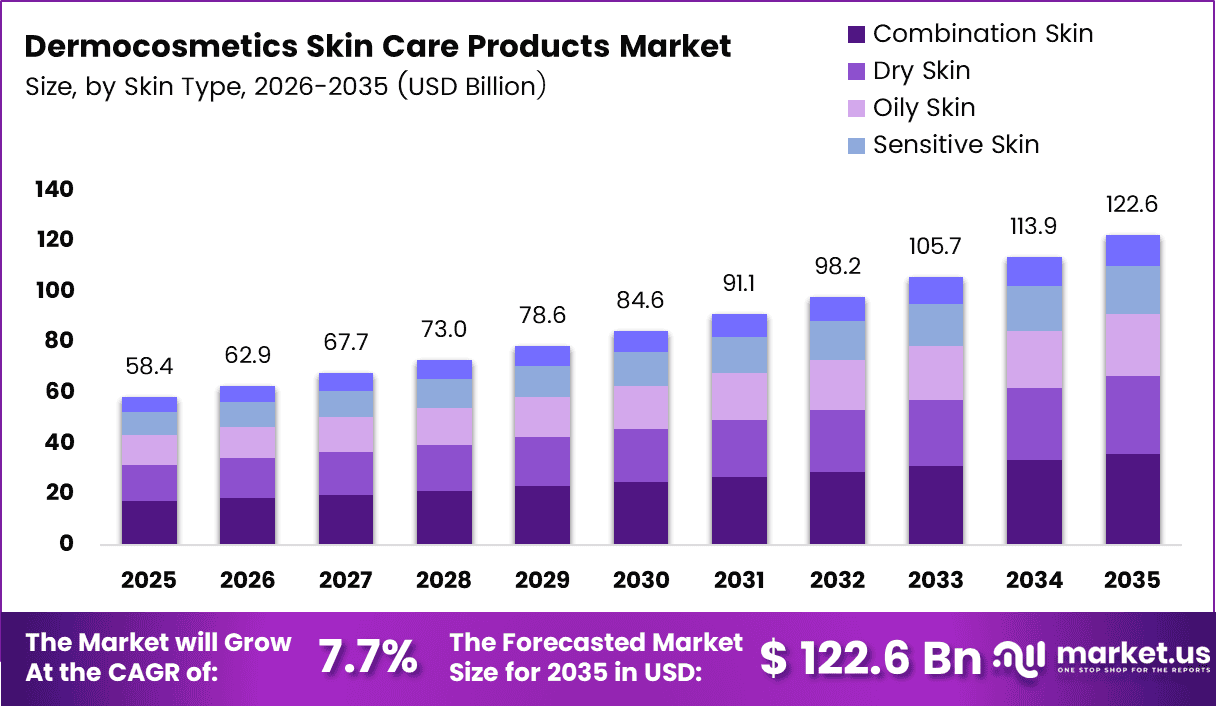
The market has gained significant momentum as consumers increasingly seek scientifically backed skincare solutions. Moreover, rising awareness about skin health and the effectiveness of dermatologist-recommended products drives adoption. These products cater to conditions like acne, eczema, rosacea, and aging while maintaining gentle formulations suitable for sensitive skin types.
Healthcare professionals increasingly recommend dermocosmetics as complementary treatments alongside prescription medications. Consequently, these products have established strong presence in pharmacy and medical channels. The medical endorsement factor differentiates dermocosmetics from traditional cosmetics, building consumer trust and justifying premium pricing in competitive markets.
Government regulations supporting clinical validation and quality standards further strengthen market credibility. Additionally, investment in research and development continues to expand, driving product innovation. Companies are focusing on microbiome-friendly ingredients and personalized formulations that address individual skin concerns more effectively than conventional skincare products.
The sector benefits from growing urbanization and pollution-related skin issues in emerging markets. Furthermore, digital transformation enables AI-driven skin diagnostics and personalized product recommendations. According to Unilever, the global dermocosmetics segment is currently worth €8 billion, representing 24% of the skincare market with growth rates at 10.5%.
Industry forecasts suggest dermocosmetics could represent 38% of skincare sales by 2030. However, market penetration remains limited in certain categories. According to WWD, hair care represents just 5-6% of dermocosmetics versus 20% in beauty, despite hair issues being the second-largest reason consumers visit dermatologists.
Regional variations show distinct growth patterns with Brazil among key markets reporting rapid rises. Additionally, emerging markets demonstrate strong potential as consumers gain access to premium dermatological skincare. The combination of clinical efficacy, professional endorsement, and targeted solutions positions dermocosmetics as a transformative force reshaping the global skincare industry landscape.
Key Takeaways
- Global Dermocosmetics Skin Care Products Market projected to reach USD 122.6 Billion by 2035 from USD 58.4 Billion in 2025
- Market growing at CAGR of 7.7% during forecast period 2026-2035
- Europe dominates market with 43.20% share, valued at USD 25.2 Billion
- Vitamins segment leads active ingredients category with 26.8% market share
- Combination skin type accounts for 29.3% of total market
- Anti-aging application dominates with 33.6% share
- Pharmacy & Drug Stores distribution channel holds 39.1% market position
- Dermocosmetics segment currently represents 24% of global skincare market worth €8 billion
Active Ingredients Analysis
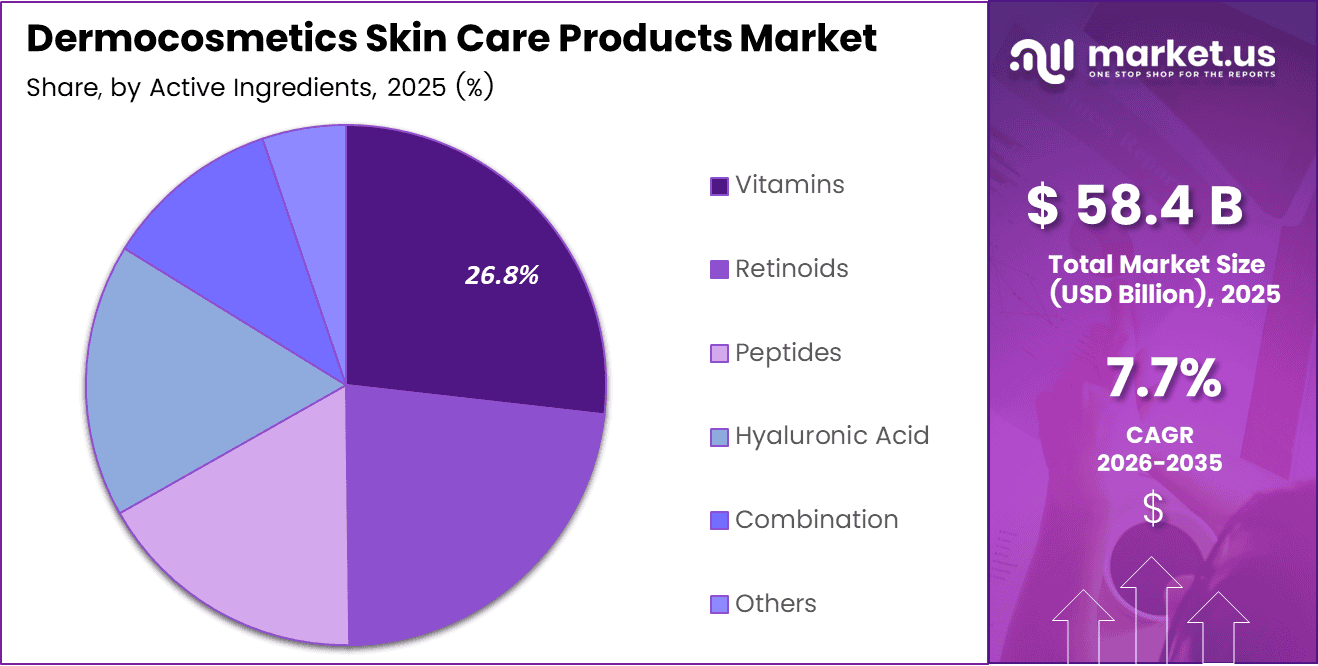
Vitamins dominate with 26.8% due to proven efficacy in skin repair and antioxidant protection.
In 2025, Vitamins held a dominant market position in the Active Ingredients segment of Dermocosmetics Skin Care Products Market, with a 26.8% share. Vitamin-based formulations deliver essential nutrients that support skin barrier function and cellular regeneration. Additionally, vitamins C and E provide powerful antioxidant benefits that combat environmental damage and premature aging effectively.
Retinoids maintain strong market presence as gold-standard ingredients for anti-aging and acne treatment. These vitamin A derivatives stimulate collagen production and accelerate cell turnover. However, their prescription-strength variants require dermatological supervision, reinforcing the medical credibility of dermocosmetic products in treating specific skin concerns professionally.
Peptides represent advanced bioactive ingredients that signal skin cells to produce essential proteins. Consequently, peptide-based products target fine lines, wrinkles, and firmness loss. Their gentle yet effective nature appeals to consumers seeking clinically proven anti-aging solutions without harsh chemical interventions or extensive downtime.
Hyaluronic Acid addresses hydration needs across all skin types with exceptional moisture-binding properties. Moreover, this ingredient plumps skin and reduces visible aging signs.
Combination formulations blend multiple active ingredients for comprehensive skincare benefits. Others include emerging bioactives like niacinamide and ceramides gaining consumer traction rapidly.
Skin Type Analysis
Combination Skin dominates with 29.3% due to widespread prevalence and specific care requirements.
In 2025, Combination Skin held a dominant market position in the Skin Type segment of Dermocosmetics Skin Care Products Market, with a 29.3% share. This skin type presents unique challenges requiring balanced formulations that address both oily and dry areas. Therefore, dermocosmetic brands develop specialized products that normalize sebum production while maintaining adequate hydration levels.
Dry Skin represents a significant consumer segment requiring intensive moisturization and barrier repair solutions. These products contain ceramides, hyaluronic acid, and emollients that prevent moisture loss. Consequently, dermocosmetic formulations offer superior hydration compared to conventional moisturizers, addressing chronic dryness and sensitivity issues effectively through clinically tested ingredients.
Oily Skin demands lightweight, non-comedogenic formulations that control excess sebum without stripping natural oils. Additionally, these products often incorporate salicylic acid and niacinamide for pore refinement. Sensitive Skin requires hypoallergenic, fragrance-free formulations that minimize irritation while delivering therapeutic benefits safely.
Normal Skin seeks maintenance-focused products that preserve skin balance and prevent future concerns. Moreover, consumers with normal skin increasingly adopt dermocosmetics for preventive care. The growing awareness of proactive skincare drives demand across all skin types within this specialized category.
Application Analysis
Anti-aging dominates with 33.6% due to global demographic shifts and prevention-focused consumer behavior.
In 2025, Anti-aging held a dominant market position in the Application segment of Dermocosmetics Skin Care Products Market, with a 33.6% share. This category encompasses moisturizers, serums, and specialized treatments addressing wrinkles, firmness loss, and age spots. Furthermore, aging populations worldwide drive sustained demand for clinically proven anti-aging solutions with visible results.
Skin Brightening products target hyperpigmentation, dark spots, and uneven tone through active ingredients like vitamin C and niacinamide. These formulations include creams, moisturizers, cleansers, and specialized treatments. Consequently, consumers seeking radiant complexions increasingly prefer dermatologically tested brightening products over conventional cosmetics offering unsubstantiated claims.
Hair & Scalp Care addresses dandruff, scalp sensitivity, and hair thinning through medicated shampoos and conditioners. Additionally, specialized treatments target specific conditions requiring dermatological intervention. According to WWD, hair care represents just 5-6% of dermocosmetics versus 20% in beauty, despite being the second-largest reason consumers visit dermatologists.
Baby Care focuses on gentle, hypoallergenic formulations including creams, shampoos, massage oils, and protective products designed for delicate infant skin. These products prioritize safety and mildness with clinically tested ingredients. Moreover, parental demand for dermatologist-recommended baby products drives growth in this specialized segment.
Sun Care provides medical-grade UV protection for adults and babies, complemented by after-sun treatments. These formulations offer superior broad-spectrum protection compared to conventional sunscreens. Therefore, dermatologist endorsement and clinical efficacy drive consumer preference for dermocosmetic sun protection products.
Anti-Stretch Mark products include creams and oils preventing and reducing scarring during pregnancy and weight fluctuations. These specialized formulations contain active ingredients promoting skin elasticity and regeneration. Consequently, expectant mothers and fitness enthusiasts seek clinically validated solutions for stretch mark prevention and treatment.
Lip Care encompasses balms and scrubs addressing dryness and sensitivity with dermatologically tested formulations. These products provide therapeutic hydration and protection for delicate lip skin. Additionally, medicated lip care solutions treat specific conditions like cheilitis and severe chapping effectively.
Others cover emerging applications including body care, intimate hygiene, and specialized treatments expanding dermocosmetic market reach. Innovation in niche categories creates new growth opportunities. Therefore, brands continuously develop targeted solutions addressing previously underserved dermatological needs across diverse consumer segments.
Distribution Channel Analysis
Pharmacy & Drug Stores dominate with 39.1% due to professional credibility and expert consultation availability.
In 2025, Pharmacy & Drug Stores held a dominant market position in the Distribution Channel segment of Dermocosmetics Skin Care Products Market, with a 39.1% share. This channel provides consumers access to trained pharmacists who offer product recommendations and usage guidance. Moreover, the medical setting reinforces dermocosmetic positioning as therapeutic skincare rather than conventional cosmetics.
Supermarkets & Hypermarkets expand dermocosmetic accessibility through mass retail channels offering convenience and competitive pricing. These locations attract mainstream consumers exploring dermatological skincare options. However, limited expert consultation compared to pharmacy channels may impact purchase confidence for consumers seeking professional guidance on specific skin concerns.
Online distribution channels experience rapid growth driven by e-commerce expansion and digital-savvy consumers seeking convenience. Additionally, online platforms provide detailed product information, customer reviews, and virtual consultations. The digital channel enables brands to reach broader audiences while offering personalized recommendations through AI-powered skin analysis tools.
Others include specialty beauty retailers, dermatology clinics, and direct-to-consumer channels gaining momentum. Furthermore, omnichannel strategies combining physical and digital touchpoints enhance consumer experience. The evolving distribution landscape reflects changing shopping behaviors and increasing demand for accessible yet credible dermocosmetic products worldwide.
Key Market Segments
By Active Ingredients
- Vitamins
- Retinoids
- Peptides
- Hyaluronic Acid
- Combination
- Others
By Skin Type
- Combination Skin
- Dry Skin
- Oily Skin
- Sensitive Skin
- Normal Skin
By Application
- Anti-aging
- Moisturizer
- Serum
- Others
- Skin Brightening
- Cream & Moisturizer
- Cleanser
- Others)
- Hair & Scalp Care
- Shampoo
- Conditioner
- Others
- Baby Care
- Cream & Moisturizer
- Shampoo
- Massage Oil
- Others
- Sun Care
- Adult Sun Cream
- Baby Sun Cream
- After Sun
- Others
- Anti-Stretch Mark
- Cream
- Oil
- Lip Care
- Lip Balm
- Lip Scrub
- Others
- Others
By Distribution Channel
- Pharmacy & Drug Stores
- Supermarkets & Hypermarkets
- Online
- Others
Drivers
Rising Prevalence of Dermatological Conditions Drives Clinical Skincare Adoption
Increasing incidence of skin conditions like acne, eczema, rosacea, and dermatitis creates growing demand for clinically validated skincare solutions. Moreover, environmental factors including pollution, UV exposure, and lifestyle stress contribute to rising dermatological concerns. Consequently, consumers actively seek products combining therapeutic efficacy with cosmetic benefits, positioning dermocosmetics as essential healthcare rather than discretionary beauty purchases.
Healthcare professionals increasingly recommend dermocosmetics as complementary or preventive treatments alongside prescription medications. Additionally, consumer trust in dermatologist-endorsed brands strengthens purchasing decisions and brand loyalty. The medical validation differentiates these products from mass-market alternatives, justifying premium pricing. Therefore, professional recommendations significantly influence consumer adoption patterns across diverse demographic segments globally.
Growing awareness of skin barrier health and sensitive skin management drives educated consumer behavior. Furthermore, digital information accessibility enables consumers to research ingredients and formulation science independently. This knowledge empowers informed purchasing decisions favoring scientifically backed products. Consequently, expansion of pharmacy and medical channel distribution provides credible retail environments reinforcing dermocosmetic positioning as trusted skincare solutions.
Restraints
High Product Pricing Limits Market Penetration and Consumer Accessibility
Premium pricing strategies position dermocosmetics significantly above mass-market cosmetic alternatives, limiting accessibility for price-sensitive consumers. Moreover, clinical development, testing, and quality assurance requirements increase production costs substantially. Consequently, many consumers perceive dermocosmetics as luxury products rather than essential skincare, restricting market penetration particularly in emerging economies with lower disposable incomes.
Economic downturns and inflation pressures impact consumer spending on premium skincare products. Additionally, budget-conscious shoppers may prioritize conventional cosmetics offering lower price points despite inferior efficacy. The cost barrier prevents widespread adoption among younger demographics and middle-income segments. Therefore, brands must balance premium positioning with accessibility strategies to expand market reach effectively.
Regulatory complexity and clinical validation requirements across different regions create substantial barriers for market entry and expansion. Furthermore, varying regulatory standards between countries necessitate multiple testing protocols and certifications. These compliance requirements extend product development timelines and increase operational costs. Consequently, smaller brands face challenges competing against established players with resources for navigating complex regulatory landscapes effectively.
Growth Factors
Expanding Demand for Condition-Specific Dermocosmetic Treatments Accelerates Growth
Rapid demand growth for dermocosmetics targeting specific conditions like acne, rosacea, and eczema creates specialized market opportunities. Moreover, consumers increasingly seek targeted solutions rather than generic skincare products. This trend drives product innovation and segmentation within the dermocosmetic category. Consequently, brands develop comprehensive treatment systems addressing multiple aspects of specific dermatological concerns through scientifically formulated product lines.
Expansion of men’s dermocosmetic skincare and gender-neutral formulations opens untapped market segments with significant growth potential. Additionally, changing social attitudes reduce stigma around male grooming and skincare routines. Men increasingly recognize skin health importance, driving demand for clinically effective products. Therefore, brands targeting male consumers and developing inclusive gender-neutral products capture emerging opportunities within expanding demographic markets.
Increasing adoption of dermocosmetics in emerging and urbanizing markets presents substantial growth opportunities. Furthermore, rising disposable incomes and growing middle-class populations in Asia Pacific and Latin America expand consumer bases. Urban pollution and lifestyle factors intensify skin concerns in developing cities. Consequently, product innovation using microbiome-friendly and bioactive ingredients positions brands competitively while addressing evolving consumer preferences for advanced skincare solutions.
Emerging Trends
Hybrid Formulations Combining Therapeutic and Cosmetic Benefits Reshape Market Standards
Surge in hybrid skincare combining cosmetic benefits with therapeutic efficacy represents transformative market evolution. Moreover, consumers increasingly demand products delivering visible results while addressing underlying skin health concerns. This convergence blurs traditional boundaries between cosmetics and pharmaceuticals. Consequently, dermocosmetic brands leverage clinical research to develop multifunctional formulations satisfying both aesthetic and medical skincare requirements effectively.
Growing popularity of minimalist, fragrance-free, and hypoallergenic formulations reflects consumer preference for clean, safe ingredients. Additionally, transparency regarding formulation composition builds trust among ingredient-conscious consumers. The minimalist trend emphasizes essential actives without unnecessary additives or potential irritants. Therefore, brands reformulate existing products and develop new lines emphasizing purity, simplicity, and dermatological safety standards.
Integration of AI-driven skin diagnostics with personalized dermocosmetic regimens enables customized skincare solutions. Furthermore, digital technologies analyze individual skin characteristics and recommend targeted product combinations. This personalization enhances treatment efficacy and consumer satisfaction significantly. Consequently, rising preference for sustainable, dermatologically tested clean-label products drives brands toward eco-friendly packaging, ethical sourcing, and transparent manufacturing practices meeting evolving consumer values.
Regional Analysis
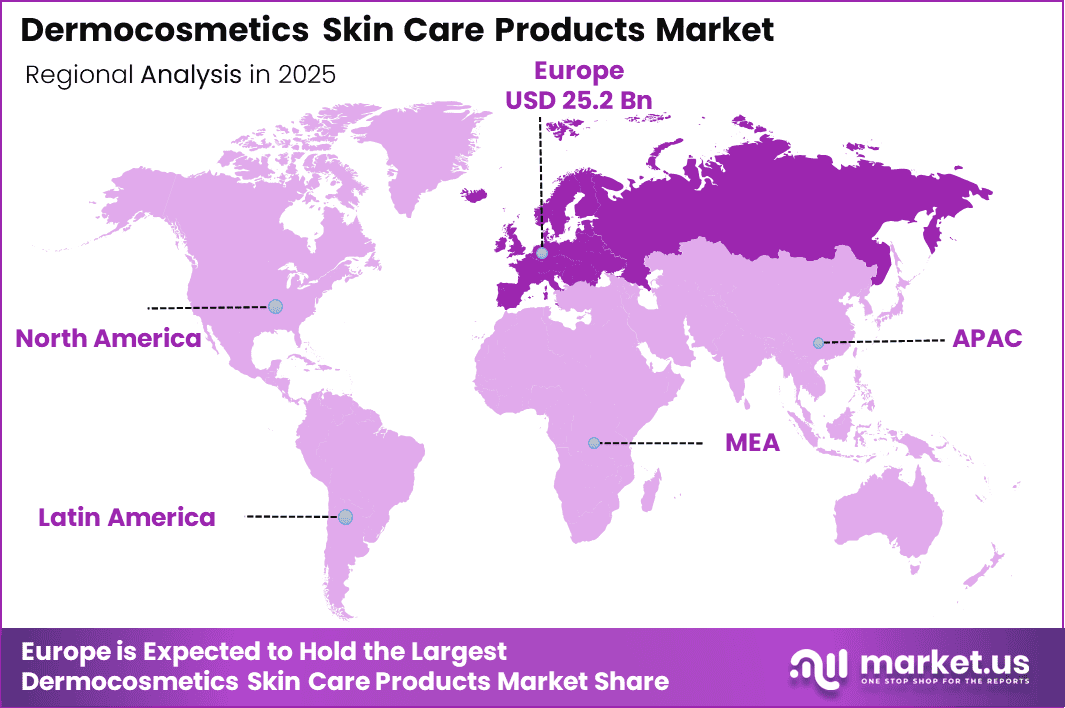
Europe Dominates the Dermocosmetics Skin Care Products Market with a Market Share of 43.20%, Valued at USD 25.2 Billion
Europe maintains market leadership with a 43.20% share valued at USD 25.2 Billion through strong pharmaceutical infrastructure and established dermocosmetic heritage. Additionally, stringent quality regulations and clinical validation requirements reinforce consumer confidence in European brands. Countries like France and Germany house major dermocosmetic manufacturers with extensive research capabilities. Therefore, European consumers demonstrate high awareness and preference for dermatologically tested products, supported by healthcare professionals recommending these solutions routinely.
North America Dermocosmetics Skin Care Products Market Trends
North America exhibits robust growth driven by increasing dermatological consultations and professional skincare recommendations. Moreover, rising skin cancer awareness promotes sun protection and preventive skincare adoption. The region benefits from advanced retail infrastructure combining pharmacy channels with digital platforms. Consequently, American consumers actively seek clinically proven solutions addressing aging, acne, and environmental damage concerns.
Asia Pacific Dermocosmetics Skin Care Products Market Trends
Asia Pacific demonstrates fastest growth potential fueled by urbanization, pollution, and expanding middle-class populations. Additionally, countries like China, Japan, and South Korea show strong consumer interest in innovative skincare technologies. K-beauty influence drives demand for dermatologist-developed formulations. Therefore, increasing disposable incomes and digital commerce expansion facilitate market penetration across diverse Southeast Asian markets rapidly.
Latin America Dermocosmetics Skin Care Products Market Trends
Latin America represents emerging opportunity with Brazil leading regional growth in dermocosmetic adoption. Furthermore, tropical climates intensify sun protection and skin hydration needs. However, price sensitivity requires brands to balance premium positioning with accessibility. Consequently, pharmacy channel expansion and localized product development support market penetration in this promising region.
Middle East & Africa Dermocosmetics Skin Care Products Market Trends
Middle East and Africa show growing interest in premium skincare driven by affluent Gulf markets and South African beauty consumers. Additionally, harsh climatic conditions create specific dermatological needs. Limited healthcare infrastructure in certain areas restricts professional recommendations. Therefore, education initiatives and pharmacy channel development remain critical for expanding dermocosmetic awareness and adoption across this diverse region.
Key Regions and Countries
North America
- US
- Canada
Europe
- Germany
- France
- The UK
- Spain
- Italy
- Rest of Europe
Asia Pacific
- China
- Japan
- South Korea
- India
- Australia
- Rest of APAC
Latin America
- Brazil
- Mexico
- Rest of Latin America
Middle East & Africa
- GCC
- South Africa
- Rest of MEA
Key Company Insights
Procter & Gamble maintains significant dermocosmetic presence through brands like Olay Regenerist and SK-II, combining mass-market reach with premium positioning. The company leverages extensive research capabilities to develop scientifically validated formulations addressing diverse skin concerns. Moreover, P&G’s distribution network ensures global accessibility while maintaining brand credibility. Their innovation pipeline focuses on peptide technology and sustainable packaging solutions meeting evolving consumer expectations effectively.
L’Oréal Groupe dominates through comprehensive dermocosmetic portfolio including La Roche-Posay, Vichy, and CeraVe brands with strong pharmacy presence. Additionally, the company’s December 2024 acquisition of Korean dermatologist-founded brand Dr.G strengthens its skincare capabilities. L’Oréal invests heavily in clinical research and personalized skincare technologies. Therefore, their strategic acquisitions and product innovations position them competitively across multiple price segments globally.
Unilever expands dermocosmetic presence through Dove’s new facial range targeting the fast-growing sector. The company recognizes that while 18% of Brazilian consumers use facial skincare, engagement remains low at 50% due to routine complexity. Consequently, Unilever develops simplified yet effective formulations addressing barrier concerns. Their focus on accessible dermocosmetics aims to capture mainstream consumers transitioning from conventional cosmetics to clinically backed solutions.
Johnson & Johnson Services, Inc. leverages pharmaceutical expertise through Neutrogena and Aveeno brands offering dermatologist-recommended formulations. Additionally, the company emphasizes clinical testing and safety standards across product lines. Their trusted reputation in healthcare translates effectively into consumer confidence for dermocosmetic purchases. Therefore, J&J maintains strong pharmacy channel relationships while expanding digital commerce capabilities to reach evolving consumer shopping preferences efficiently.
Key players
- Procter & Gamble
- L’Oréal Groupe
- Unilever
- Johnson & Johnson Services, Inc.
- Shiseido Co., Limited
- Amorepacific
- Beiersdorf
- Kanebo Cosmetics Inc.
- Avon Products, Inc.
- Lotus Herbals Pvt. Ltd.
- VLCC Health Care Limited
- Himalaya Global Holdings Ltd.
Recent Developments
- December 2024 – L’Oréal Groupe acquired Korean skincare brand Dr.G, a dermatologist-founded company joining the Group’s Consumer Products Division. This strategic acquisition bolsters L’Oréal’s dermocosmetic portfolio and positions Dr.G for international expansion, strengthening the company’s presence in the rapidly growing K-beauty and clinical skincare segments globally.
- September 2024 – Global private equity healthcare specialist ARCHIMED acquired Group Laboratoire Rivadis, a leading player in baby and elderly skincare products. This acquisition further expands ARCHIMED’s presence in the Consumer Health sector, demonstrating investor confidence in specialized dermocosmetic segments targeting vulnerable populations requiring gentle, clinically tested formulations.
Report Scope
Report Features Description Market Value (2025) USD 58.4 Billion Forecast Revenue (2035) USD 122.6 Billion CAGR (2026-2035) 7.7% Base Year for Estimation 2025 Historic Period 2020-2024 Forecast Period 2026-2035 Report Coverage Revenue Forecast, Market Dynamics, Competitive Landscape, Recent Developments Segments Covered By Active Ingredients (Vitamins, Retinoids, Peptides, Hyaluronic Acid, Combination, Others), By Skin Type (Combination Skin, Dry Skin, Oily Skin, Sensitive Skin, Normal Skin), By Application (Anti-aging, Skin Brightening, Hair & Scalp Care, Baby Care, Sun Care, Anti-Stretch Mark, Lip Care, Others), By Distribution Channel (Pharmacy & Drug Stores, Supermarkets & Hypermarkets, Online, Others) Regional Analysis North America (US and Canada), Europe (Germany, France, The UK, Spain, Italy, and Rest of Europe), Asia Pacific (China, Japan, South Korea, India, Australia, and Rest of APAC), Latin America (Brazil, Mexico, and Rest of Latin America), Middle East & Africa (GCC, South Africa, and Rest of MEA) Competitive Landscape Procter & Gamble, L’Oréal Groupe, Unilever, Johnson & Johnson Services, Inc., Shiseido Co., Limited, Amorepacific, Beiersdorf, Kanebo Cosmetics Inc., Avon Products, Inc., Lotus Herbals Pvt. Ltd., VLCC Health Care Limited, Himalaya Global Holdings Ltd. Customization Scope Customization for segments, region/country-level will be provided. Moreover, additional customization can be done based on the requirements. Purchase Options We have three licenses to opt for: Single User License, Multi-User License (Up to 5 Users), Corporate Use License (Unlimited User and Printable PDF)  Dermocosmetics Skin Care Products MarketPublished date: Feb 2026add_shopping_cartBuy Now get_appDownload Sample
 -
-
- Procter & Gamble
- L'Oréal Groupe
- Unilever
- Johnson & Johnson Services, Inc.
- Shiseido Co., Limited
- Amorepacific
- Beiersdorf
- Kanebo Cosmetics Inc.
- Avon Products, Inc.
- Lotus Herbals Pvt. Ltd.
- VLCC Health Care Limited
- Himalaya Global Holdings Ltd.
Our Clients

- 177420
- Feb 2026






