


Global Coolant Monitoring Sensors Market Size, Share and Analysis By Parameter (Flow, Temperature, Pressure, Conductivity or Other), By Technology (MEMS, Ultrasonic, Optical, Other), By Integration Level (Standalone Probes, Inline Modules, Integrated Coolant Units), By End User (Data Centers, Industrial Cooling, Battery Cooling, Others), By Regional Analysis, Global Trends and Opportunity, Future Outlook By 2025-2035
- Published date: March 2026
- Report ID: 181662
- Number of Pages: 323
- Format:
-
keyboard_arrow_up
Quick Navigation
Report Overview
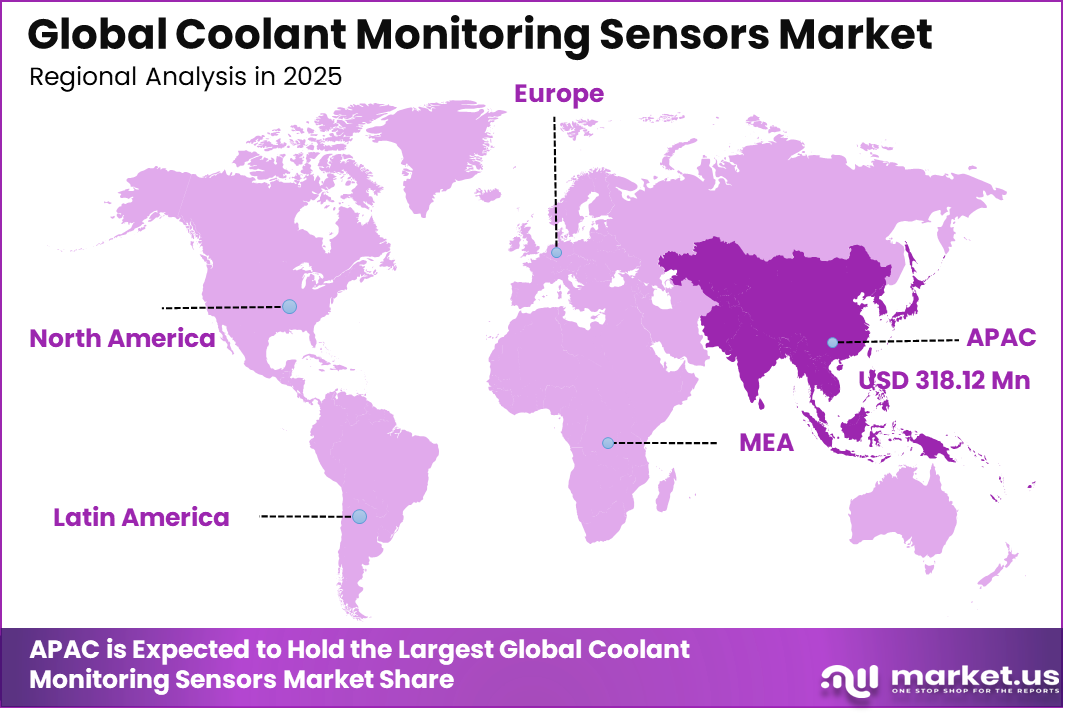
The Global Coolant Monitoring Sensors Market size is expected to be worth around USD 3,501.5 million by 2035, from USD 850.6 million in 2025, growing at a CAGR of 15.2% during the forecast period from 2025 to 2035. North America held a dominant market position, capturing more than a 37.4% share, holding USD 318.12 million in revenue.
The coolant monitoring sensors market refers to technologies that measure and track key parameters such as temperature, flow rate, pressure, and fluid levels within cooling systems. These sensors are widely used in automotive engines, industrial machinery, HVAC systems, and data center cooling infrastructure to ensure optimal thermal performance and prevent overheating or system failure.
Coolant monitoring sensors provide real-time data that helps operators maintain system stability, improve efficiency, and reduce maintenance risks. The market is gaining importance as industries increasingly rely on advanced cooling systems to support high-performance equipment and digital infrastructure. Cooling systems are critical in environments such as manufacturing plants and data centers, where even minor temperature fluctuations can impact performance.
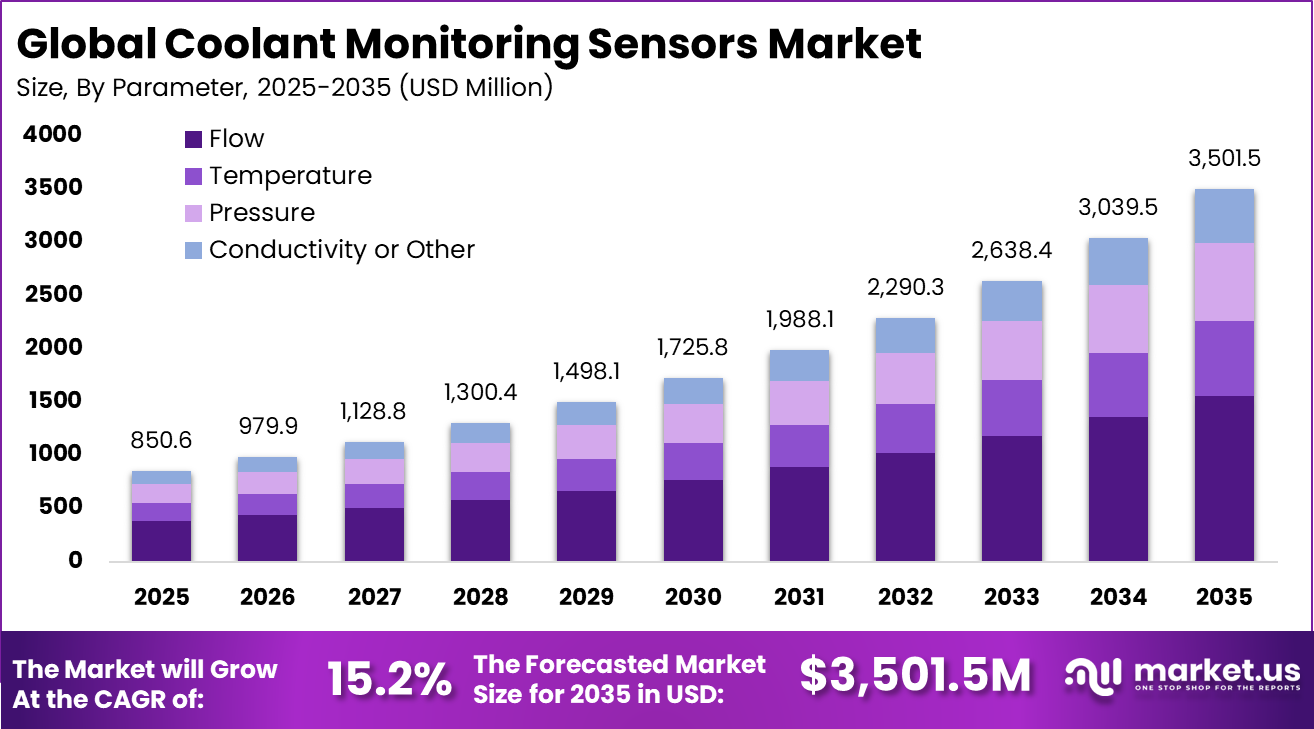
Demand for cooling flow sensors continues to rise as cooling networks become more complex across industries. Data centers and server farms require constant monitoring because thermal problems contribute to over 80% of potential downtime risks. Real time sensor data helps operators respond quickly, and many facilities report that such monitoring reduces unexpected system shutdowns by roughly 25%.
For instance, in March 2026, Infineon Technologies released PSoC-based coolant monitoring ICs that combine pressure, temperature, and level sensing in a single chip. Aimed at space-constrained applications like aerospace, these chips reduce system complexity while maintaining high reliability in extreme thermal conditions.
Key Takeaway
- In 2025, the Flow segment led the Global Coolant Monitoring Sensors Market, accounting for 44.6% of total share.
- In 2025, MEMS technology dominated with a 53.2% market share.
- In 2025, Standalone Probes represented the primary product category, capturing 56.4% of overall demand.
- In 2025, Data Centers emerged as the leading application segment with a 46.5% share.
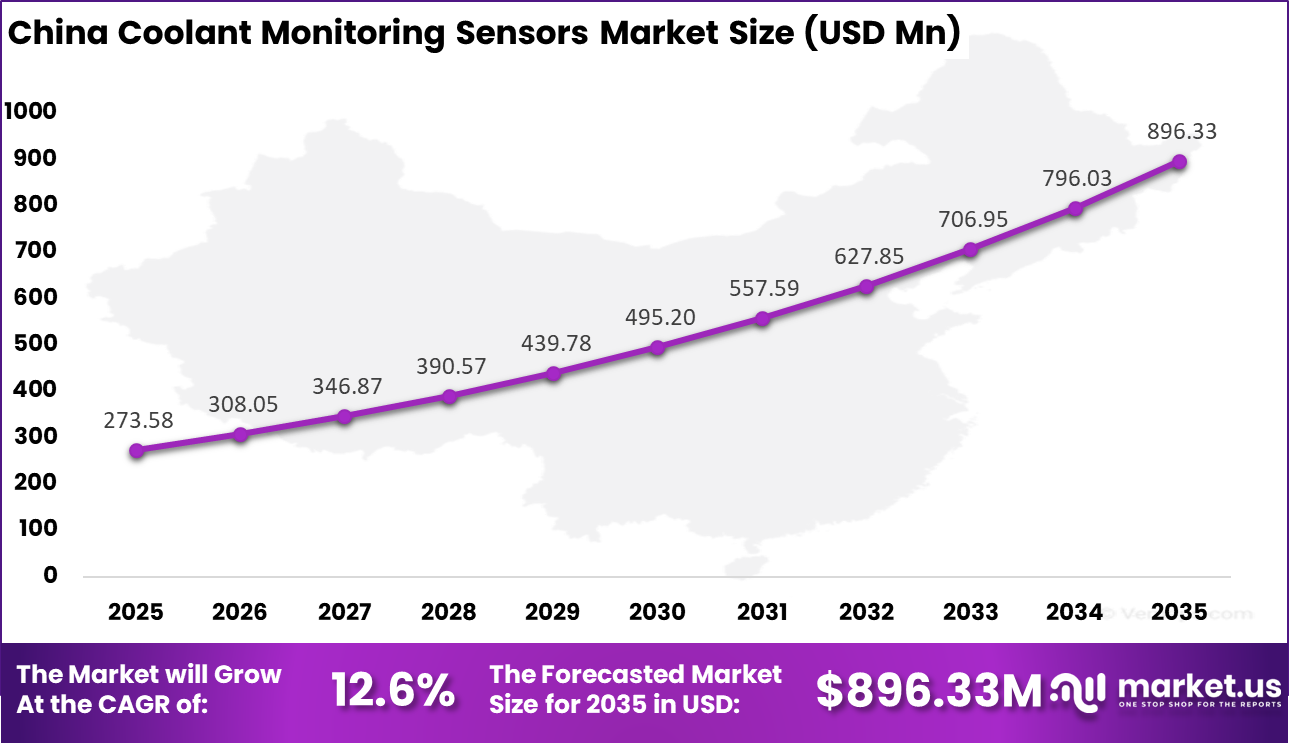
- In 2025, the China Coolant Monitoring Sensors Market reached USD 273.58 million and recorded a growth rate of 12.6%.
- In 2025, Asia Pacific maintained regional leadership, securing more than 37.4% of the Global Coolant Monitoring Sensors Market.
Role of Generative AI
Generative AI is transforming coolant monitoring by analyzing large volumes of sensor data to build predictive maintenance models. These systems identify abnormal patterns and forecast equipment failures early. Studies indicate AI-driven monitoring improves detection accuracy by about 25% compared with traditional analytical methods.
Generative AI also accelerates the design and testing of advanced coolant sensors through digital simulations. Engineers use AI-generated models to test materials and structures quickly. Early industry deployments indicate that this approach shortens development cycles and enables roughly 30% faster prototyping for specialized sensors.
By Parameter
Flow monitoring accounts for 44.6% of the market, reflecting its critical role in maintaining effective coolant circulation within systems. Accurate flow measurement ensures that cooling fluids are distributed evenly across components, preventing overheating and equipment failure. Industries rely on flow sensors to detect blockages, leaks, or irregular flow patterns that may impact system performance.
The importance of flow monitoring has increased with the growth of high density computing and industrial automation systems. Continuous monitoring allows operators to optimize coolant usage and improve system efficiency. As cooling requirements become more complex, flow sensors remain a key component in thermal management systems.
For Instance, in January 2026, Sensata Technologies rolled out upgraded flow detection tools tailored for coolant systems. These sensors catch shifts in liquid movement right away, helping teams avoid clogs before they turn into big headaches. It’s a practical step that fits right into busy operations, making maintenance smoother without extra hassle.
By Technology
MEMS technology represents 53.2% of the market, highlighting its widespread adoption in compact and high precision sensing applications. MEMS based sensors offer advantages such as small size, low power consumption, and high sensitivity, making them suitable for integration into advanced cooling systems. These sensors provide accurate real time data that supports efficient coolant management.
The adoption of MEMS technology is also driven by its reliability and cost efficiency in large scale deployments. Industries increasingly prefer MEMS sensors for applications requiring precise monitoring in constrained environments. As electronic systems become more compact and performance intensive, MEMS based coolant sensors continue to gain prominence.
For instance, in March 2026, TE Connectivity introduced compact MEMS-based sensors for precise coolant tracking. Their small footprint and sharp accuracy make them ideal for cramped cooling setups, cutting down on power draw while holding up in rough conditions. This move shows they’re listening to engineers’ needs for tougher, smarter tech.
By Integration Level
Standalone probes account for 56.4% of the market, reflecting their flexibility and ease of deployment across various cooling systems. These probes can be installed independently within pipelines or cooling channels to monitor coolant conditions directly. Their modular design allows integration into existing systems without requiring significant infrastructure changes.
Standalone probes are widely used in industrial and data center environments where real time monitoring is essential. They provide direct measurement capabilities and can be easily replaced or upgraded as needed. As organizations prioritize system reliability and maintenance efficiency, standalone probes remain a preferred integration option.
For Instance, in December 2025, Infineon Technologies released rugged standalone probes that thrive in standalone mode. They deliver spot-on coolant data independently, making them a favorite for quick installs in diverse setups. This keeps things flexible for teams juggling multiple priorities.
By End User
Data centers represent 46.5% of market adoption due to the increasing demand for efficient cooling solutions in high performance computing environments. Data centers generate significant heat from servers and networking equipment, requiring continuous and reliable cooling systems. Coolant monitoring sensors help maintain optimal temperature conditions and prevent equipment overheating.
Operators use these sensors to monitor coolant flow and detect potential issues that may disrupt cooling performance. As data center capacity expands to support cloud computing and digital services, the need for advanced thermal management solutions continues to grow. This has strengthened the adoption of coolant monitoring sensors within the sector.
For Instance, in March 2026, Emerson Electric announced enhanced monitoring probes for data center chillers. These standalone units provide real-time alerts on coolant issues, helping staff act fast to maintain uptime. It’s a straightforward win for facilities running 24/7 operations.
By Region
Asia Pacific holds 37.4% of the market share due to rapid industrialization, expansion of data center infrastructure, and increasing adoption of advanced manufacturing technologies. Countries in the region are investing in efficient cooling systems to support industrial operations and digital infrastructure growth. The presence of large scale manufacturing hubs further supports market demand.
For instance, in December 2024, Fine Tek ramped up coolant monitoring sensors to meet surging liquid cooling demand for Nvidia AI servers in Asia Pacific data centers. Shipments spiked as production scaled, bolstering regional dominance through precise flow and leak detection for reliable high-density computing.
Within Asia Pacific, China contributes USD 273.58 million with a growth rate of 12.6%. The country’s expanding data center industry and strong industrial base have increased the demand for coolant monitoring solutions. Continued investment in digital infrastructure and industrial automation is expected to sustain market growth across the region.
For instance, in January 2026, Shanghai-based sensor maker HollySys ramped up coolant monitoring production for data centers, leveraging China’s data center boom and industrial policies. Their sensors deliver precise leak detection and flow tracking, fueling dominance through cost-effective scaling and integration with local AI server builds.
Growth Factors
One of the primary growth factors driving the coolant monitoring sensors market is the increasing adoption of advanced cooling systems across industries. High-performance computing, industrial automation, and electric vehicles generate significant heat, requiring precise thermal management. Sensors provide accurate monitoring of coolant behavior, ensuring efficient heat dissipation and system reliability.
Another growth factor is the rising demand for predictive maintenance and real-time monitoring. Organizations are adopting smart sensor technologies to detect early signs of system failure, such as abnormal temperature or coolant flow variations. These capabilities help reduce downtime, lower maintenance costs, and extend equipment lifespan.
Emerging Trends
One emerging trend in the coolant monitoring sensors market is the integration of IoT-enabled and smart sensors. These devices allow remote monitoring and data analytics, enabling operators to track coolant performance across distributed systems. IoT integration supports predictive maintenance by providing continuous data streams and performance insights.
Another trend is the growing use of coolant monitoring solutions in data centers and high-density computing environments. With increasing heat generation from AI workloads and cloud infrastructure, advanced cooling systems require precise monitoring. Sensors are being deployed to track flow, pressure, and temperature to maintain energy-efficient cooling operations.
Key Market Segments
By Parameter
- Flow
- Temperature
- Pressure
- Conductivity or Other
By Technology
- MEMS
- Ultrasonic
- Optical
- Other
By Integration Level
- Standalone Probes
- Inline Modules
- Integrated Coolant Units
By End User
- Data Centers
- Industrial Cooling
- Battery Cooling
- Others
Key Regions and Countries
North America
- US
- Canada
Europe
- Germany
- France
- The UK
- Spain
- Italy
- Russia
- Netherlands
- Rest of Europe
Asia Pacific
- China
- Japan
- South Korea
- India
- Australia
- Singapore
- Thailand
- Vietnam
- Rest of APAC
Latin America
- Brazil
- Mexico
- Rest of Latin America
Middle East & Africa
- South Africa
- Saudi Arabia
- UAE
- Rest of MEA
Drivers
Rising Heat Loads in Data Centers
Growing digital infrastructure is increasing the need for reliable cooling systems across modern data centers. Large computing clusters, cloud services, and artificial intelligence workloads generate significant heat, which must be carefully controlled to prevent equipment failure. Monitoring coolant behavior allows operators to maintain safe temperatures and ensure continuous system performance.
Industry organizations such as the International Energy Agency note that electricity demand from global data centers continues to increase as digital services expand. As facilities manage heavier computing loads, cooling networks become more complex. Coolant monitoring sensors help engineers detect circulation issues early and maintain stable thermal conditions in critical computing environments.
For instance, in January 2026, Sensata rolled out a new line of precision sensors tailored for data center cooling racks last month. These units track coolant flow and temperature in high-density server setups, helping operators catch heat spikes early. The design focuses on quick response times, which fits right into the push for nonstop data processing without overheating risks. Teams on the ground say it eases daily checks in busy facilities.
Restraint
High Setup Costs
The adoption of coolant monitoring sensors often involves additional investment in monitoring hardware, system calibration, and integration with existing cooling infrastructure. Industrial facilities may need specialized installation procedures, which increases the overall cost of deploying advanced monitoring systems.
Many smaller facilities hesitate to upgrade their cooling infrastructure because of the upfront expense required for sensor installation and system adjustments. Budget limitations and maintenance planning sometimes delay implementation, especially in operations that already run on traditional cooling equipment without digital monitoring capabilities.
For instance, in February 2026, TE Connectivity shared details on a cost-optimized sensor kit aimed at easing upfront expenses for industrial cooling installs. By simplifying wiring and calibration, it targets plants watching their budgets closely. Feedback from early users highlights how the modular approach spreads out the investment, making it doable for mid-sized operations without skimping on reliability.
Opportunities
Expansion of Electric Vehicle Thermal Systems
The rapid development of electric vehicles is creating new opportunities for coolant monitoring technologies. Battery packs, electric motors, and power electronics require stable temperature control to maintain performance and safety. Advanced coolant monitoring systems help maintain balanced cooling across these components.
As governments encourage cleaner transportation and electric vehicle production continues to rise, automotive manufacturers are investing in advanced thermal management solutions. Coolant monitoring sensors help maintain consistent operating conditions inside battery systems, supporting longer battery life and reliable vehicle performance.
For instance, in March 2026, Bosch Sensortec launched compact sensors for EV battery thermal management just last week. These track coolant in electric drivetrains, ensuring safe temperatures during fast charges. Auto makers praise the small size for tight battery packs, supporting longer drives as more vehicles go electric on roads everywhere.
Challenges
High Installation Complexity
Integrating coolant monitoring sensors into existing cooling networks can be technically demanding. Industrial cooling systems often contain complex piping structures, pumps, and control systems that require careful modification during installation. This complexity increases the time and effort required for proper sensor deployment.
Maintenance teams must also ensure that new monitoring devices operate correctly within established cooling frameworks. Calibration, system compatibility, and safe installation procedures require technical expertise. These challenges can slow adoption in facilities where cooling systems were originally designed without digital monitoring capabilities.
For instance, in January 2026, Analog Devices released a plug-and-play sensor module to tackle tricky installs in complex machinery setups. It reduces steps for linking into pipes and controls, with built-in diagnostics. Technicians report fewer errors during retrofits, speeding up the process in older plants where space and access prove tough.
Key Players Analysis
The Coolant Monitoring Sensors Market is supported by global sensor manufacturers and industrial technology providers that deliver advanced sensing solutions for temperature, pressure, and fluid monitoring. Sensata Technologies, Honeywell International, TE Connectivity, and Amphenol Corporation provide high precision sensors used in automotive, industrial machinery, and energy systems.
Semiconductor and electronics companies also play a key role in developing compact and intelligent sensing technologies. Infineon Technologies, Analog Devices, and Bosch Sensortec focus on integrating sensor functionality with embedded processing and connectivity features. These technologies support smart vehicle systems, industrial automation, and IoT based monitoring applications.
Industrial automation and energy management companies further strengthen the competitive landscape. Emerson Electric, Siemens AG, and ABB deliver integrated monitoring systems that combine coolant sensors with control and automation platforms. These systems are widely used in manufacturing, power generation, and heavy equipment operations.
Top Key Players in the Market
- Sensata Technologies
- Honeywell International
- TE Connectivity
- Amphenol Corporation
- Bosch Sensortec
- Infineon Technologies
- Analog Devices
- Emerson Electric
- Siemens AG
- ABB Group
- Others
Recent Developments
- In January 2026, Sensata Technologies launched its Insight-Certified coolant sensor line with cryptographic data signatures for tamper-proof monitoring. These sensors target data center cooling systems, ensuring precise temperature and flow readings even in harsh environments. The move positions Sensata as a leader in secure, industrial-grade coolant monitoring solutions.
- In February 2026, Amphenol Corporation unveiled AquaGuard coolant sensors featuring corrosion-resistant coatings for marine applications. These sensors monitor coolant pH levels and conductivity in real-time, preventing engine failures in harsh saltwater environments. Amphenol targets shipbuilders with this durable new offering.
Report Scope
Report Features Description Market Value (2025) USD 850.6 Mn Forecast Revenue (2035) USD 3,501.5 Mn CAGR (2026-2035) 15.2% Base Year for Estimation 2025 Historic Period 2020-2024 Forecast Period 2026-2035 Report Coverage Revenue forecast, AI impact on Market trends, Share Insights, Company ranking, competitive landscape, Recent Developments, Market Dynamics and Emerging Trends Segments Covered By Parameter (Flow, Temperature, Pressure, Conductivity or Other), By Technology (MEMS, Ultrasonic, Optical, Other), By Integration Level (Standalone Probes, Inline Modules, Integrated Coolant Units), By End User (Data Centers, Industrial Cooling, Battery Cooling, Others) Regional Analysis North America – US, Canada; Europe – Germany, France, The UK, Spain, Italy, Russia, Netherlands, Rest of Europe; Asia Pacific – China, Japan, South Korea, India, New Zealand, Singapore, Thailand, Vietnam, Rest of Latin America; Latin America – Brazil, Mexico, Rest of Latin America; Middle East & Africa – South Africa, Saudi Arabia, UAE, Rest of MEA Competitive Landscape Sensata Technologies, Honeywell International, Connectivity, Amphenol Corporation, Bosch Sensortec, Infineon Technologies, Analog Devices, Emerson Electric, Siemens AG, ABB Group, Others Customization Scope Customization for segments, region/country-level will be provided. Moreover, additional customization can be done based on the requirements. Purchase Options We have three license to opt for: Single User License, Multi-User License (Up to 5 Users), Corporate Use License (Unlimited User and Printable PDF)  Coolant Monitoring Sensors MarketPublished date: March 2026add_shopping_cartBuy Now get_appDownload Sample
 -
-
- Sensata Technologies
- Honeywell International
- TE Connectivity
- Amphenol Corporation
- Bosch Sensortec
- Infineon Technologies
- Analog Devices
- Emerson Electric
- Siemens AG
- ABB Group
- Others
Our Clients

- 181662
- March 2026






