Market Overview
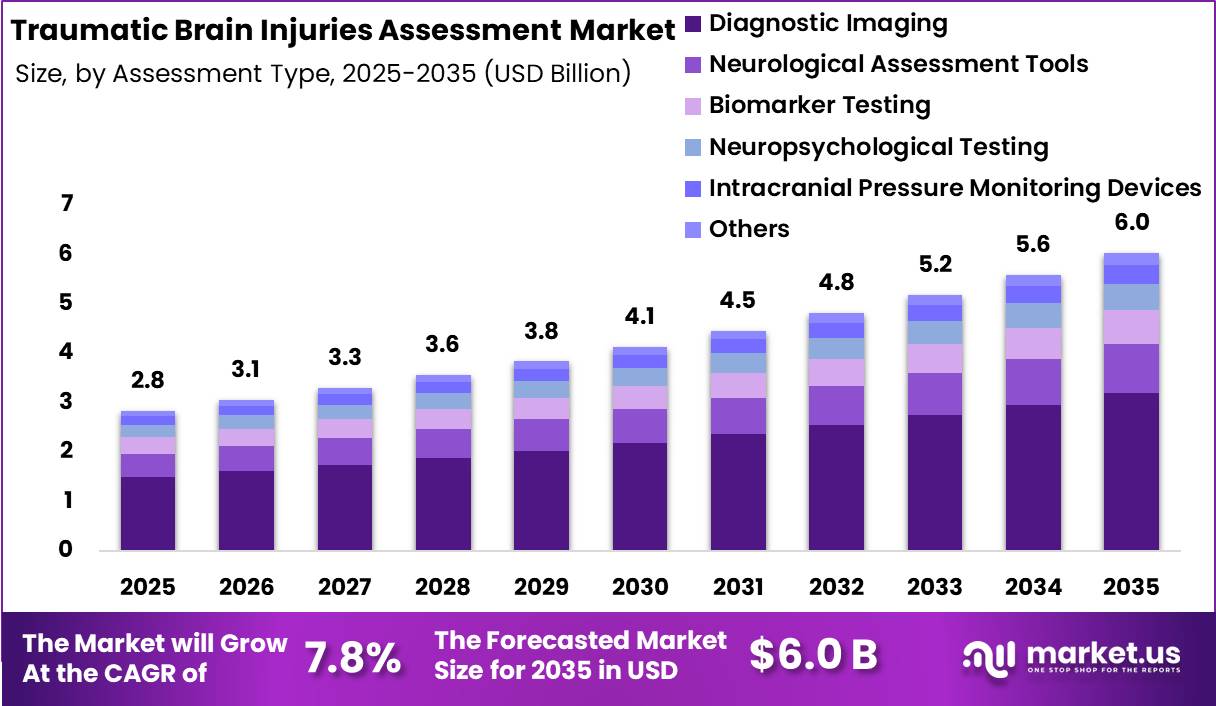
Global Traumatic Brain Injuries Assessment Market size is expected to be worth around US$ 6.0 Billion by 2035 from US$ 2.8 Billion in 2025, growing at a CAGR of 7.8% during the forecast period from 2026 to 2035. In 2025, North America led the market, achieving over 48.26% share with a revenue of US$ 1.37 Billion.
The increasing global burden of traumatic brain injuries (TBI) is accelerating the adoption of advanced assessment solutions, including neuroimaging technologies, cognitive evaluation tools, biomarker-based diagnostics, and digital assessment platforms.
Traumatic brain injuries remain a major public health concern, requiring rapid diagnosis and continuous monitoring to reduce complications and improve patient outcomes. According to the U.S. Centers for Disease Control and Prevention (CDC), traumatic brain injury contributes significantly to hospitalization and mortality rates in the United States.
Recent CDC data indicates that approximately 214,110 TBI-related hospitalizations were recorded in 2020, while 68,663 TBI-related deaths occurred in 2023. This represents more than 586 TBI-related hospitalizations and around 190 TBI-related deaths every day, highlighting the need for efficient assessment and early intervention technologies.
The growing focus on emergency care, sports-related concussion management, military healthcare, and elderly fall prevention is increasing demand for accurate TBI evaluation methods. Healthcare providers are adopting tools that support neurological examinations, computed tomography (CT), magnetic resonance imaging (MRI), and emerging blood-based biomarker assessments to improve diagnosis accuracy.
Government initiatives and clinical guidelines emphasizing early detection and improved patient management are further supporting market development. The CDC highlights that mild TBI and concussion cases require appropriate medical evaluation because symptoms can affect thinking, learning, emotions, and sleep patterns.
Additionally, increasing investments in neurological research, artificial intelligence-assisted imaging analysis, and portable diagnostic technologies are expected to create new opportunities for TBI assessment solutions. Growing awareness among healthcare professionals and patients about long-term neurological impacts will continue to strengthen demand for innovative assessment platforms worldwide.
Key Takeaways
- Market Size : Traumatic Brain Injuries Assessment Market size is expected to be worth around US$ 6.0 Billion by 2035 from US$ 2.8 Billion in 2025.
- Market Share : The market is growing at a CAGR of 7.8% during the forecast period from 2026 to 2035.
- Assessment Type Analysis : The Diagnostic Imaging segment dominated the Traumatic Brain Injuries Assessment Market in 2025, accounting for 52.9% market share.
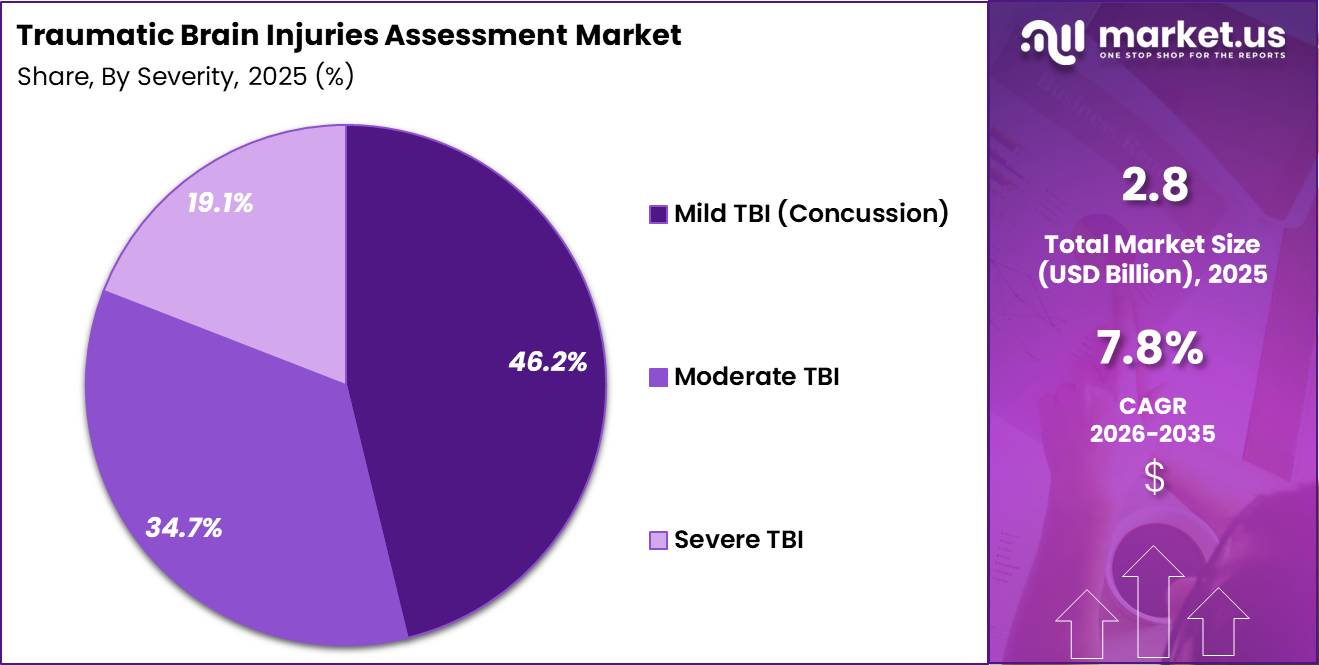
- Severity Analysis : The Mild TBI (Concussion) segment dominated the Traumatic Brain Injuries Assessment Market in 2025, capturing 46.2% market share.
- End User Analysis : The Hospitals segment dominated the Traumatic Brain Injuries Assessment Market in 2025, accounting for 59.4% market share.
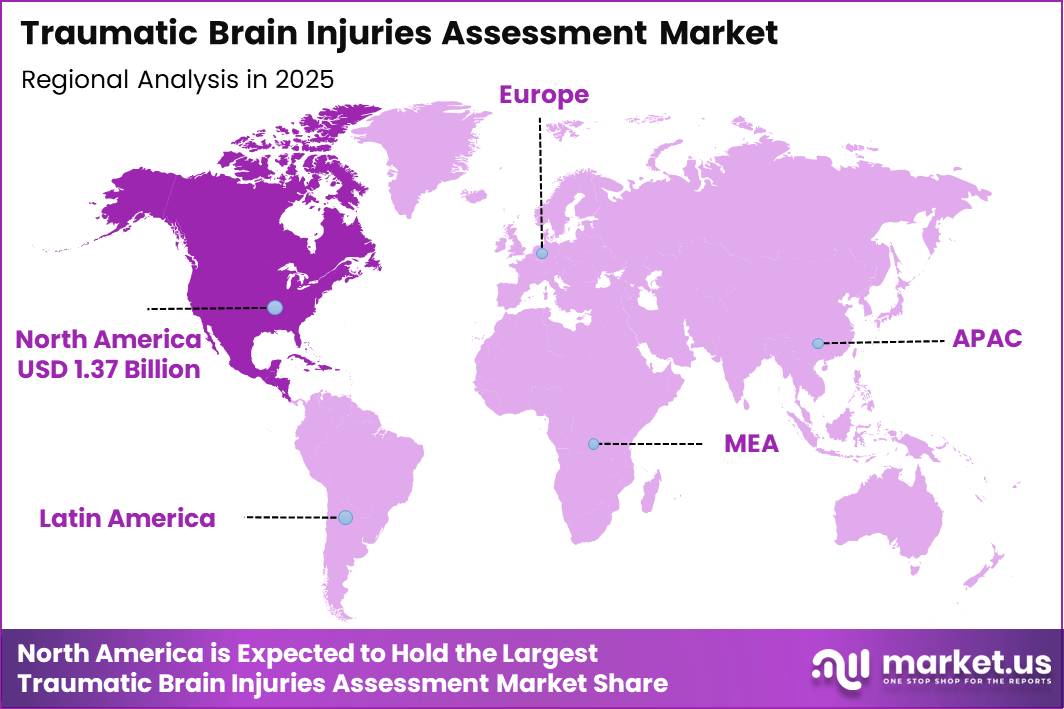
- Regional Analysis : In 2025, North America led the market, achieving over 48.26% share with a revenue of US$ 1.37 Billion.
Assessment Type Analysis
The Diagnostic Imaging segment dominated the Traumatic Brain Injuries Assessment Market in 2025, accounting for 52.9% market share. The segment’s leading position is supported by the widespread use of CT and MRI technologies for identifying brain abnormalities such as bleeding, swelling, and structural damage after traumatic injuries. CT remains a key imaging method in emergency settings due to its rapid availability and ability to detect critical brain injuries requiring immediate intervention.
Other assessment types, including Neurological Assessment Tools, Biomarker Testing, Neuropsychological Testing, Intracranial Pressure Monitoring Devices, and Others, are gaining importance as healthcare providers focus on comprehensive evaluation beyond conventional imaging.
Neurological assessment tools help evaluate cognitive, motor, and sensory functions, while neuropsychological testing supports the identification of memory, attention, and behavioral changes associated with TBI. Biomarker testing is emerging as a promising approach, with blood-based biomarkers such as GFAP and UCH-L1 being studied to support faster diagnosis and improve decision-making.
Intracranial pressure monitoring devices remain important for managing severe injuries by helping clinicians track brain pressure changes and prevent secondary complications. Overall, increasing adoption of multimodal assessment approaches is expected to strengthen market growth.
Severity Analysis
The Mild TBI (Concussion) segment dominated the Traumatic Brain Injuries Assessment Market in 2025, capturing 46.2% market share. The segment’s growth is driven by the high occurrence of concussions from sports injuries, falls, road accidents, and everyday head impacts.
Mild TBI cases often require detailed evaluation because symptoms may involve memory issues, concentration difficulties, headaches, dizziness, and behavioral changes that are not always visible through standard imaging methods.
The Moderate TBI and Severe TBI segments also represent significant areas of demand due to the need for advanced monitoring, emergency diagnosis, and intensive neurological care. Moderate injuries often require imaging, neurological examinations, and continuous observation to identify potential complications.
Severe TBI cases require specialized assessment technologies, including intracranial pressure monitoring, advanced imaging, and critical care solutions, as these injuries are associated with higher risks of brain swelling, bleeding, and long-term disability.
Increasing awareness about concussion management, improved trauma care systems, and the development of objective diagnostic methods such as biomarkers are supporting growth across all severity categories.
End User Analysis
The Hospitals segment dominated the Traumatic Brain Injuries Assessment Market in 2025, accounting for 59.4% market share. Hospitals remain the primary healthcare setting for TBI assessment due to the availability of emergency departments, advanced imaging systems, neurological specialists, and intensive care facilities. Trauma centers and hospitals frequently use CT scans, MRI systems, neurological evaluation tools, and monitoring devices for rapid diagnosis and treatment planning.
Other end users, including Emergency Medical Services, Neurology Clinics, Rehabilitation Centers, Sports Medicine Facilities, Military and Defense Healthcare, and Others, are expanding their role in the market. Emergency medical services support early injury evaluation and patient stabilization before hospital admission.
Neurology clinics focus on long-term monitoring and cognitive assessment, while rehabilitation centers provide recovery-focused neurological evaluations. Sports medicine facilities are increasingly adopting concussion assessment technologies due to rising awareness of sports-related brain injuries.
Military and defense healthcare organizations also require advanced TBI assessment solutions because of exposure to blast injuries and combat-related trauma. Growing investments in trauma care infrastructure and specialized neurological services are expected to support demand across these end-user segments.
Market Segmentations
By Assessment Type
- Diagnostic Imaging
- Neurological Assessment Tools
- Biomarker Testing
- Neuropsychological Testing
- Intracranial Pressure Monitoring Devices
- Others
By Severity
- Mild TBI (Concussion)
- Moderate TBI
- Severe TBI
By End User
- Hospitals
- Emergency Medical Services
- Neurology Clinics
- Rehabilitation Centers
- Sports Medicine Facilities
- Military and Defense Healthcare
- Others
Driver
Public health surveillance expansion and under-diagnosis correction
Another growth catalyst is better case capture. CDC explicitly states that current estimates do not include the many TBIs treated only in emergency departments, primary care, urgent care, or not treated at all, and it is also building a National Concussion Surveillance System to quantify how many Americans experience concussion each year and the leading causes.
At the same time, CDC notes that TBIs may be missed in older adults and that providers should actively evaluate for TBI after falls or car crashes, especially among patients using anticoagulants or antiplatelet agents such as warfarin, rivaroxaban, apixaban, clopidogrel, ticagrelor, and aspirin.
For market growth, this matters because under-diagnosis correction mechanically expands the tested population: once public-health surveillance, hospital protocols, and clinical education define more encounters as probable TBI workups, assessment utilization rises even without a change in injury incidence.
The business effect is strongest in software-guided screening, ED order-set embedding, and community-hospital decision support, where the main revenue unlock comes from converting previously missed cases into billable and protocolized assessment episodes.
| Driver | (~) % Impact on CAGR Forecast | Geographic Relevance | Impact Timeline |
|---|---|---|---|
| Acute care load from older-adult falls and high-severity trauma triage | +2.1% | North America core, EU, Japan, South Korea, urban China | Short term |
| Blood biomarker adoption for CT-triage and ED workflow compression | +2.4% | North America core, EU early adopters, Gulf tertiary centers | Short term |
| Shift toward multimodal classification beyond Glasgow-only assessment | +1.7% | U.S. academic centers, EU neurotrauma networks, APAC referral hubs | Medium term |
| Rehabilitation-linked longitudinal assessment demand | +1.5% | North America core, EU, Australia, advanced APAC corridors | Medium term |
| Public health surveillance expansion and under-diagnosis correction | +1.3% | U.S. core, EU, Canada, selected APAC systems | Medium term |
| Rural access, decentralized testing, and virtual supervision economics | +1.1% | U.S. rural corridors, Canada, Australia, Latin America spill-over | Long term |
Challenge
Imaging Infrastructure Gaps Limiting TBI Assessment Adoption
Imaging and monitoring infrastructure gaps create a durable two-speed TBI assessment landscape in which high-income urban centers operate near global best practice while large portions of low- and middle-income countries (LMICs) and rural areas in high-income nations remain constrained by limited CT availability, scarce MRI capacity, and minimal access to multimodal neuromonitoring and advanced assessment devices.
In some LMIC settings, there may be as few as 0.5–1 CT scanner per million population compared with 30 or more per million in high-income settings, and even where CT is present, machine uptime, power reliability, and maintenance coverage can reduce effective availability by 10–20 %, forcing triage-based rationing of imaging for TBI cases and limiting the feasible deployment of adjunct assessment tools that are designed to complement imaging.
For ICU-level monitoring, only a subset of tertiary facilities have the capital budget and bed-level infrastructure (e.g., invasive monitoring capacity, EEG systems) to support advanced devices, and occupancy rates above 80 % in many ICUs leave little flexibility for new technology that adds complexity without clear throughput gains, effectively capping the share of severe TBI patients who can be managed with state-of-the-art assessment at perhaps 30–40 % globally.
Over the long term, bridging this gap will require sustained investment in hardware (e.g., expanding CT density, mobile imaging solutions), flexible monitoring platforms that can be operated by non-specialist staff, and rugged, lower-cost devices designed for constrained environments; until such infrastructure spreads, a structural 1.3 % point drag on global CAGR persists, as vendor deployment remains concentrated in infrastructure-rich geographies and large segments of incident cases remain addressable only with basic assessment solutions.
| Challenge | (~) % CAGR Friction Drag | Geographic Relevance | Mitigation Horizon |
|---|---|---|---|
| Fragmented clinical pathways | -1.2% | North America, EU, APAC urban | Medium term (2-4 years) |
| Limited validation & biomarker evidence | -1.0% | North America, EU research hubs | Long term (≥ 4 years) |
| Neurocritical workforce constraints | -0.9% | North America, EU, GCC, APAC tier-1 | Long term (≥ 4 years) |
| Imaging & monitoring infrastructure gaps | -1.3% | LMICs, rural US/EU, APAC emerging | Long term (≥ 4 years) |
| Reimbursement & coding complexity | -0.8% | US, EU-5, Japan | Medium term (2-4 years) |
| Data integration & interoperability lag | -0.7% | North America, EU digital hubs | Medium term (2-4 years) |
Restraints
High Costs Limiting Advanced TBI Assessment Adoption
Advanced TBI assessment is capital‑ and skill‑intensive, relying on 3‑Tesla MRI, high‑resolution CT, multimodal neuromonitoring systems, and specialized laboratory analyzers for emerging biomarkers, all of which impose substantial upfront and recurring costs on hospitals.
A typical tertiary center deploying a modern TBI assessment ecosystem comprising upgraded CT/MRI, bedside neuromonitoring, and rapid biomarker analyzers faces incremental capital outlays of USD 5–10 million and device‑specific service contracts of 8–12% of asset value per year, alongside consumables that can add USD 80–150 per test panel.
Overlaying this, neurointensivists, neuroradiologists, and specialized acute TBI nurses remain in shortage in many regions; in high‑SDI countries, workforce surveys frequently show vacancy rates of 10–20% in neurocritical care roles, and training pathways that require 5–8 years post‑graduate, which constrains the volume of complex TBI cases that can realistically be processed with advanced assessment tools.
Hospitals therefore triage these technologies to the most severe 10–20% of TBI cases often those with intracranial hemorrhage or high injury severity scores leaving mild and moderate injuries under‑served and limiting device utilization to 40–60% of theoretical capacity.
The combination of high depreciation charges, rising technician wages, and modest utilization translates into lower return on invested capital, discouraging aggressive network roll‑outs and causing procurement decisions to be staggered over 5–7‑year cycles; this drag on installed‑base growth is estimated to shave about 1.6 % points from the market’s long‑term CAGR, particularly in North America, Western Europe, GCC hubs, and tier‑1 APAC systems.
| Restraint | (~) % Impact on CAGR Forecast | Geographic Relevance | Impact Timeline |
|---|---|---|---|
| Prolonged regulatory & clinical validation cycles | -2.3% | North America, EU, OECD APAC | Medium term (2–4 years) |
| Reimbursement gaps & cost-containment pressure | -1.9% | North America, EU-5, Japan, Australasia | Medium term (2–4 years) |
| High CapEx, Opex & specialist workforce intensity | -1.6% | North America core, EU, GCC, Tier-1 APAC | Long term (≥ 4 years) |
| Data interoperability, standards & liability constraints | -1.4% | North America, EU, UK, high-SDI regions | Long term (≥ 4 years) |
| Public health budget strain & macroeconomic volatility | -1.3% | Emerging APAC, LatAm, Africa, parts of EU | Short–Medium term (≤ 4 years) |
| Persistent under-diagnosis & access disparity | -1.1% | Central/Eastern Europe, SSA, LatAm corridors | Long term (≥ 4 years) |
Opportunity
Point-of-Care Biomarkers Creating New TBI Assessment Opportunities
Point-of-care (POC) blood biomarker panels for TBI assessment are an untapped opportunity because, despite recent regulatory clearances for mTBI blood tests, penetration remains modest and current usage is concentrated in limited pilot programs rather than routine ED or urgent care workflows, leaving a large volume of suspected concussions still managed without biochemical confirmation.
TBI incidence studies indicate tens of millions of mild injuries annually, yet only a fraction receives imaging, and a POC panel capable of ruling out intracranial injury with high negative predictive value could displace 10–20% of CT scans while opening a recurring per-test revenue stream in EDs, urgent care clinics, and even sports medicine facilities.
If per-test reimbursement in high-income markets sits in the 100–200 dollar range and even 5–10% of global mild TBI cases are converted to biomarker testing by 2030, manufacturers could capture incremental low-single-digit billions of untapped TAM while achieving gross margins above 60%, given relatively low consumables production costs.
This remains a future upside rather than a baseline driver because reimbursement frameworks, clinical guidelines, and operational protocols for TBI blood tests are still evolving, and many institutions have yet to fully integrate POC analyzers into trauma workflows.
Over the next 2–4 years, companies can pursue label expansions, multi-marker panels optimized for different care settings (ED versus field use), and value-based contracts with payers that link biomarker deployment to reduced imaging spend and shorter ED length-of-stay, driving an estimated 2.5 % points of additional CAGR upside in regions with robust lab and trauma infrastructure.
| Opportunity | (~) % Potential CAGR Upside | Geographic Relevance | Execution Window |
|---|---|---|---|
| AI triage & risk stratification in EDs | +3.0% | North America, EU, high-income APAC | Short–Medium term |
| Point-of-care blood biomarker panels | +2.5% | North America, EU, GCC, China | Short–Medium term |
| Longitudinal digital neuro-monitoring | +3.5% | North America core, EU, APAC urban | Medium–Long term |
| Sports & military concussion programs | +2.0% | North America, Europe, select APAC | Medium term |
| Geriatric fall-prevention assessment bundles | +1.8% | EU, Japan, North America | Medium–Long term |
| Data-as-a-service (DaaS) and outcomes registries | +2.2% | Global multi-region | Long term |
Regional Analysis
North America dominated the Traumatic Brain Injuries Assessment Market in 2025, accounting for over 48.26% market share with revenue of approximately US$ 1.37 Billion. The region’s strong position is supported by advanced healthcare infrastructure, high adoption of neurological diagnostic technologies, and increasing awareness regarding early TBI detection.
In the United States, traumatic brain injury remains a major public health concern, with the CDC reporting TBI-related hospitalizations in 2020 and TBI-related deaths in 2023, highlighting the continued demand for advanced assessment and monitoring solutions.
Europe represents another significant market, driven by increasing investments in emergency care systems, neurological research, and rehabilitation services. Countries across the region are focusing on improving trauma management pathways, especially for road accidents, sports injuries, and aging-related falls. The rising emphasis on standardized brain injury assessment protocols is supporting technology adoption.
Asia Pacific is expected to witness strong growth due to a rising trauma burden, expanding healthcare facilities, and increasing government initiatives for neurological care. High population density, increasing road traffic injuries, and improving access to diagnostic imaging are contributing to market expansion. Global studies indicate that TBI continues to create a substantial healthcare burden across multiple Asian countries.
Latin America and the Middle East & Africa are emerging regions with growing opportunities. Improving trauma centers, healthcare modernization programs, and increasing recognition of TBI as a long-term health challenge are encouraging adoption of advanced assessment solutions.
The WHO has highlighted traumatic brain injury as a significant global health issue affecting millions annually, reinforcing the need for better diagnosis and care systems worldwide.
Key Regions and Countries
North America
- The US
- Canada
Europe
- Germany
- France
- The U.K.
- Italy
- Spain
- Russia & CIS
- Rest of Europe
Asia Pacific
- China
- India
- Japan
- South Korea
- ASEAN
- Australia & New Zealand
- Rest of Asia Pacific
Middle East & Africa
- GCC
- South Africa
- Rest of Middle East & Africa
Latin America
- Brazil
- Mexico
- Rest of Latin America
Key Player Analysis
The Traumatic Brain Injuries Assessment Market includes global medical technology companies focusing on neuroimaging, diagnostic testing, monitoring systems, and digital healthcare solutions. GE HealthCare Technologies Inc., Siemens Healthineers AG, and Koninklijke Philips N.V. strengthen the market through advanced CT, MRI, and neurological imaging solutions that support faster and more accurate TBI diagnosis.
Siemens Healthineers provides medical imaging, laboratory diagnostics, and digital healthcare technologies used across hospitals worldwide. Philips focuses on integrated imaging platforms and clinical workflow solutions for neurological care, while GE HealthCare continues to expand its diagnostic imaging and healthcare technology portfolio.
Abbott Laboratories, Roche Diagnostics International Ltd., and Becton, Dickinson and Company contribute through diagnostic testing, laboratory solutions, and healthcare systems that improve emergency care management. Abbott has introduced blood-based TBI assessment solutions designed to support faster evaluation of mild traumatic brain injuries and help reduce unnecessary CT scans.
Integra LifeSciences Holdings Corporation, Natus Medical Incorporated, and Compumedics Limited focus on neurosurgical products, neuro-monitoring systems, and brain diagnostic technologies. These companies are strengthening their market presence through product innovation, improved clinical accuracy, and solutions designed for hospitals, trauma centers, and neurological care facilities.
Top Key Players
- GE HealthCare Technologies Inc.
- Siemens Healthineers AG
- Koninklijke Philips N.V.
- Abbott Laboratories
- Roche Diagnostics International Ltd.
- Becton, Dickinson and Company
- Integra LifeSciences Holdings Corporation
- Natus Medical Incorporated
- Compumedics Limited
- BrainScope Company, Inc.
- Nihon Kohden Corporation
- InfraScan, Inc.
- Medtronic plc
- Neural Analytics, Inc.
- ImPACT Applications, Inc.
- Others
Recent Developments
- September 2025 – GE HealthCare Technologies Inc. announced an agreement to acquire icometrix to strengthen its neurological imaging portfolio. The acquisition focuses on integrating icometrix’s AI-powered icobrain platform with GE HealthCare’s MRI ecosystem to improve quantitative brain analysis. This development supports more precise neurological assessments and expands AI-based solutions for advanced brain imaging workflows
- June 2025 – Abbott Laboratories launched a laboratory-based blood test for mild traumatic brain injury (mTBI) assessment in India. The test operates on Abbott’s Alinity i and Architect i1000SR laboratory systems and provides results within 18 minutes. It measures brain injury biomarkers such as GFAP and UCH-L1, helping clinicians evaluate concussion cases faster and potentially reduce unnecessary CT scans by up to 40%.
- May 2025 – Natus Medical Incorporated launched BrainWatch™, a point-of-care EEG solution designed for rapid neurological monitoring. The product expansion supports faster brain activity assessment in critical care environments and strengthens Natus’ presence in emergency and ICU neurodiagnostic applications.
Report Scope
| Report Features | Description |
|---|---|
| Market Value (2025) | US$ 2.8 Billion |
| Forecast Revenue (2035) | US$ 6.0 Billion |
| CAGR (2026-2035) | 7.8% |
| Base Year for Estimation | 2025 |
| Historic Period | 2020-2024 |
| Forecast Period | 2026-2035 |
| Report Coverage | Revenue Forecast, Market Dynamics, Competitive Landscape, Recent Developments |
| Segments Covered | By Assessment Type (Diagnostic Imaging, Neurological Assessment Tools, Biomarker Testing, Neuropsychological Testing, Intracranial Pressure Monitoring Devices, Others), By Severity (Mild TBI (Concussion), Moderate TBI, Severe TBI), By End User (Hospitals, Emergency Medical Services, Neurology Clinics, Rehabilitation Centers, Sports Medicine Facilities, Military and Defense Healthcare, Others) |
| Regional Analysis | North America – The US, Canada; Europe – Germany, France, U.K., Italy, Spain, Russia & CIS, Rest of Europe; Asia Pacific – China, India, Japan, South Korea, ASEAN, Australia & New Zealand, Rest of Asia Pacific; Middle East & Africa – GCC, South Africa, Rest of Middle East & Africa; Latin America – Brazil, Mexico, Rest of Latin America |
| Competitive Landscape | GE HealthCare Technologies Inc., Siemens Healthineers AG, Koninklijke Philips N.V., Abbott Laboratories, Roche Diagnostics International Ltd., Becton, Dickinson and Company, Integra LifeSciences Holdings Corporation, Natus Medical Incorporated, Compumedics Limited, BrainScope Company, Inc., Nihon Kohden Corporation, InfraScan, Inc., Medtronic plc, Neural Analytics, Inc., ImPACT Applications, Inc., Others |
| Customization Scope | Customization for segments, region/country-level will be provided. Moreover, additional customization can be done based on the requirements. |
| Purchase Options | We have three licenses to opt for: Single User License, Multi-User License (Up to 5 Users), Corporate Use License (Unlimited User and Printable PDF) |