Market Overview
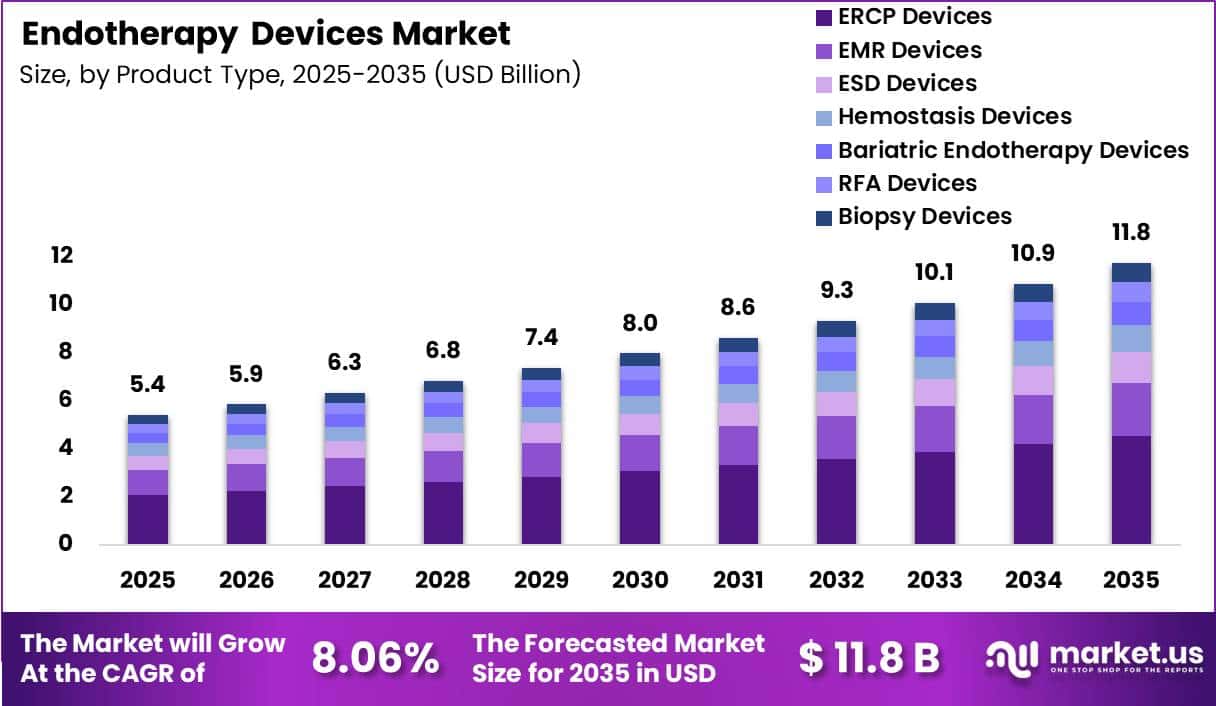
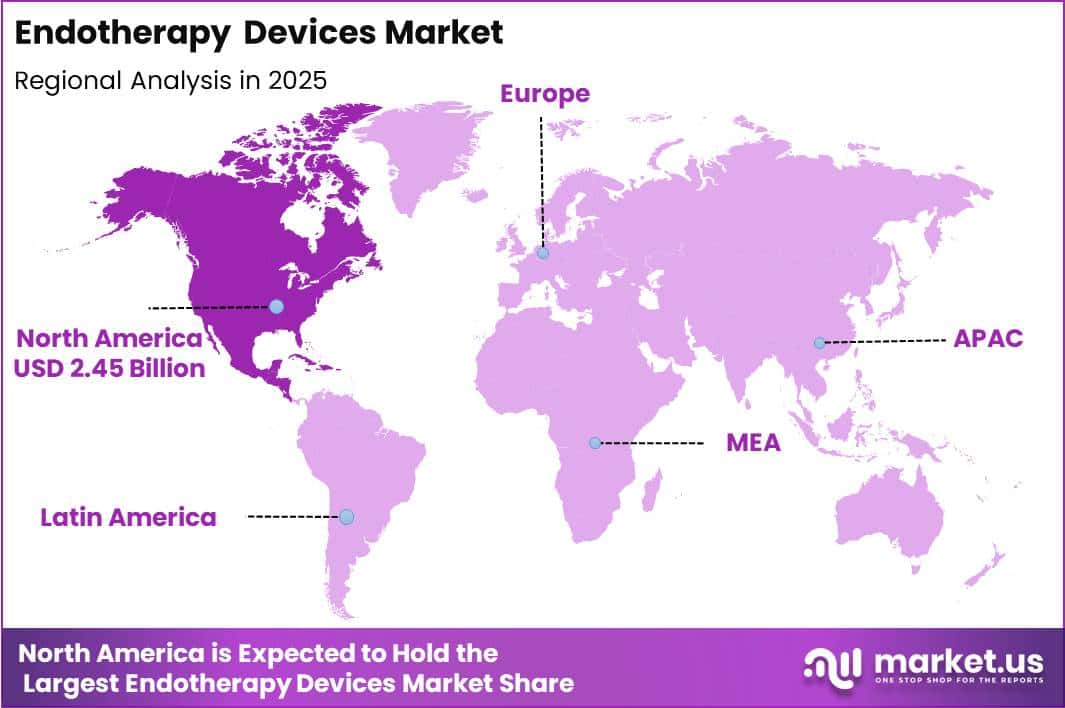
Global Endotherapy Devices Market size is expected to be worth around US$ 11.8 Billion by 2035 from US$ 5.4 Billion in 2025, growing at a CAGR of 8.06% during the forecast period from 2026 to 2035. In 2025, North America led the market, achieving over 45.16% share with a revenue of US$ 2.45 Billion.
The Endotherapy Devices market is supported by the increasing global demand for minimally invasive procedures used in gastroenterology, pulmonology, and urology. Growth is being driven by the rising burden of colorectal cancer, gastrointestinal disorders, obesity, and other chronic diseases that require therapeutic endoscopic interventions.
Healthcare systems are also investing in advanced endoscopy technologies to improve clinical outcomes, reduce hospital stays, and lower procedure-related complications.
Regulatory agencies continue to strengthen standards for device safety, reprocessing, and quality, encouraging manufacturers to introduce innovative single-use and reusable endotherapy solutions.
The U.S. Food and Drug Administration (FDA) recognizes a broad range of endotherapy devices, including grasping instruments, tissue approximation devices, guidewires, leak testers, and submucosal injection agents used during gastrointestinal endoscopic procedures, highlighting the expanding therapeutic role of these technologies. The growing clinical need is reinforced by public health statistics.
According to the World Health Organization, colorectal cancer accounted for approximately 1.9 million new cases and nearly 904,000 deaths globally in 2022, making it one of the most commonly diagnosed cancers worldwide.
The increasing prevalence of digestive diseases and cancer screening programs is driving demand for therapeutic endoscopic procedures that utilize advanced endotherapy devices.
Additionally, the FDA classifies endoscopes as reusable semi-critical medical devices that require rigorous cleaning and high-level disinfection or sterilization between patients, underscoring the importance of innovation in device design, infection prevention, and reprocessing technologies.
FDA-recognized standards, including the ISO 8600 series for medical endoscopes and endotherapy devices, further support product quality, safety, and global regulatory compliance.
Key Takeaways
- Market Size : Endotherapy Devices Market size is expected to be worth around US$ 11.8 Billion by 2035 from US$ 5.4 Billion in 2025.
- Market Share : The market is growing at a CAGR of 8.06% during the forecast period from 2026 to 2035.
- Product Type Analysis : In 2025, Endoscopic Retrograde Cholangiopancreatography (ERCP) Devices accounted for the largest share of the Endotherapy Devices Market, representing 38.5% of total revenue.
- Application Analysis : In 2025, Gastrointestinal Disorders held the leading position in the Endotherapy Devices Market, accounting for 52.4% of the market.
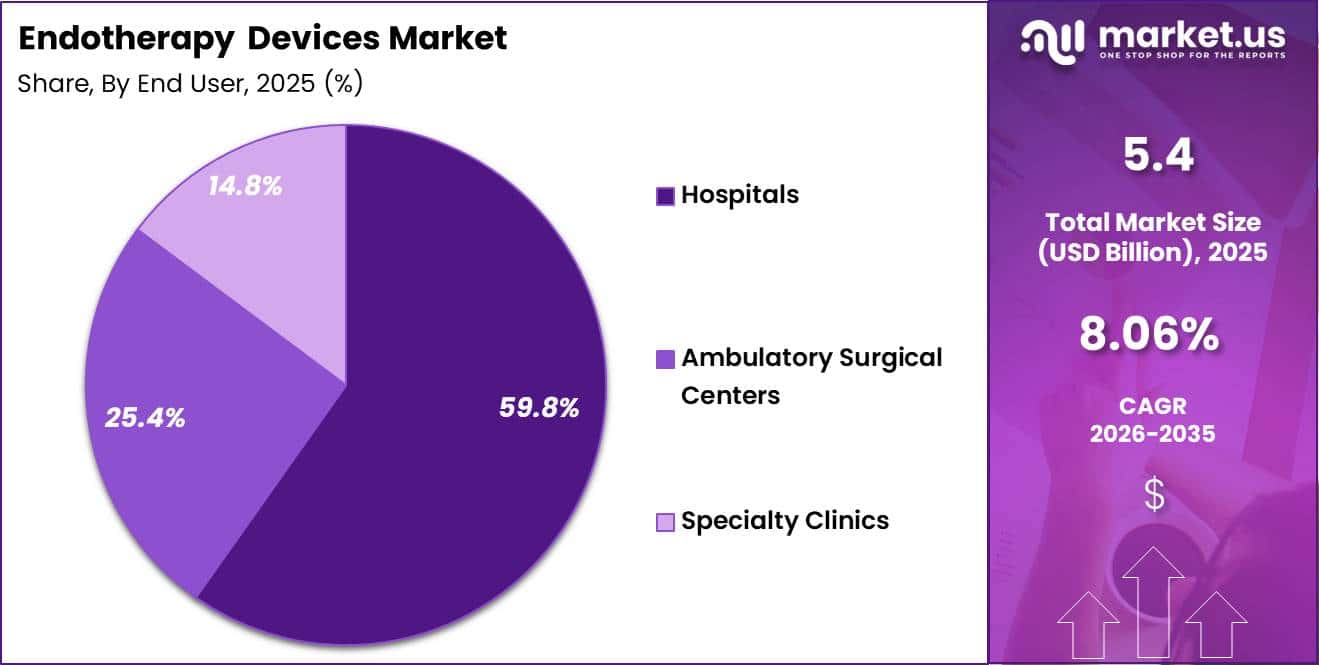
- End User Analysis : In 2025, Hospitals dominated the Endotherapy Devices Market, accounting for 59.8% of total revenue.
- Regional Analysis : In 2025, North America led the market, achieving over 45.16% share with a revenue of US$ 2.45 Billion.
Product Type Analysis
In 2025, Endoscopic Retrograde Cholangiopancreatography (ERCP) Devices accounted for the largest share of the Endotherapy Devices Market, representing 38.5% of total revenue. ERCP devices are widely used to diagnose and treat disorders affecting the bile ducts and pancreas, including gallstones, strictures, leaks, and certain cancers.
According to the U.S. National Institute of Diabetes and Digestive and Kidney Diseases (NIDDK), ERCP combines endoscopy with fluoroscopic imaging to both identify and treat biliary and pancreatic diseases during a single procedure, making it an essential therapeutic intervention.
Endoscopic Mucosal Resection (EMR) Devices and Endoscopic Submucosal Dissection (ESD) Devices are experiencing increasing adoption for the minimally invasive removal of early gastrointestinal tumors and precancerous lesions.
Hemostasis Devices remain important for controlling gastrointestinal bleeding during therapeutic endoscopy, while Bariatric Endotherapy Devices are gaining attention as healthcare providers increasingly adopt minimally invasive obesity treatments.
The U.S. FDA recognizes several endoscopic suturing and gastric balloon systems for weight management, supporting growth in this segment. Radiofrequency Ablation (RFA) Devices are widely used in treating Barrett’s esophagus and selected gastrointestinal lesions.
Biopsy Devices continue to benefit from rising demand for accurate tissue diagnosis during endoscopic procedures, while the Others segment, including dilation balloons, retrieval baskets, and stents, supports a broad range of therapeutic gastrointestinal interventions.
Application Analysis
In 2025, Gastrointestinal Disorders held the leading position in the Endotherapy Devices Market, accounting for 52.4% of the market. The segment is driven by the increasing prevalence of digestive diseases, colorectal polyps, ulcers, and gastrointestinal cancers requiring minimally invasive treatment.
Government health agencies continue to promote early diagnosis and therapeutic endoscopy, supporting greater utilization of advanced endotherapy devices.
Biliary and Pancreatic Diseases represent another significant application, as ERCP remains the standard therapeutic procedure for managing bile duct obstruction, pancreatic duct disorders, and gallstones.
Gastrointestinal Bleeding continues to generate demand for clips, coagulation probes, and hemostatic devices that enable rapid bleeding control during endoscopy. Inflammatory Bowel Disease supports increasing use of endoscopic assessment and intervention, while Barrett’s Esophagus frequently requires radiofrequency ablation to reduce progression to cancer.
The Oncology segment continues expanding through applications in Esophageal Cancer, Gastric Cancer, and Colorectal Cancer, where EMR and ESD allow minimally invasive removal of early-stage lesions.
Bariatric Surgery is another growing application as hospitals adopt endoscopic weight-loss therapies approved by the FDA. The Others segment includes treatment of gastrointestinal strictures, fistulas, foreign body removal, and additional therapeutic endoscopic procedures.
End User Analysis
In 2025, Hospitals dominated the Endotherapy Devices Market, accounting for 59.8% of total revenue. Hospitals perform the majority of advanced therapeutic endoscopy procedures because they offer specialized gastroenterology departments, experienced endoscopists, emergency care, imaging support, and surgical backup.
Complex interventions such as ERCP, EMR, ESD, endoscopic hemostasis, and advanced biopsy procedures are commonly performed in hospital settings due to their multidisciplinary capabilities. Government healthcare investments in advanced endoscopy infrastructure continue to strengthen this segment.
Ambulatory Surgical Centers (ASCs) are witnessing steady growth as more minimally invasive gastrointestinal procedures are performed on an outpatient basis. These facilities provide shorter recovery times, lower treatment costs, and improved patient convenience, making them attractive for selected therapeutic endoscopy procedures.
Advances in endoscopic technology and anesthesia have further supported the expansion of ASCs. Specialty Clinics also represent an important market segment, particularly gastroenterology clinics that focus on routine diagnostic and therapeutic endoscopy for digestive diseases.
Growing awareness of early gastrointestinal disease detection, increasing screening programs, and continuous improvements in minimally invasive technologies are expected to support demand across all end-user segments throughout the forecast period.
Market Segmentations
By Product Type
- Endoscopic Retrograde Cholangiopancreatography (ERCP) Devices
- Endoscopic Mucosal Resection (EMR) Devices
- Endoscopic Submucosal Dissection (ESD) Devices
- Hemostasis Devices
- Bariatric Endotherapy Devices
- Radiofrequency Ablation (RFA) Devices
- Biopsy Devices
- Others
By Application
- Gastrointestinal Disorders
- Biliary and Pancreatic Diseases
- Gastrointestinal Bleeding
- Inflammatory Bowel Disease
- Barrett’s Esophagus
- Oncology
- Esophageal Cancer
- Gastric Cancer
- Colorectal Cancer
- Bariatric Surgery
- Others
By End User
- Hospitals
- Ambulatory Surgical Centers
- Specialty Clinics
Driver
Escalating global GI disease burden and endoscopy volumes
The first structural driver is the scale and persistence of gastrointestinal disease burden, which directly translates into rising therapeutic endoscopy case volumes and device demand across major health systems.
Global data indicate that digestive diseases accounted for roughly 2.3 billion prevalent cases and around 2.6 million deaths in 2019, with prevalence up nearly 68% versus 1990 and incident cases increasing from about 254 million to over 440 million during the same period, underscoring a long‑term upward trend in GI morbidity that spills into 2026 planning assumptions.
In the US alone, GI health‑care expenditures reached approximately USD 112 billion in 2021, with GI diagnoses driving 14.5 million emergency department visits, 2.9 million hospital admissions, and an estimated 23.5 million GI endoscopies performed in 2022, highlighting the large installed base of procedural infrastructure and recurring volumes into which endotherapy devices plug as the interventional arm of care.
For manufacturers, this demand driver supports business models focused on high‑utilization consumables (e.g., biopsy forceps, hemostasis systems, dilation balloons, retrieval baskets) and capital‑light growth strategies leveraging existing endoscopy suite footprints, with unit economics driven by procedure‑linked replenishment rather than one‑off device deployment.
The incremental 2.0 % points lift to the baseline CAGR reflects the convergence of rising GI case incidence, growing adoption of therapeutic interventions beyond pure diagnostics, and regional expansions of endoscopy capacity in APAC corridors and emerging markets where previously unmet need is being systemically addressed.
| Driver | (~) % Impact on CAGR Forecast | Geographic Relevance | Impact Timeline |
|---|---|---|---|
| Escalating global GI disease burden and endoscopy volumes | +2.0% | North America core, EU, APAC corridors | Medium term (2–4 years) |
| Rising obesity and metabolic disorders driving endoscopic bariatric and GERD therapies | +1.8% | North America core, EU, GCC, APAC urban | Medium term (2–4 years) |
| AI-enhanced diagnostic and therapeutic endoscopy increasing efficacy and throughput | +1.5% | North America core, EU, Japan, South Korea | Short to medium term (≤4 years) |
| Procedural migration to minimally invasive endoscopic therapy from open surgery | +1.7% | North America core, EU, APAC corridors, Latin America spill-over | Long term (≥4 years) |
| Aging population and chronic GI/oncology care pathways expanding therapeutic case load | +1.3% | North America core, EU, East Asia, China | Long term (≥4 years) |
| Evolving reimbursement and value-based care models favoring outpatient GI endotherapy | +1.2% | North America core, EU selective, APAC private | Short to medium term (≤4 years) |
Challenge
Infrastructure Gaps Restricting Endotherapy Adoption in Emerging Markets
Large sections of low‑ and middle‑income countries (LMICs) remain structurally under‑equipped for endotherapy, with many secondary and even tertiary facilities operating with one or two endoscopy rooms, limited fluoroscopy access, and constrained sterilization infrastructure, resulting in systemic under‑penetration of advanced endotherapy devices despite growing disease burdens.
While global endoscopy and minimally invasive procedure markets show steady mid‑single‑digit growth, aggregate figures mask stark regional disparities: high‑income regions account for over 40 % of revenue despite representing a far smaller share of the global population, indicating that per‑capita procedure rates in many LMICs remain one‑half to one‑third of high‑income benchmarks even after adjusting for age structure.
A typical fully utilized, two‑room endoscopy suite can support 15–25 procedures per day depending on case mix; however, in LMIC public hospitals, factors such as intermittent power, limited anesthesia support, and reprocessing bottlenecks frequently cap throughput at 8–12 cases per day.
Effectively suppressing potential device utilization by 30–50 % relative to installed capacity and translating into a 0.7 % point drag on global endotherapy device CAGR as vendors struggle to convert macro‑level epidemiologic need into realized device demand.
Addressing this requires a capital- and policy-intensive strategy expanding endoscopy units in regional hubs, investing in reliable reprocessing equipment and water systems, training multidisciplinary teams, and designing rugged, lower‑maintenance platforms tailored to mid‑resource settings.
Paired with international financing mechanisms that can underwrite multi‑year equipment programs; given competing budget priorities and the slow pace of infrastructure build‑out, this capacity gap remains a ≥4‑year friction even under optimistic investment scenarios.
| Challenge | (~) % CAGR Friction Drag | Geographic Relevance | Mitigation Horizon |
|---|---|---|---|
| GI specialist workforce strain | -1.0% | North America, Europe, high-volume APAC | Long term (≥ 4 years) |
| Post-pandemic endoscopy backlog | -0.6% | North America, Europe, selected LMIC urban hubs | Medium term (2-4 years) |
| Procedural capacity & infrastructure gaps | -0.7% | LMIC health systems, public sector hospitals | Long term (≥ 4 years) |
| Infection control & safety overhead | -0.4% | Global tertiary and ambulatory centers | Medium term (2-4 years) |
| Supply chain & device component volatility | -0.5% | APAC–EU–NA logistics corridors | Medium term (2-4 years) |
| Capital intensity of advanced endotherapy | -0.5% | North America core, EU regulatory hubs, Tier-1 APAC | Long term (≥ 4 years) |
Restraints
Infection Control Requirements Increasing Endotherapy Cost Pressures
Heightened scrutiny of infections associated with reprocessed duodenoscopes and other complex reusable GI devices driven by CDC alerts and FDA safety communications has triggered a cascade of new reprocessing, tracking, and design expectations that materially raise operating and capital costs for endoscopy units.
Facilities in the U.S., EU, and Japan are investing in automated endoscope reprocessors, high-level disinfection systems, enhanced drying solutions, and expanded sterile processing staff, often increasing per-procedure reprocessing cost by an estimated 20–40% compared with pre-2018 baselines.
In parallel, manufacturers face incremental design and validation expenditures to provide more robust, validated reprocessing instructions and to address potential design modifications (e.g., shift to single-use distal caps or even fully disposable devices for high-risk anatomies), adding an estimated low- to mid-single-digit % to bill-of-materials and development costs.
The regulatory and clinical pressure to reduce infection risk thus drives hospitals toward either more expensive single-use devices or higher CapEx for sterilization infrastructure, both of which reset purchasing committees’ hurdle rates and lengthen evaluation cycles by 6–12 months.
At a macro level, this translates into a modeled 1.4 %-point drag on CAGR as some facilities slow replacement of legacy reusable devices, underutilize high-complexity endotherapy tools due to reprocessing capacity constraints, and redirect limited capital budgets from advanced therapeutic platforms toward infection control infrastructure, thereby compressing unit volumes and exerting sustained margin pressure, particularly in segments where reimbursement does not fully reflect higher per-case safety costs.
| Restraint | (~) % Impact on CAGR Forecast | Geographic Relevance | Impact Timeline |
|---|---|---|---|
| EU MDR & tightened FDA evidence burden | -1.8% | EU core, North America | Medium term (2-4 years) |
| Infection control & reprocessing compliance costs | -1.4% | North America, EU, Japan | Short to medium term (≤ 4 years) |
| Reimbursement pressure & procedure deferrals | -1.6% | North America, selected EU | Short term (≤ 2 years) |
| Capital budget constraints in hospitals | -1.2% | Emerging APAC, Latin America, MEA | Medium to long term (≥ 2 years) |
| Skilled endoscopy workforce & capacity bottlenecks | -1.0% | Global tertiary centers, APAC corridors | Medium term (2-4 years) |
| Price sensitivity in low- and middle-income markets | -1.3% | Latin America, MEA, South & SE Asia | Long term (≥ 4 years) |
Opportunity
Endotherapy-as-a-Service Enabling Scalable Healthcare Delivery Models
Most endotherapy devices today are sold as capital equipment plus consumables, yet hospitals and ambulatory surgical centers face tightening capital budgets and high maintenance costs even as GI and other digestive disease‑related procedures remain a major driver of healthcare encounters and expenditures.
An Endotherapy‑as‑a‑Service model bundling devices, maintenance, training, and analytics into per‑procedure or subscription contracts could unlock latent demand by shifting spend from capex to opex, reducing upfront investment by 40–60% per endoscopy room while stabilizing lifetime service revenue for vendors.
In markets such as North America and the EU, where GI endoscopy volumes number in the tens of millions annually and GI‑specific health expenditures run into the tens of billions of dollars, even a 10% conversion of procedural volume to EaaS contracts could translate into several billion dollars of incremental serviceable revenue pool for endotherapy suppliers by 2030.
This model can also meaningfully compress downtime through guaranteed uptime clauses and remote diagnostics raising effective utilization per room by 10–15% and improving return on invested capital for providers, in turn justifying the adoption of higher‑margin advanced endotherapy tools embedded in the service bundle.
The opportunity remains underexploited because reimbursement, procurement, and accounting structures at most health systems are still aligned to one‑off capital purchases, and major OEMs tend to prioritize unit sales over lifetime monetization.
a shift to EaaS would require dedicated financing arms, risk‑sharing contracts, and standardized outcome metrics, but successful implementation could realistically add 150 basis points of CAGR to the endotherapy segment in North America and Gulf Cooperation Council markets over the next decade.
| Opportunity | (~) % Potential CAGR Upside | Geographic Relevance | Execution Window |
|---|---|---|---|
| AI-Guided Therapeutic Endoscopy Suites | +2.0% | North America, Western Europe, advanced APAC | Medium term (2–4 years) |
| Integrated Endotherapy-as-a-Service (EaaS) | +1.5% | North America core, EU, GCC | Medium term (2–4 years) |
| Emerging Market Day-Case GI Networks | +2.3% | APAC emerging, Latin America, Middle East, Africa | Long term (≥ 4 years) |
| Obesity and Metabolic Endotherapy Programs | +1.8% | North America, Europe, high-BMI APAC & LATAM | Medium term (2–4 years) |
| Robotics-Assisted Flexible Endotherapy | +1.2% | US, Japan, South Korea, Western Europe | Long term (≥ 4 years) |
| Single-Use and Infection-Control Platforms | +1.0% | US, EU, Japan, high-income urban centers | Short term (≤ 2 years) |
Regional Analysis
In 2025, North America dominated the Endotherapy Devices Market, accounting for over 45.16% of global revenue. The region’s leadership is supported by its advanced healthcare infrastructure, widespread adoption of minimally invasive procedures, and strong colorectal cancer screening programs.
According to the U.S. Centers for Disease Control and Prevention (CDC), colorectal cancer remains the fourth most common cancer in the United States, and adults aged 45 to 75 years are recommended to undergo routine screening.
The CDC also reports that about 7 in 10 U.S. adults aged 50–75 years are up to date with colorectal cancer screening, supporting sustained demand for endoscopic therapeutic devices used during diagnosis and treatment.
Europe represents the second-largest regional market, driven by well-established national colorectal cancer screening initiatives and increasing adoption of advanced therapeutic endoscopy.
The World Health Organization (WHO) notes that Europe records some of the world’s highest colorectal cancer incidence rates, encouraging healthcare providers to expand early detection and minimally invasive treatment programs.
The Asia-Pacific region is expected to witness the fastest growth during the forecast period due to expanding healthcare infrastructure, rising healthcare expenditure, increasing awareness of gastrointestinal diseases, and improving access to endoscopic services across countries such as China, India, Japan, and South Korea. Government investments in cancer screening and hospital modernization continue to strengthen demand for advanced endotherapy devices.
Latin America is experiencing steady market growth as public healthcare systems expand access to endoscopy services and cancer screening programs. Increasing diagnosis of gastrointestinal disorders, coupled with gradual improvements in hospital infrastructure, is supporting demand for therapeutic endoscopic procedures.
Meanwhile, the Middle East & Africa market is growing at a moderate pace, supported by healthcare modernization initiatives, rising investments in specialty hospitals, and improving availability of minimally invasive gastrointestinal treatments, although adoption remains comparatively lower due to disparities in healthcare access and specialist availability.
Key Regions and Countries
North America
- The US
- Canada
Europe
- Germany
- France
- The U.K.
- Italy
- Spain
- Russia & CIS
- Rest of Europe
Asia Pacific
- China
- India
- Japan
- South Korea
- ASEAN
- Australia & New Zealand
- Rest of Asia Pacific
Middle East & Africa
- GCC
- South Africa
- Rest of Middle East & Africa
Latin America
- Brazil
- Mexico
- Rest of Latin America
Key Player Analysis
The Endotherapy Devices Market is supported by companies that continuously develop FDA-cleared products for therapeutic endoscopy and minimally invasive procedures.
Boston Scientific Corporation offers endoscopic treatment devices, including the FDA-cleared EXALT single-use duodenoscope, while Olympus Corporation has a broad portfolio of gastrointestinal endoscopes, capsule endoscopy systems, and endoscopic accessories widely used in clinical practice.
Medtronic plc develops advanced surgical and endoscopic technologies for gastrointestinal interventions, and Cook Medical LLC provides guidewires, stents, dilation devices, and other therapeutic products used in digestive disease treatment.
CONMED Corporation supplies minimally invasive surgical and endoscopic instruments, whereas Pentax Medical (HOYA Group) focuses on high-definition imaging and diagnostic endoscopy systems.
Fujifilm Holdings Corporation continues expanding its therapeutic endoscopy portfolio with advanced visualization technologies. KARL STORZ SE & Co. KG and Richard Wolf GmbH are recognized for precision endoscopy equipment across multiple specialties.
Taewoong Medical Co., Ltd. specializes in gastrointestinal stents and therapeutic devices, strengthening innovation in minimally invasive gastrointestinal care. Together, these companies compete through product development, regulatory compliance, physician training, and technological advancement.
Top Key Players
- Boston Scientific Corporation
- Olympus Corporation
- Medtronic plc
- Cook Medical LLC
- CONMED Corporation
- Pentax Medical (HOYA Group)
- Fujifilm Holdings Corporation
- KARL STORZ SE & Co. KG
- Richard Wolf GmbH
- Taewoong Medical Co., Ltd.
- MI.TECH Co., Ltd.
- Stryker Corporation
- Erbe Elektromedizin GmbH
- Aponos Medical
- EndoChoice Holdings, Inc.
- Others
Recent Developments
- In May 2026, Fujifilm Healthcare Americas launched the EB-710US balloon-less Endobronchial Ultrasound (EBUS) Bronchoscope. The new bronchoscope improves visualization and maneuverability during pulmonary endoscopic procedures and expands Fujifilm’s therapeutic endoscopy portfolio.
- In October 2025, Olympus Corporation signed an international distribution agreement with W. L. Gore & Associates to become the exclusive international distributor of the GORE® VIABIL® Biliary Endoprosthesis for endoscopic placement.
- In July 2025, Olympus Corporation entered a strategic partnership with Swan EndoSurgical and agreed to take a significant equity stake with an initial combined investment of at least US$65 million. The collaboration aims to develop an endoluminal robotic system for less invasive therapeutic endoscopy procedures, with total funding potentially reaching US$458 million upon achieving development milestones.
Report Scope
| Report Features | Description |
|---|---|
| Market Value (2025) | US$ 5.4 Billion |
| Forecast Revenue (2035) | US$ 11.8 Billion |
| CAGR (2026-2035) | 8.06% |
| Base Year for Estimation | 2025 |
| Historic Period | 2020-2024 |
| Forecast Period | 2026-2035 |
| Report Coverage | Revenue Forecast, Market Dynamics, Competitive Landscape, Recent Developments |
| Segments Covered | By Product Type (Endoscopic Retrograde Cholangiopancreatography (ERCP) Devices, Endoscopic Mucosal Resection (EMR) Devices, Endoscopic Submucosal Dissection (ESD) Devices, Hemostasis Devices, Bariatric Endotherapy Devices, Radiofrequency Ablation (RFA) Devices, Biopsy Devices, Others), By Application (Gastrointestinal Disorders, Biliary and Pancreatic Diseases, Gastrointestinal Bleeding, Inflammatory Bowel Disease, Barrett’s Esophagus, Oncology, Esophageal Cancer, Gastric Cancer, Colorectal Cancer, Bariatric Surgery, Others), By End User (Hospitals, Ambulatory Surgical Centers, Specialty Clinics) |
| Regional Analysis | North America – The US, Canada; Europe – Germany, France, U.K., Italy, Spain, Russia & CIS, Rest of Europe; Asia Pacific – China, India, Japan, South Korea, ASEAN, Australia & New Zealand, Rest of Asia Pacific; Middle East & Africa – GCC, South Africa, Rest of Middle East & Africa; Latin America – Brazil, Mexico, Rest of Latin America |
| Competitive Landscape | Boston Scientific Corporation, Olympus Corporation, Medtronic plc, Cook Medical LLC, CONMED Corporation, Pentax Medical (HOYA Group), Fujifilm Holdings Corporation, KARL STORZ SE & Co. KG, Richard Wolf GmbH, Taewoong Medical Co., Ltd., MI.TECH Co., Ltd., Stryker Corporation, Erbe Elektromedizin GmbH, Aponos Medical, EndoChoice Holdings, Inc., Others |
| Customization Scope | Customization for segments, region/country-level will be provided. Moreover, additional customization can be done based on the requirements. |
| Purchase Options | We have three licenses to opt for: Single User License, Multi-User License (Up to 5 Users), Corporate Use License (Unlimited User and Printable PDF) |