


Market Overview
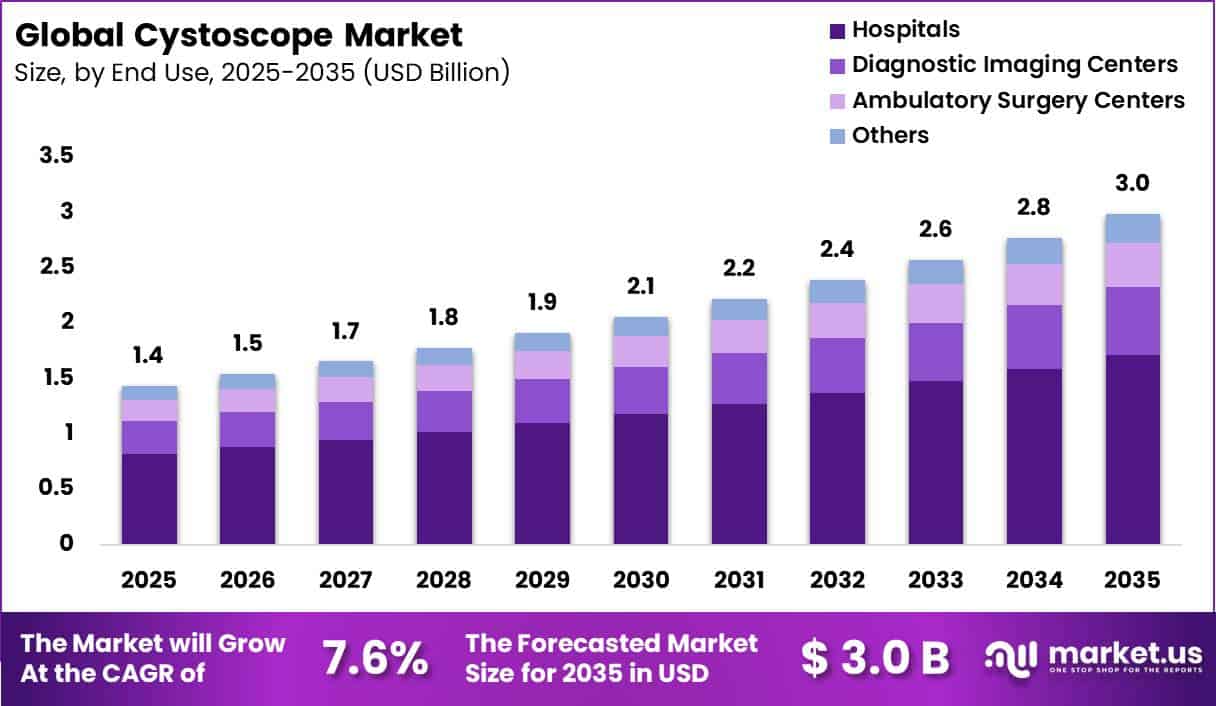
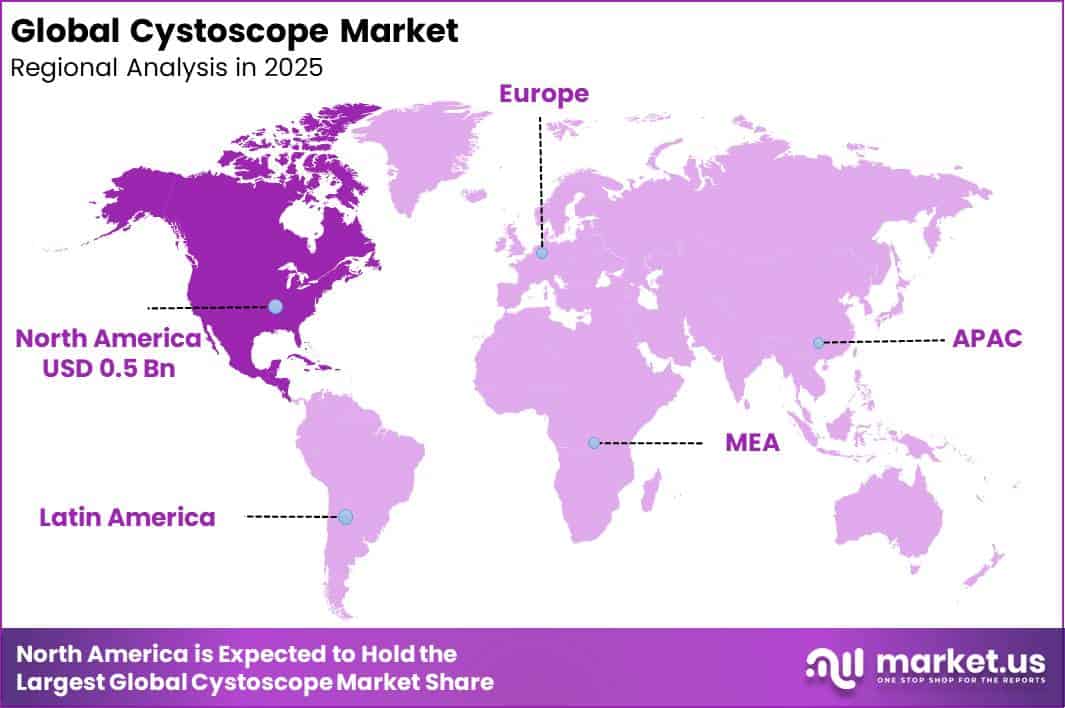
Global Cystoscope Market size is expected to be worth around US$ 3.0 Billion by 2035 from US$ 1.4 Billion in 2025, growing at a CAGR of 7.6% during the forecast period from 2026 to 2035. In 2025, North America led the market, achieving over 34.5% share with a revenue of US$ 0.5 Billion.
The cystoscope market is experiencing steady growth due to the increasing prevalence of urological disorders and the rising need for bladder cancer diagnosis and surveillance. According to the World Health Organization’s International Agency for Research on Cancer (IARC), bladder cancer remains one of the most commonly diagnosed cancers globally, with more than 570,000 new cases and over 210,000 deaths reported annually.
Because bladder cancer has one of the highest recurrence rates among malignancies, many patients require repeated cystoscopic examinations throughout their treatment and follow-up journey, creating a sustained demand for cystoscopy procedures and related equipment.
The growing aging population is another key factor supporting market expansion. Urological conditions such as bladder cancer, urinary tract abnormalities, and lower urinary tract dysfunction are significantly more common among individuals aged 65 years and older.
According to the World Health Organization, the global population aged 60 years and above is projected to increase from 1 billion in 2020 to approximately 1.4 billion by 2030. This demographic shift is expected to increase the number of patients requiring diagnostic and monitoring procedures involving cystoscopes, particularly in developed healthcare systems where routine urological screening and surveillance are widely practiced.
Technological advancements are reshaping the cystoscope industry, with healthcare providers increasingly transitioning from conventional fiber-optic systems to digital imaging platforms. Recent U.S. FDA clearances demonstrate a growing number of digital and single-use cystoscope systems entering the market, reflecting demand for improved image quality, enhanced maneuverability, and streamlined clinical workflows.
Single-use cystoscopes have gained particular attention as healthcare facilities seek to reduce the complexities associated with reprocessing and sterilization while minimizing the risk of cross-contamination. This trend is contributing to increased investment in innovative visualization technologies and next-generation endoscopic solutions.
Furthermore, the shift toward minimally invasive diagnostic procedures and outpatient care settings is strengthening the adoption of flexible cystoscopy systems worldwide. Hospitals and specialty urology clinics are increasingly prioritizing equipment that supports faster procedures, improved patient comfort, and operational efficiency.
Continuous product innovation, growing procedural volumes, expanding healthcare infrastructure, and increasing awareness of early disease detection are collectively supporting the long-term development of the cystoscope market across both established and emerging healthcare markets.
Key Takeaways
- Market Size : Global Cystoscope Market size is expected to be worth around US$ 3.0 Billion by 2035 from US$ 1.4 Billion in 2025.
- Market Share : The Market is growing at a CAGR of 7.6% during the forecast period from 2026 to 2035.
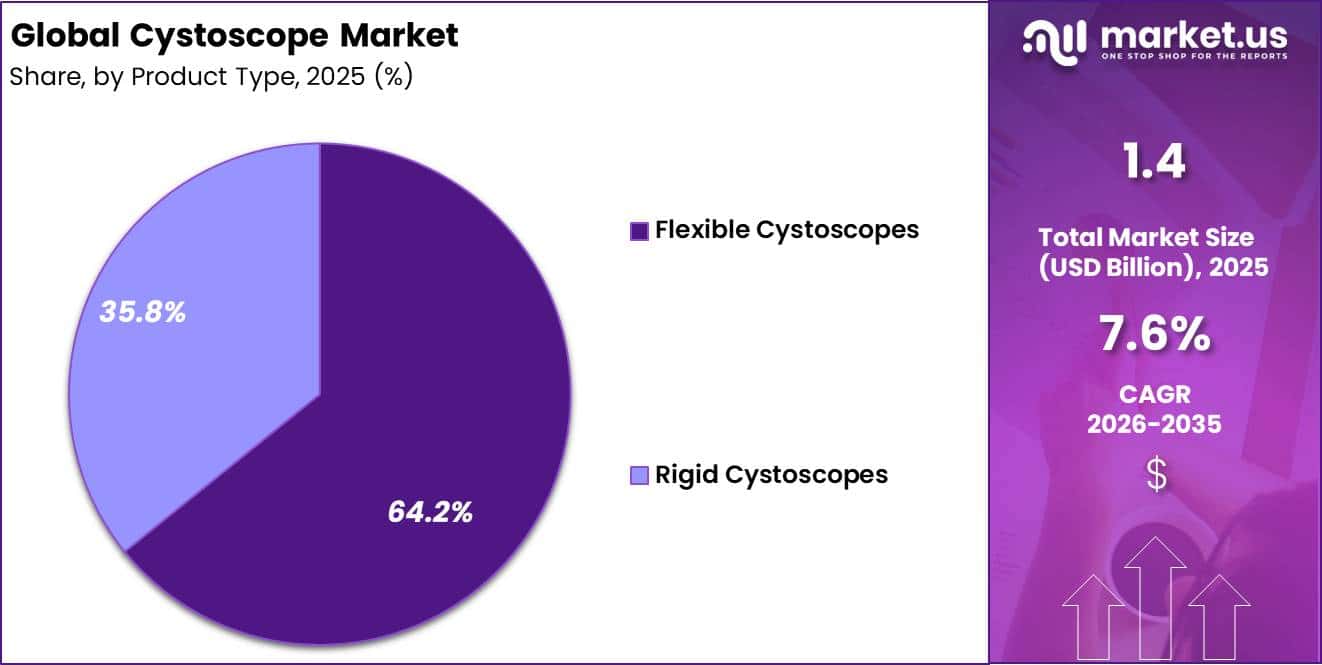
- Product Analysis : Flexible cystoscopes dominated the cystoscope market in 2025, accounting for 64.2% of the total market share.
- Application Analysis : The urology segment dominated the cystoscope market capturing 83.6% of the overall market share in 2025.
- Technology Analysis : Video (digital) cystoscopes emerged as the leading technology segment in 2025, holding 65.7% of the global market share.
- End User Analysis : Hospitals dominated the cystoscope market representing 57.4% of total market revenue in 2025.
- Regional Analysis : In 2025, North America led the market, achieving over 34.5% share with a revenue of US$ 0.5 Billion.
Product Analysis
Flexible cystoscopes dominated the cystoscope market in 2025, accounting for 64.2% of the total market share. Their widespread adoption is attributed to enhanced patient comfort, superior maneuverability, and the ability to perform procedures with minimal discomfort in outpatient settings.
Flexible cystoscopes are increasingly preferred for diagnostic examinations, surveillance of bladder cancer, and routine urological evaluations because they reduce the need for anesthesia and support faster patient recovery.
Technological advancements such as high-definition imaging, improved illumination systems, and digital visualization capabilities have further strengthened demand for flexible devices. In addition, the growing trend toward minimally invasive procedures and office-based cystoscopy continues to support segment expansion.
Rigid cystoscopes represented 35.8% of the market in 2025. These devices remain essential for therapeutic and interventional procedures, including biopsies, stone removal, and transurethral surgeries. Their superior image clarity, durability, and compatibility with surgical instruments make them a preferred choice in hospital operating rooms.
Despite the increasing popularity of flexible systems, rigid cystoscopes continue to maintain significant demand due to their effectiveness in complex procedures and their long-established role in urological practice.
Application Analysis
The urology segment dominated the cystoscope market in 2025, capturing 83.6% of the overall market share. The high prevalence of urinary tract disorders, bladder cancer, benign prostatic hyperplasia, and recurrent urinary tract infections has significantly increased the use of cystoscopic procedures within urology.
Cystoscopes play a vital role in diagnosing abnormalities, monitoring disease progression, collecting tissue samples, and guiding minimally invasive treatments. The growing aging population and increasing awareness regarding early diagnosis of urological conditions are further supporting demand for cystoscopy procedures. Additionally, advances in imaging technologies and improvements in endoscopic equipment have enhanced diagnostic precision, contributing to the segment’s leading position.
Gynecology accounted for 16.4% of the market share in 2025. Cystoscopy is increasingly utilized in gynecological practices to evaluate urinary tract injuries, investigate pelvic floor disorders, and assess complications associated with gynecological surgeries.
Rising awareness among healthcare professionals regarding comprehensive pelvic examinations and postoperative monitoring is encouraging greater adoption within this segment. Although smaller in comparison with urology, gynecology is expected to witness steady growth due to expanding applications and increasing emphasis on minimally invasive diagnostic procedures.
Technology Analysis
Video (digital) cystoscopes emerged as the leading technology segment in 2025, holding 65.7% of the global market share. Their dominance is primarily driven by superior image quality, enhanced visualization, and improved diagnostic accuracy.
Digital cystoscopes provide high-definition images that enable physicians to identify abnormalities more effectively and perform procedures with greater precision. Integration with electronic medical records, image storage capabilities, and real-time data sharing further supports their growing adoption in modern healthcare facilities.
Hospitals and specialty clinics increasingly favor digital systems because they enhance workflow efficiency and facilitate better clinical decision-making. Continuous advancements in camera technologies and imaging software are expected to strengthen the segment’s market position.
Fiberoptic cystoscopes accounted for 34.3% of the market in 2025. These devices continue to be widely used due to their reliability, flexibility, and established presence in clinical practice. Fiberoptic systems remain an attractive option for healthcare facilities seeking cost-effective solutions for routine diagnostic procedures.
Although they offer lower image quality compared to digital alternatives, their durability and familiarity among healthcare providers contribute to sustained market demand. Ongoing technological refinements are also helping improve their performance and extend their application scope.
End User Analysis
Hospitals dominated the cystoscope market in 2025, representing 57.4% of total market revenue. The segment’s strong position is attributed to the availability of advanced infrastructure, skilled healthcare professionals, and comprehensive surgical facilities. Hospitals perform a large volume of diagnostic and therapeutic cystoscopy procedures, including cancer detection, biopsies, and minimally invasive interventions.
Increasing patient admissions for urological disorders and growing investments in endoscopic technologies continue to drive demand within this segment. Furthermore, hospitals often serve as primary referral centers for complex cases, supporting their leading market share.
Diagnostic imaging centers constitute an important end-user segment, benefiting from the growing preference for specialized diagnostic services and outpatient procedures. These facilities provide efficient and cost-effective evaluations for patients requiring routine examinations.
Ambulatory surgery centers are also witnessing increased adoption of cystoscopy equipment due to shorter procedure times, lower treatment costs, and faster patient recovery. The others segment, which includes specialty clinics and research institutions, contributes to market growth through expanding access to urological care and increasing utilization of minimally invasive diagnostic technologies.
Market Segmentations
By Product
- Flexible Cystoscopes
- Rigid Cystoscopes
By Application
- Urology
- Gynecology
By Technology
- Video (Digital)
- Fiberoptic
By End Use
- Hospitals
- Diagnostic Imaging Centers
- Ambulatory Surgery Centers
- Others
Driver
Imaging upgrades and procedure productivity gains
Technology refresh in visualization is a smaller but real driver because it supports replacement demand and can improve lesion detection confidence, procedural speed, and premium pricing. FDA-related signals show ongoing endoscopy imaging innovation.
Olympus announced FDA 510(k) clearance in 2025 for EZ1500 series endoscopes with Extended Depth of Field technology, while the broader FDA device environment remained highly active, with one industry review counting 295 AI/ML-enabled medical device clearances in 2025, reinforcing hospitals’ willingness to invest in smarter visualization stacks even if cystoscopy-specific AI is still early.
In bladder cancer workflow, enhanced visualization matters because conventional cystoscopy is useful but imperfect; one NIH-hosted 2023 study reported cystoscopy sensitivity of 81% and specificity of 73% for bladder tumor detection, leaving room for image enhancement, better optics, digital documentation, and adjunct technologies to improve clinical confidence.
Strategically, this shifts vendors from pure hardware sales toward image chain ecosystems, software upgrades, and premium disposable reusable combinations, especially in US, EU, Japan, South Korea, and top tier Chinese hospitals where capital replacement decisions are tied to throughput, documentation quality, and premium procedural differentiation.
| Driver | (~) % Impact on CAGR Forecast | Geographic Relevance | Impact Timeline |
|---|---|---|---|
| Rising bladder cancer surveillance load | +2.2% | North America core, EU5, Japan, South Korea, urban China | Medium term (2-4 years) |
| Hematuria workup and office cystoscopy expansion | +1.6% | US, Canada, Western Europe, Australia, private APAC corridors | Short term (≤ 2 years) |
| Single-use cystoscope adoption for infection control | +1.9% | US hospitals/ASCs core, UK and Nordics, tertiary Gulf, high-acuity APAC | Short term (≤ 2 years) |
| Outpatient reimbursement and ASC migration | +1.4% | US core, selected OECD outpatient systems | Medium term (2-4 years) |
| Imaging upgrades and procedure productivity gains | +1.3% | US, EU, Japan, premium China and South Korea | Medium term (2-4 years) |
| Population aging and male-risk concentration | +1.7% | Europe, Japan, China, US, high-aging upper-middle-income markets | Long term (≥ 4 years) |
Challenge
Sterilization infrastructure raises cystoscopy operating cost base
The progressive tightening of reprocessing expectations, including explicit regulatory and manufacturer guidance against high level disinfection alone, is pushing cystoscope users toward capital intensive sterilization solutions that increase per procedure costs and complicate scaling in resource constrained facilities.
In 2022, the FDA posted a Class II recall notification in which Karl Storz Endoscopy warned that certain flexible urological endoscopes were failing to achieve the expected six log reduction in microorganisms under high level disinfection, instructing customers to discontinue all high level disinfection methods and instead sterilize affected endoscopes after each use or stop using them if suitable sterilization was unavailable.
For hospitals that perform several thousand cystoscopies annually, shifting from high level disinfection to full sterilization can add 10 to 20 minutes of reprocessing time per scope cycle and require additional sterilizer capacity, raising the effective cost per reusable procedure by an estimated 10 to 25 % when labor, consumables, downtime, and capital depreciation are combined.
This friction does not halt cystoscope purchases but contributes to about 0.9 % points of global CAGR drag by slowing replacement decisions in smaller centers that cannot absorb sterilization upgrades quickly.
Over the medium term, vendors that design cystoscopes and accessories explicitly for low touch, validated sterilization and that bundle capital financing or pay per use models can help customers navigate this cost step change, while health systems must re optimize procedure scheduling, sterilizer loads, and instrument fleet sizing so that sterilization requirements do not cap cystoscopy capacity or delay follow up surveillance schedules.
| Challenge | (~) % CAGR Friction Drag | Geographic Relevance | Mitigation Horizon |
|---|---|---|---|
| Reprocessing infection risk | -1.2% | North America, EU hospitals, APAC tertiary centers | Medium term (2-4 years) |
| Capital-heavy sterilization workflows | -0.9% | OECD urology hubs, high-volume centers | Medium term (2-4 years) |
| Urologist and staff shortages | -1.4% | US, Western Europe, aging markets | Long term (≥ 4 years) |
| Slow transition to single-use | -0.8% | Global, especially cost-sensitive APAC, LATAM | Long term (≥ 4 years) |
| Variability in procedure economics | -1.0% | North America, Europe outpatient settings | Medium term (2-4 years) |
| Infection control policy tightening | -0.7% | EU, US, regulated markets | Medium term (2-4 years) |
Restraints
Workforce shortages and constrained cystoscopy procedure capacity worldwide
Cystoscopy is widely used for hematuria workups, cancer surveillance, and lower urinary tract symptoms, but growth is increasingly limited by shortages of urologists, nurses, and reprocessing staff, as well as clinic and operating room capacity constraints.
In many high income countries, an aging workforce and slower replacement of retiring urologists has created regional gaps, with wait times extending from 2 to 4 weeks to 8 to 12 weeks, limiting annual procedure volumes despite rising disease incidence.
Post pandemic burnout and attrition among nurses and technicians further worsen capacity, with some systems reporting 10 to 15% vacancy rates in endoscopy units and reduced daily procedure schedules. These constraints cap utilization, meaning additional cystoscopes do not always translate into more procedures, weakening investment returns and leading to delayed replacement cycles.
Training and onboarding for reprocessing and device use can also slow adoption of new equipment by 6 to 12 months. Overall, these workforce and capacity limits are estimated to reduce cystoscope market growth by about 1.5 % points through 2026, as vendors must increasingly support workflow efficiency and capacity expansion, not just equipment sales.
| Restraint | (~) % Impact on CAGR Forecast | Geographic Relevance | Impact Timeline |
|---|---|---|---|
| Capital budget squeeze in urology | -2.2% | North America core, EU, selected APAC | Short–Medium term |
| Reusable scope reprocessing burden | -1.8% | North America, EU, Japan, high-volume LATAM | Medium term |
| Sterilization and infection-control tightening | -1.5% | EU, North America, GCC, East Asia | Medium–Long term |
| Supply chain fragility in optics and components | -1.3% | Global OEM hubs; EU, US, China, Japan | Short–Medium term |
| Regulatory and procurement pricing pressure | -1.7% | OECD health systems, India, China public sector | Medium–Long term |
| Workforce and procedure-capacity constraints | -1.5% | Global, strongest in EU, UK, emerging APAC | Short–Medium term |
Opportunity
Scalable single-use cystoscope platforms to monetize infection economics
Single-use cystoscope ecosystems are a distinct upside pool because they remain a marginal share of procedure volume despite clinical evidence that disposable scopes reduce 30-day post-procedure infections versus reusable devices, which remain standard of care. Current forecasts assume gradual replacement of reusable scopes, limited disposable contribution, and no structural redesign of costs such as reprocessing, repairs, and infection penalties.
However, reusable flexible cystoscopes carry per-case costs around 600 USD when fully loaded, while single-use devices reduce reprocessing and infection-related costs and lower CO₂ emissions from about 3.7 kg to 2.2 kg.
If manufacturers shift to platform-based single-use cystoscopy models and capture 25–30% of global procedures by 2030 in infection-sensitive settings, the market could add 2% points of CAGR versus baseline, driven by higher ASPs, margin expansion, and monetization of infection-avoidance economics under hospital penalty regimes.
This remains an opportunity rather than a driver because procurement is still dominated by reusable systems, infection penalties are not fully embedded in TCO models, and disposables are mainly positioned as replacements rather than integrated platforms with software and outcomes-based pricing.
| Opportunity | (~) % Potential CAGR Upside | Geographic Relevance | Execution Window |
|---|---|---|---|
| Single-use cystoscope platforms at scale | +2.0% | North America, Western Europe, selective APAC | Short term |
| Ambulatory & office-based cystoscopy networks | +1.5% | North America, EU, urban LatAm, GCC | Short–medium term |
| AI-guided diagnostic & surveillance suites | +1.8% | North America, EU5, Japan, South Korea | Medium term |
| Subscription / per-procedure cystoscopy-as-a-service | +1.2% | North America, Europe, high-income APAC | Medium–long term |
| Emerging-market urology access build-out | +1.5% | APAC emerging, Africa, South Asia, LatAm | Long term |
| Integrated infection-control & carbon-footprint value propositions | +0.8% | OECD markets, large IDNs, academic centers | Short–medium term |
Regional Analysis
In 2025, North America dominated the cystoscope market, accounting for more than 34.5% of global revenue and generating approximately US$ 0.5 billion. The region’s leadership is supported by a high prevalence of urological disorders, increasing incidence of bladder cancer, and strong adoption of minimally invasive diagnostic and therapeutic procedures.
Advanced healthcare infrastructure, widespread availability of technologically advanced cystoscopy systems, and favorable reimbursement policies continue to drive market growth across the United States and Canada. Growing investments in ambulatory surgical centers and outpatient urology services further contribute to regional expansion.
Europe represented the second-largest market share, supported by a well-established healthcare system, rising geriatric population, and increasing demand for early diagnosis of urinary tract diseases. Countries such as Germany, the United Kingdom, France, and Italy are witnessing greater utilization of flexible and digital cystoscopes in clinical settings.
The Asia-Pacific region is expected to register the fastest growth during the forecast period, driven by improving healthcare infrastructure, expanding medical tourism, and growing awareness regarding urological health. Increasing healthcare expenditure in China, India, and Japan is accelerating the adoption of advanced endoscopic technologies.
Meanwhile, Latin America and the Middle East & Africa are experiencing steady growth due to ongoing healthcare modernization initiatives, improved access to specialized medical services, and rising investments in hospital infrastructure.
Key Regions and Countries
North America
- The US
- Canada
Europe
- Germany
- France
- The U.K.
- Italy
- Spain
- Russia & CIS
- Rest of Europe
Asia Pacific
- China
- India
- Japan
- South Korea
- ASEAN
- Australia & New Zealand
- Rest of Asia Pacific
Middle East & Africa
- GCC
- South Africa
- Rest of Middle East & Africa
Latin America
- Brazil
- Mexico
- Rest of Latin America
Key Player Analysis
The cystoscope market is characterized by the presence of established medical device manufacturers and specialized endoscopy companies that compete through technological advancements, product quality, and expanded distribution networks.
Market participants are increasingly focusing on high-definition imaging systems, ergonomic device designs, and minimally invasive solutions to improve diagnostic accuracy and procedural efficiency. Companies are also emphasizing product innovation, physician training programs, and strategic partnerships to strengthen their market position.
Ambu A/S is recognized for its growing portfolio of single-use endoscopy products, supporting infection prevention and cost-efficient clinical workflows. Boston Scientific Corporation maintains a strong presence in the urology segment through advanced technologies designed for diagnosis and treatment of urinary tract conditions.
BD leverages its broad healthcare expertise and extensive distribution capabilities to enhance access to urological devices. FUJIFILM Corporation benefits from its advanced optical and imaging technologies, enabling high-quality visualization during cystoscopic procedures. Coloplast focuses on specialized urology solutions and patient-centered innovations.
Meanwhile, Ackermann, ELEPS, and EndoMed Systems continue to expand their product offerings, supporting the increasing demand for reliable and technologically advanced cystoscopy equipment worldwide.
Top Key Players
- Ambu A/S
- Ackermann
- BD
- Boston Scientific Corporation
- Coloplast
- ELEPS
- EndoMed Systems
- FUJIFILM Corporation
- Henke-Sass, Wolf GmbH
- KARL STORZ SE & Co. KG
- Laborie, Inc.
- Maxer Endoscopy GmbH
- Medline Industries Inc.
- OLYMPUS CORPORATION
- Richard Wolf GmbH
- SCHÖLLY FIBEROPTIC GMBH
Recent Developments
- In September 2025, OLYMPUS CORPORATION signed an exclusive global distribution agreement with MacroLux Medical Technology to commercialize single-use cystoscopes, ureteroscopes, and suction access sheaths across North America, Europe, and selected Asia-Pacific markets, expanding Olympus’ disposable urology endoscopy offering.
- In April 2025, KARL STORZ SE & Co. KG integrated Diaspective Vision expertise into its development organization, including technologies related to the TIVITA Mini endoscopic imaging platform, supporting future innovation in image-enhanced endoscopy.
- In February 2025, Ambu A/S expanded the CE Mark for its Ambu® aScope™ 5 Cysto HD, enabling the device to be used as a single-use flexible cysto-nephroscope for percutaneous nephrolithotomy (PCNL) procedures. The expansion allows Ambu to enter the cysto-nephroscopy segment and broaden its single-use urology endoscopy portfolio across Europe.
Report Scope
| Report Features | Description |
|---|---|
| Market Value (2025) | US$ 1.4 Billion |
| Forecast Revenue (2035) | US$ 3.0 Billion |
| CAGR (2026-2035) | 7.6 % |
| Base Year for Estimation | 2025 |
| Historic Period | 2020-2024 |
| Forecast Period | 2026-2035 |
| Report Coverage | Revenue Forecast, Market Dynamics, Competitive Landscape, Recent Developments |
| Segments Covered | By Product (Flexible Cystoscopes, Rigid Cystoscopes), By Application (Urology, Gynecology), By Technology (Video (Digital), Fiberoptic), By End Use (Hospitals, Diagnostic Imaging Centers, Ambulatory Surgery Centers, Others) |
| Regional Analysis | North America – The US, Canada; Europe – Germany, France, U.K., Italy, Spain, Russia & CIS, Rest of Europe; Asia Pacific – China, India, Japan, South Korea, ASEAN, Australia & New Zealand, Rest of Asia Pacific; Middle East & Africa – GCC, South Africa, Rest of Middle East & Africa; Latin America – Brazil, Mexico, Rest of Latin America |
| Competitive Landscape | Ambu A/S, Ackermann, BD, Boston Scientific Corporation, Coloplast, ELEPS, EndoMed Systems, FUJIFILM Corporation, Henke-Sass, Wolf GmbH, KARL STORZ SE & Co. KG, Laborie, Inc., Maxer Endoscopy GmbH, Medline Industries Inc., OLYMPUS CORPORATION, Richard Wolf GmbH, SCHÖLLY FIBEROPTIC GMBH |
| Customization Scope | Customization for segments, region/country-level will be provided. Moreover, additional customization can be done based on the requirements. |
| Purchase Options | We have three licenses to opt for: Single User License, Multi-User License (Up to 5 Users), Corporate Use License (Unlimited User and Printable PDF) |





































