Market Overview
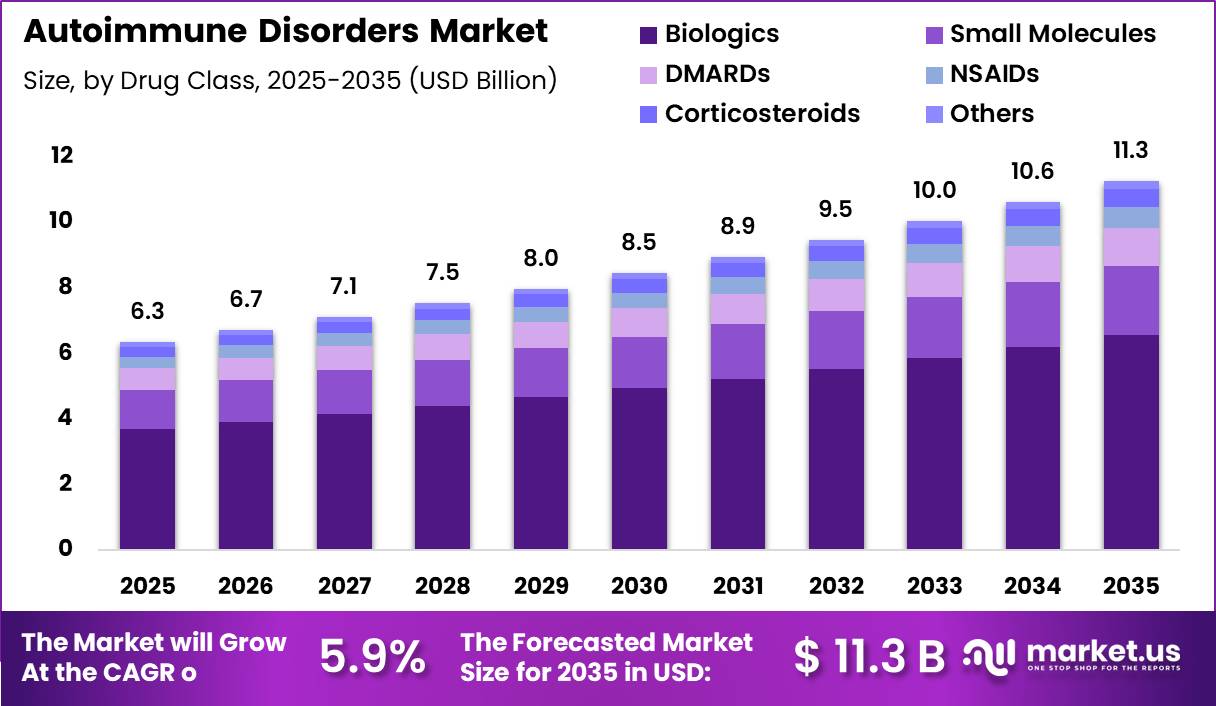
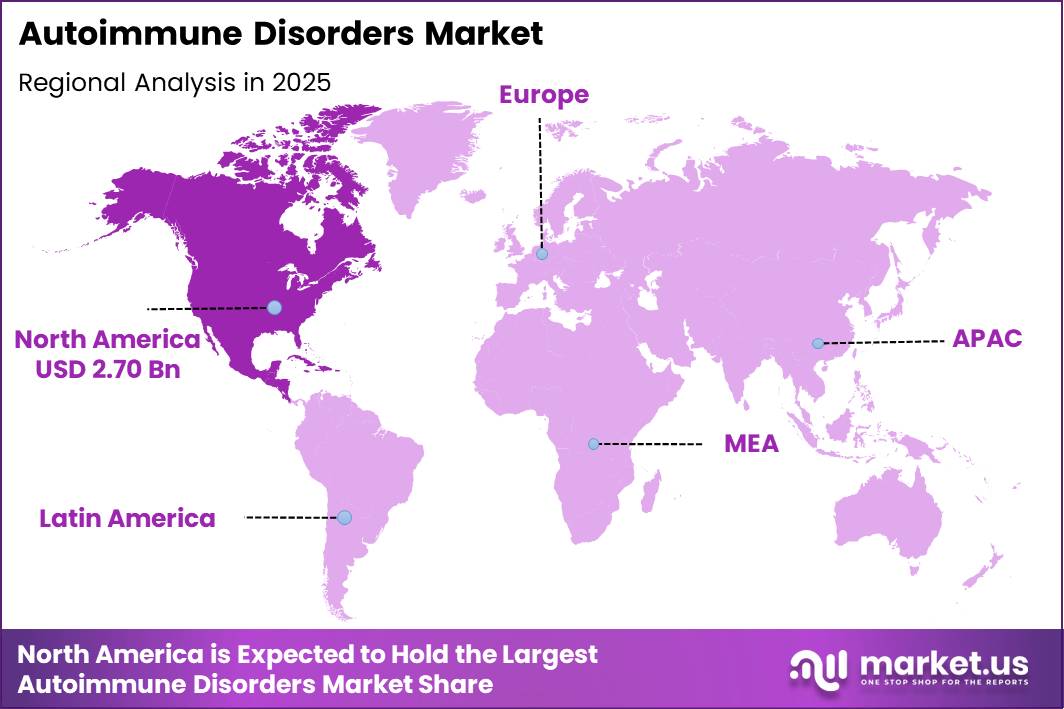
The Global Autoimmune Disorders Market size is expected to be worth around US$ 11.3 Billion by 2035 from US$ 6.3 Billion in 2025, growing at a CAGR of 5.9% during the forecast period from 2026 to 2035. In 2025, North America led the market, achieving over 42.5% share with a revenue of US$ 2.70 Billion.
Autoimmune disorders are a diverse group of chronic diseases in which the immune system mistakenly attacks healthy tissues and organs. According to the U.S. National Institute of Arthritis and Musculoskeletal and Skin Diseases (NIAMS), these conditions include rheumatoid arthritis, systemic lupus erythematosus, multiple sclerosis, psoriasis, Sjögren’s disease, and type 1 diabetes, among many others.
The National Institute of Environmental Health Sciences (NIEHS) reports that scientists have identified more than 80 autoimmune diseases, while some broader scientific references recognize over 100 immune-mediated disorders. Autoimmune diseases represent a growing global healthcare challenge because they require lifelong diagnosis, monitoring, and treatment.
The U.S. National Institutes of Health (NIH) estimates that up to 50 million people in the United States are living with an autoimmune disease, and approximately four out of every five patients are women, highlighting a significant gender disparity. Researchers continue to investigate genetic, hormonal, and environmental factors that contribute to disease development and progression.
Advances in diagnostic technologies, including autoantibody testing, molecular diagnostics, advanced imaging, and biomarker research, are improving early detection and disease classification. At the same time, biologic drugs, targeted immunotherapies, and personalized treatment strategies are transforming patient care by improving disease control while reducing long-term complications.
Government agencies such as the NIH and NIAID are expanding research programs to better understand immune mechanisms and accelerate the development of next-generation therapies.
The growing burden of autoimmune diseases is also reflected in individual conditions. The World Health Organization (WHO) estimates that 18 million people worldwide were living with rheumatoid arthritis in 2019, with 70% of patients being women.
Increasing disease awareness, expanding access to specialty care, and continued innovation in precision medicine are expected to support sustained growth in the global autoimmune disorders market while improving long-term patient outcomes.
Key Takeaways
- Market Size: The Global Autoimmune Disorders Market size was US$ 6.3 billion in 2025. The market is estimated to grow to US$ 11.3 billion by 2035.
- Market Share: The Compound Annual Growth Rate (CAGR) of the market from 2026 to 2035 will be 5.9%.
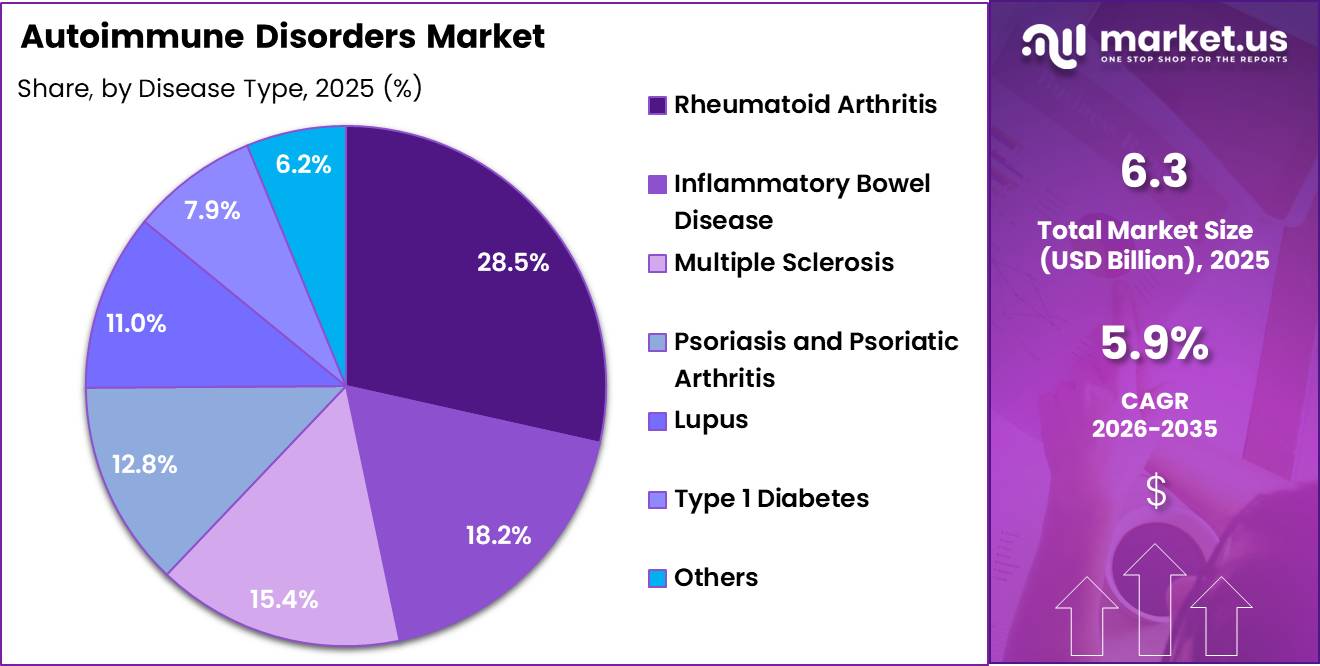
- Disease Type: Rheumatoid Arthritis has the largest market share, accounting for 28.5% of total disease type revenue.
- Drug Class: Biologics leads the segment, accounting for 58.4% of total drug class revenue.
- Route of Administration: Injectable leads the segment, accounting for 58.4% of total route of administration revenue.
- Distribution Channel: Hospital Pharmacies lead the segment, accounting for 52.4% of total distribution channel revenue.
- Regional: North America is the dominant regional market, accounting for 42.5% of global revenue, holding US$ 2.70 billion in revenue in 2025.
Disease Type Analysis
The Rheumatoid Arthritis segment dominated the global autoimmune disorders market in 2025, accounting for 28.5% of the total market share. Its leadership is driven by the high prevalence of the disease, growing awareness, early diagnosis, and the widespread use of biologic therapies that effectively manage symptoms and slow disease progression.
Continuous advancements in targeted immunotherapies and increased access to specialty rheumatology care have further strengthened this segment. Favorable reimbursement policies for advanced biologics in developed countries have also contributed to sustained market growth.
The Inflammatory Bowel Disease (IBD) segment held 18.2% of the market, supported by rising cases of Crohn’s disease and ulcerative colitis along with expanding use of monoclonal antibodies and JAK inhibitors. Multiple Sclerosis represented 15.4%, benefiting from improved diagnostic imaging and innovative disease-modifying therapies.
Psoriasis and Psoriatic Arthritis captured 12.8%, driven by increasing adoption of IL-17 and IL-23 inhibitors. Lupus accounted for 11%, supported by recent biologic approvals and ongoing research into targeted therapies.
Type 1 Diabetes contributed 7.9%, reflecting continued innovation in immune-based treatment approaches. The Others category, comprising less common autoimmune diseases, represented 6.2%, supported by growing research and orphan drug development.
Drug Class Analysis
The Biologics segment dominated the autoimmune disorders market in 2025, capturing 58.4% of the total market share. This dominance is primarily attributed to the superior clinical effectiveness of biologic therapies in treating moderate-to-severe autoimmune diseases such as rheumatoid arthritis, psoriasis, inflammatory bowel disease, and lupus.
Monoclonal antibodies targeting TNF, IL-6, IL-17, IL-23, and B-cell pathways have significantly improved disease control while reducing long-term complications. Increasing physician preference for targeted therapies and expanding regulatory approvals continue to strengthen this segment.
The Small Molecules segment accounted for 18.7% of the market, driven by convenient oral administration, rapid therapeutic action, and expanding indications across autoimmune diseases.
Disease-Modifying Antirheumatic Drugs (DMARDs) held 10.3%, remaining an essential first-line treatment for many chronic autoimmune conditions due to their affordability and established clinical use. NSAIDs represented 5.6%, mainly used for pain and inflammation management rather than disease modification.
Corticosteroids captured 4.8%, primarily serving as short-term therapies during disease flares because of long-term safety concerns. The Others category accounted for 2.2%, including immunosuppressants and emerging therapies currently expanding through ongoing clinical research.
Route of Administration Analysis
The Injectable segment dominated the global autoimmune disorders market in 2025, accounting for 58.4% of the total market share.
The strong position of injectable therapies is largely due to the widespread use of biologics, including monoclonal antibodies and biosimilars, which require intravenous or subcutaneous administration. Injectable formulations offer high bioavailability, targeted immune modulation, and sustained therapeutic effectiveness for chronic autoimmune conditions.
The increasing availability of self-administered prefilled syringes and auto-injectors has also improved patient convenience and treatment adherence. The Oral segment represented a significant share of the market, supported by growing adoption of JAK inhibitors, S1P modulators, conventional DMARDs, and corticosteroids.
Oral therapies remain popular because they are easy to administer, improve patient compliance, and reduce the need for hospital visits. The Topical segment maintained a notable presence, particularly for localized autoimmune conditions such as psoriasis and certain dermatological disorders, where creams, gels, and ointments provide targeted symptom relief with minimal systemic exposure.
The Others category includes ophthalmic formulations, rectal therapies, and inhalation-based treatments used for specific autoimmune indications. Continuous pharmaceutical innovation is expanding formulation options, improving patient convenience, and supporting personalized treatment strategies across different disease types.
Distribution Channel Analysis
The Hospital Pharmacies segment dominated the autoimmune disorders market in 2025, accounting for 52.4% of the global market share. This leadership is attributed to the high utilization of hospital-based specialty care for administering biologic therapies, infusion treatments, and complex immunomodulatory medications.
Hospitals also provide comprehensive disease monitoring, multidisciplinary care, and access to specialized healthcare professionals, making them the preferred distribution channel for patients with moderate-to-severe autoimmune diseases. In addition, reimbursement support for high-cost biologics is often managed through hospital systems.
The Retail Pharmacies segment held a substantial share of the market, supported by increasing prescriptions for oral therapies, corticosteroids, NSAIDs, and maintenance medications. Their extensive geographic presence and easy accessibility enable patients to obtain long-term treatments conveniently.
The Online Pharmacies segment is experiencing steady growth due to the rapid expansion of digital healthcare services, home delivery options, competitive pricing, and improved availability of specialty medicines.
Growing patient preference for digital prescription management and telemedicine services is further supporting this channel. As healthcare systems continue embracing digital transformation, online pharmacy platforms are expected to play an increasingly important role in improving medication access and treatment adherence for individuals living with chronic autoimmune disorders.
Key Market Segments
By Disease Type
- Rheumatoid Arthritis
- Inflammatory Bowel Disease
- Multiple Sclerosis
- Psoriasis and Psoriatic Arthritis
- Lupus
- Type 1 Diabetes
- Others
By Drug Class
- Biologics
- Small Molecules (JAK Inhibitors, S1P Modulators)
- DMARDs
- NSAIDs
- Corticosteroids
- Others
By Route of Administration
- Injectable
- Oral
- Topical
- Others
By Distribution Channel
- Hospital Pharmacies
- Retail Pharmacies
- Online Pharmacies
Driver
Rising Disease Burden & Epidemiological Expansion
Global autoimmune disease incidence has risen at an average annual rate of 19.1%, with rheumatological conditions such as Sjögren’s syndrome and lupus specifically increasing at 7.1% per year.
A landmark Mayo Clinic study published in the Journal of Clinical Investigation (2025) confirmed that approximately 15 million Americans, representing 4.6% of the U.S. population, are diagnosed with one or more of 105 autoimmune conditions, with 34% of that cohort carrying two or more concurrent diagnoses.
Globally, the Global Burden of Disease 2021 dataset shows the age-standardised prevalence rate of ADs nearly doubled from 1990 to 2021, with an upward trend in prevalence projected to continue from 2022 through 2032 before moderating.
In the United Kingdom, a population-level Lancet study covering 22 million individuals found that 19 autoimmune diseases collectively affect approximately 10% of adults, 13% of women and 7% of men a substantially higher figure than historical estimates.
Rheumatic diseases currently account for 46.9% of the autoimmune therapeutics revenue pool, while inflammatory bowel disease (IBD) is now the fastest growing indication with an expected CAGR of 8.1% through 2031, outpacing rheumatic and neurological conditions.
This epidemiological tide creates a structurally expanding addressable market that underpins baseline revenue growth independent of any single drug launch, contributing an estimated +1.4 % points to the market CAGR.
| Driver | (~) % Impact on CAGR Forecast | Geographic Relevance | Impact Timeline |
|---|---|---|---|
| Rising Disease Burden & Epidemiological Expansion | +1.4% | North America core; EU, South Asia spill-over | Short term (≤ 2 years) |
| Biologics & Next-Gen JAK Inhibitor Pipeline | +1.2% | North America core; EU corridors; APAC emerging | Medium term (2–4 years) |
| Biosimilar-Driven Market Access & Cost Reduction | +0.9% | EU lead; North America adopting; APAC corridors | Short–Medium term |
| CAR-T / Cell Therapy Platform Expansion into Autoimmunity | +1.5% | North America first-mover; EU clinical expansion | Long term (≥ 4 years) |
| AI & Precision Diagnostics Accelerating Targeted Therapy Adoption | +0.8% | North America; EU; APAC corridors | Medium term (2–4 years) |
| Federal R&D Policy & IRA Pricing Mechanics Reshaping Commercial Models | +0.6% | North America core; EU regulatory mirror effect | Medium–Long term |
Challenge
Biosimilar Erosion and Originator Revenue Displacement
The immunology segment is experiencing structural revenue displacement at an accelerating rate as blockbuster biologics, many of which anchor autoimmune therapeutic portfolios, cascade through patent expiry windows between 2025 and 2030, exposing an estimated 200 billion dollars or more in annual branded biologic revenue to biosimilar competition globally.
Taltz, a flagship IL 17 inhibitor for psoriasis and psoriatic arthritis, faces U.S. patent expiry in 2026, while Benlysta for systemic lupus erythematosus entered its biosimilar window in 2025, and Pfizer’s Xeljanz a cornerstone JAK inhibitor is concurrently subject to patent litigation settlements permitting generic entry by spring 2026 collectively, these cliffs are compressing the five year growth outlook for immunology to a forecast CAGR of approximately 4% through end of decade, which for the first time is expected to fall below overall pharmaceutical market growth.
Biosimilar pricing dynamics impose 15% to 35% net price erosion on the reference biologic at launch, and as biosimilar penetration extends beyond anti-TNF molecules into second- and third-generation mechanism classes including IL 17, IL 23, integrin, JAK, and IL 4 13 pathways, the commercial resilience of existing portfolio anchors contracts sharply.
Compounding this, the autoimmune segment faces a further structural burden originator manufacturers now must absorb a non medical switching phenomenon in which payers mandate formulary transitions to biosimilars, triggering a well documented nocebo effect clinically observed higher discontinuation rates among patients who are aware of the originator to biosimilar switch which erodes real world effectiveness data, complicates outcomes evidence generation, and creates an additional 8% to 15% patient non adherence overhang that fragments market utilization metrics.
Enterprises navigating this challenge must invest in robust lifecycle management strategies, including label expansion, new indication development, patient-reported outcome datasets for payer differentiation, and accelerated pipeline pivots toward innovation-protected next-generation modalities, all of which entail continuous capital reallocation and multi-year portfolio restructuring rather than a singular corrective intervention.
| Challenge | (~) % CAGR Friction Drag | Geographic Relevance | Mitigation Horizon |
|---|---|---|---|
| Biosimilar Erosion & Originator Revenue Displacement | ~-1.4% | EU regulatory hubs, North America core, APAC ex-Japan | Medium term (2–4 years) |
| Payer Utilisation Management & Formulary Friction | ~-1.1% | North America core, Western EU, Middle East payer corridors | Long term (≥4 years) |
| Specialist Workforce Deficit & Care Access Bottlenecks | ~-0.9% | North America, Australia, Sub-Saharan Africa, APAC emerging corridors | Long term (≥4 years) |
| Biologics Cold-Chain Integrity & Last-Mile Logistics | ~-0.8% | APAC logistics corridors, LatAm distribution hubs, MENA infrastructure zones | Medium term (2–4 years) |
| Next-Gen Cell Therapy Manufacturing Scalability | ~-0.7% | North America biopharma clusters, EU GMP hubs, emerging APAC CDMOs | Long term (≥4 years) |
| Biomarker Deficit in Precision Therapy Stratification | ~-0.6% | Global R&D centers; EU/North America clinical trial corridors | Long term (≥4 years) |
Restraints
IRA Mandated Drug Price Negotiations and Mandatory Price Controls
The Inflation Reduction Act’s Medicare Drug Price Negotiation Program, whose first cycle of Maximum Fair Prices took legal effect on January 1, 2026, represents the most direct government-imposed pricing intervention in the U.S. autoimmune pharmaceutical market in decades.
The program’s autoimmune-specific impact is already concrete and quantifiable. CMS negotiated a 67% reduction from the manufacturer list price for etanercept, one of the most widely prescribed anti-TNF biologics for rheumatoid arthritis, psoriatic arthritis, and ankylosing spondylitis, with that negotiated Maximum Fair Price binding from January 2026 through at least 2029.
The Inflation Reduction Act’s structural mechanics further amplify this restraint: CMS negotiated prices for the first 10 drugs in 2026, will add 15 additional drugs including immunology-adjacent blockbusters taking effect in 2027, and will escalate to up to 20 drugs per year thereafter, meaning the number of autoimmune assets subject to binding government pricing will grow every annual cycle.
The estimated USD 6 billion in annual Medicare savings from the first cohort is expected to translate into significant revenue pressure for pharmaceutical manufacturers. Besides direct price reductions, the Medicare drug price negotiation program creates a structural financial challenge for the industry.
Manufacturers must account for mandatory price negotiations when forecasting future revenues, reducing the long-term commercial value of many autoimmune therapies.
As a result, companies may experience lower returns on existing products, particularly in the North American market, which accounts for approximately 42.35% of global autoimmune disorders market revenue. The policy also acts as a long-term investment deterrent by increasing uncertainty around future earnings from innovative medicines.
Since small-molecule drugs may face mandatory negotiations 9 years after approval and biologics after 13 years, manufacturers are likely to apply lower revenue expectations in research and development planning.
| Restraint | (~) % Impact on CAGR Forecast | Geographic Relevance | Impact Timeline |
|---|---|---|---|
| Biosimilar Erosion of Blockbuster Biologic Revenue | -1.4% | North America, EU, APAC | Medium term (2–4 years) |
| IRA-Mandated Drug Price Negotiations & Mandatory Price Controls | -0.9% | North America core | Short term (≤ 2 years) |
| API & Biologic Supply Chain Disruption (Tariff Shock + Concentration Risk) | -0.8% | North America, APAC corridors | Short–Medium term |
| Plasma-Derived Therapy Supply Fragility (IVIg/SCIg Shortage) | -0.6% | EU, North America, ANZ | Medium term (2–4 years) |
| JAK Inhibitor Safety Regulatory Overhang | -0.5% | North America, EU, ANZ | Medium term (2–4 years) |
| High Therapy Cost & Reimbursement Barriers in Emerging Markets | -0.7% | APAC, LATAM, MEA | Long term (≥ 4 years) |
Opportunity
CAR T Cell Therapy as a Curative Reset for Refractory Autoimmunity
As of July 2025, 119 clinical trials of CAR T cell therapy for autoimmune diseases have been registered globally: 70 Phase I, 30 Phase I/II, and 15 Phase II; yet not a single product has received commercial approval for an autoimmune indication, meaning the entire patient monetization potential remains untouched at the top of the funnel. This is categorically not a current market driver; it is a future paradigm shift.
Data from the open-label CASTLE and BreakFree trials of zorpocabtagene autoleucel and zolacabtagene autoleucel, respectively, showed that 91.6% of participants remained off disease-directed treatments at approximately 18 months post-treatment across conditions including SLE, systemic sclerosis, IIM, and myasthenia gravis, with cytokine release syndrome largely self-resolving at grade 1.
Separately, CD19-directed CART therapy has demonstrated sustained, drug-free remission in pediatric patients with treatment-resistant severe autoimmune disorders, and at ACR Convergence 2025, CTA313, a dual-targeted CD19/BCMA universal CART, showed drug-free remission in three of five evaluable SLE patients after a single infusion.
The commercial logic is straightforward: currently, biologic-treated autoimmune patients generate lifetime annual recurring revenue of USD 20,000 80,000+ per patient on maintenance therapy;
A curative single-dose CART model would monetise this as a one-time procedure valued at USD 300,000 600,000, compressing the revenue timeline but radically expanding total addressable value across the estimated 15 million+ U.S. autoimmune patients alone.
With a Phase III mRNA based CART trial for myasthenia gravis named among Nature Medicine’s eleven trials that will shape medicine in 2026, and the FDA actively reviewing this modality as regulatory frameworks mature, operators that build manufacturing capacity, reimbursement architecture, and specialist infusion center networks now before first approval will capture 7080% of early market share, potentially adding 2.8 % points of CAGR above baseline across the 20282035 commercialization window
| Opportunity | (~) % Potential CAGR Upside | Geographic Relevance | Execution Window |
|---|---|---|---|
| CAR-T Cell Therapy as First-Line Curative Reset for Refractory Autoimmunity | +2.8% | North America, EU (Germany, UK, France), Japan | Medium term (2–4 years) |
| Next-Generation Oral Small Molecules (TYK2/BTK Inhibitors) Expanding to Under-Penetrated Indications | +2.2% | North America, EU, China | Short term (≤ 2 years) |
| Microbiome-Based Immunomodulation as a New Autoimmune Therapeutic Class | +1.9% | North America, EU, APAC emerging markets | Medium term (2–4 years) |
| APAC Emerging Market Commercialization — Monetizing the Untapped Patient Pool | +2.5% | India, China, Southeast Asia, LATAM | Medium-to-Long term (3–5 years) |
| AI-Powered Precision Diagnostics & Biomarker-Directed Therapy Matching | +1.6% | North America, EU, China | Short-to-Medium term (1–3 years) |
| Rare & Orphan Autoimmune Indication Roll-Up via M&A Consolidation | +2.1% | North America, EU, APAC (selective) | Short term (≤ 2 years) |
Regional Analysis
In 2025, North America led the market, achieving over 42.5% share with a revenue of US$ 2.70 billion. The region’s dominance is supported by a high prevalence of autoimmune diseases, advanced healthcare infrastructure, widespread adoption of biologic therapies, and strong investments in immunology research.
The United States remains the largest contributor due to extensive availability of innovative treatments, favorable reimbursement policies, and the presence of leading pharmaceutical and biotechnology companies. Continuous clinical trials and increasing use of precision medicine further strengthen regional market growth.
Europe held the second-largest share of the market, driven by growing awareness of autoimmune diseases, universal healthcare systems, and rising adoption of advanced biologics and biosimilars.
Countries including Germany, France, the United Kingdom, Italy, and Spain continue to invest in early diagnosis, specialized treatment centers, and research initiatives aimed at improving patient outcomes. Supportive regulatory frameworks and increasing access to innovative therapies also contribute to steady market expansion.
The Asia-Pacific region is expected to register the fastest growth during the forecast period. Rising healthcare expenditure, improving diagnostic capabilities, expanding access to specialty care, and increasing awareness of autoimmune disorders are fueling demand across China, Japan, South Korea, and Australia. Rapid pharmaceutical innovation and growing government support for chronic disease management are further accelerating market development.
Meanwhile, Latin America and the Middle East & Africa are experiencing gradual market growth due to improving healthcare infrastructure, expanding access to biologic medicines, increasing disease awareness, and government initiatives aimed at enhancing diagnosis and treatment of chronic autoimmune disorders.
Key Regions and Countries
North America
- The US
- Canada
Europe
- Germany
- France
- The U.K.
- Italy
- Spain
- Russia & CIS
- Rest of Europe
Asia Pacific
- China
- India
- Japan
- South Korea
- ASEAN
- Australia & New Zealand
- Rest of Asia Pacific
Middle East & Africa
- GCC
- South Africa
- Rest of Middle East & Africa
Latin America
- Brazil
- Mexico
- Rest of Latin America
Key Player Analysis
Suppliers in the global autoimmune disorders market seek competitive advantage through next-generation biologic platform development encompassing IL-17, IL-23, IL-6, and CD20 targeting monoclonal antibodies offering differentiated mechanism profiles over established anti-TNF biologic standards of care.
Alongside selective JAK inhibitor and TYK2 inhibitor small molecule development delivering oral administration convenience that addresses the adherence and patient preference limitations of injectable biologic therapy across rheumatoid arthritis, psoriatic disease, and inflammatory bowel disease patient populations.
Key strategic focus areas include biosimilar anti-TNF portfolio development capturing market share from originator adalimumab, infliximab, and etanercept brands facing progressive patent expiration across major global markets.
Precision medicine biomarker program development enabling biologic responder patient selection reducing time-to-effective-therapy and healthcare system cost burden from sequential treatment failure, and combination therapy clinical development programs exploring synergistic multi-mechanism approaches targeting difficult-to-treat refractory autoimmune disease populations unresponsive to single-mechanism biologic monotherapy.
Companies continue investing in payer formulary access strategy development supporting premium biologic reimbursement authorization, patient support program infrastructure improving biologic adherence and persistence among chronic autoimmune disease populations requiring sustained therapy, and rheumatology, gastroenterology, and neurology specialist institutional procurement relationship development to secure long-term hospital pharmacy and specialty pharmacy supply agreements globally.
The expanding global autoimmune disease prevalence driven by environmental triggers, microbiome alterations, and improved diagnosis awareness combined with treat-to-target clinical guideline evolution mandating earlier and more aggressive biologic therapy initiation is creating structurally growing institutional procurement demand through the forecast period to 2035.
Top Key Players
- AbbVie Inc.
- Johnson & Johnson
- Pfizer Inc.
- Merck & Co. Inc.
- Novartis AG
- F. Hoffmann-La Roche AG
- Amgen Inc.
- Bristol-Myers Squibb Company
- Eli Lilly and Company
- Sanofi S.A.
- AstraZeneca PLC
- Takeda Pharmaceutical Company Limited
- UCB S.A.
- Biogen Inc.
- GSK plc
- Other Key Players
Recent Developments
- In January 2026, AbbVie Inc. expanded its risankizumab IL-23 inhibitor commercial program across additional autoimmune indications including psoriatic arthritis and Crohn’s disease, securing expanded hospital pharmacy and specialty pharmacy institutional procurement agreements across North American and European distribution networks.
- In February 2026, Eli Lilly and Company received regulatory approval for its TYK2 inhibitor deucravacitinib across European national health service formularies for moderate-to-severe psoriasis and psoriatic arthritis, targeting dermatology and rheumatology specialist institutional prescribing adoption as an oral alternative to injectable biologic therapy.
- In March 2026, Johnson & Johnson secured a multi-year guselkumab IL-23 biologic supply agreement with a leading European hospital rheumatology network covering psoriatic arthritis treatment procurement across its regional specialty clinic and hospital pharmacy institutional buyer programs.
- In May 2026, Bristol-Myers Squibb expanded its abatacept subcutaneous injection program for rheumatoid arthritis across Asia Pacific specialty pharmacy and hospital institutional distribution channels, targeting growing biologic-naive and biologic-experienced RA patient populations across Japanese, South Korean, and Chinese rheumatology institutional buyer networks.
Report Scope
| Report Features | Description |
|---|---|
| Market Value (2025) | US$ 6.3 Billion |
| Forecast Revenue (2035) | US$ 11.3 Billion |
| CAGR (2026-2035) | 5.9% |
| Base Year for Estimation | 2025 |
| Historic Period | 2020-2024 |
| Forecast Period | 2026-2035 |
| Report Coverage | Revenue Forecast, Market Dynamics, Competitive Landscape, Recent Developments |
| Segments Covered | By Disease Type (Rheumatoid Arthritis, Inflammatory Bowel Disease, Multiple Sclerosis, Psoriasis and Psoriatic Arthritis, Lupus, Type 1 Diabetes, Others), By Drug Class (Biologics, Small Molecules, DMARDs, NSAIDs, Corticosteroids, Others), By Route of Administration (Injectable, Oral, Topical, Others), By Distribution Channel (Hospital Pharmacies, Retail Pharmacies, Online Pharmacies) |
| Regional Analysis | North America – The US, Canada; Europe – Germany, France, U.K., Italy, Spain, Russia & CIS, Rest of Europe; Asia Pacific – China, India, Japan, South Korea, ASEAN, Australia & New Zealand, Rest of Asia Pacific; Middle East & Africa – GCC, South Africa, Rest of Middle East & Africa; Latin America – Brazil, Mexico, Rest of Latin America |
| Competitive Landscape | AbbVie Inc., Johnson & Johnson, Pfizer Inc., Merck & Co. Inc., Novartis AG, F. Hoffmann-La Roche AG, Amgen Inc., Bristol-Myers Squibb Company, Eli Lilly and Company, Sanofi S.A., AstraZeneca PLC, Takeda Pharmaceutical Company Limited, UCB S.A., Biogen Inc., GSK plc, Other Key Players |
| Customization Scope | Customization for segments, region/country-level will be provided. Moreover, additional customization can be done based on the requirements. |
| Purchase Options | We have three licenses to opt for: Single User License, Multi-User License (Up to 5 Users), Corporate Use License (Unlimited User and Printable PDF) |