Report Overview
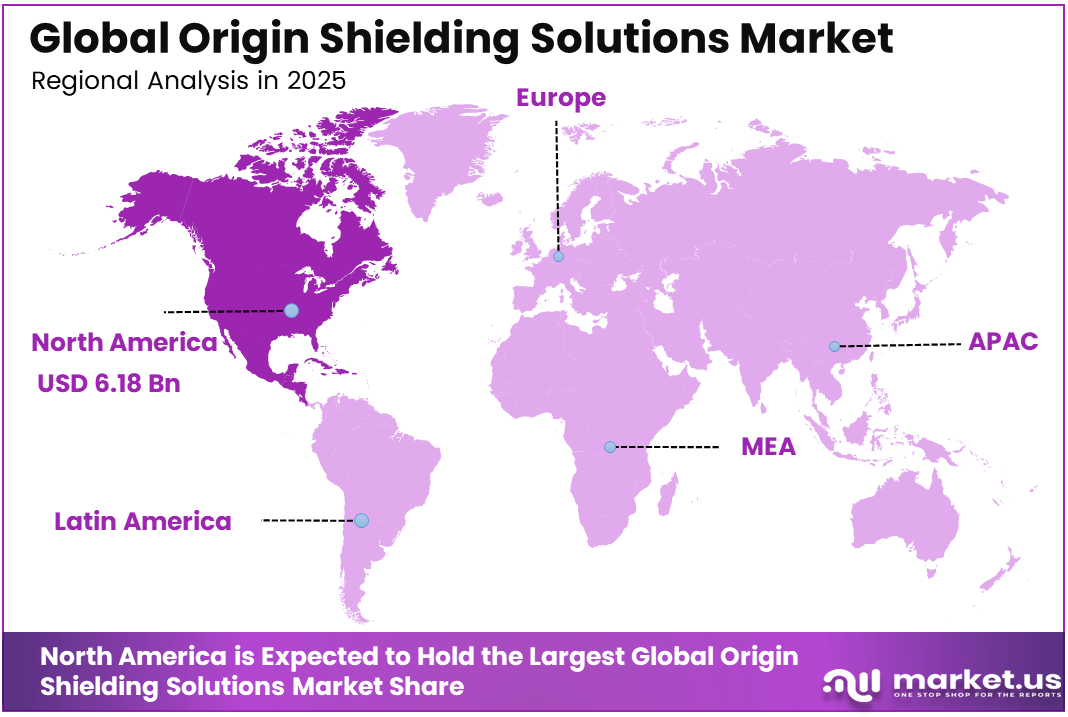
The Global Origin Shielding Solutions Market size is expected to be worth around USD 32.16 billion by 2035, from USD 16.35 billion in 2025, growing at a CAGR of 7.0% during the forecast period from 2025 to 2035. North America held a dominant market position, capturing more than a 37.8% share, holding USD 6.18 billion in revenue.
Origin Shielding Solutions refers to methods and materials used to control electromagnetic or radiation interference directly at the source of generation. These solutions are designed to block, absorb, or reduce unwanted signals within electronic systems, ensuring stable performance, safety, and compliance across industries such as electronics, healthcare, automotive, and industrial equipment.
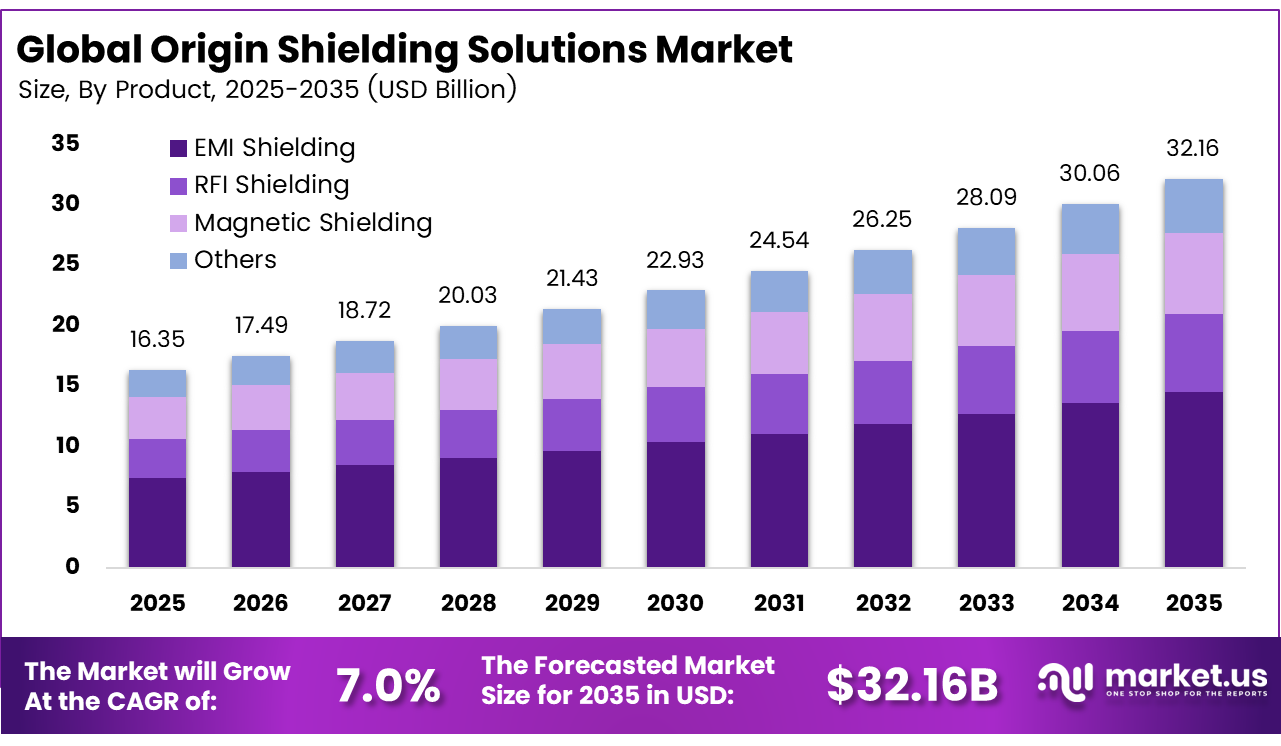
The growth of high-frequency and high-density electronics across consumer, automotive, telecom, and medical sectors has increased circuit complexity by more than 50% over a decade, raising interference risks. The expansion of 5G, Wi-Fi 6, and IoT adds billions of connected devices, making shielding a core design requirement. Regulatory pressure and safety expectations further strengthen early adoption.
The market for Origin Shielding Solutions is driven by the rapid growth of advanced electronics and connected systems across industries. As devices become more compact and complex, the need to control interference at the source increases. Strong regulatory standards, rising use of high-frequency technologies, and demand for reliable performance in automotive, healthcare, telecom, and industrial applications continue to support steady market expansion.
Demand is led by consumer electronics, automotive, and aerospace or defense sectors, which together hold a major share of shielding material usage. Consumer devices ship in hundreds of millions annually, creating strong volume demand. Electric vehicles and advanced systems increase electronic density, while aerospace platforms require strict EMI control, sustaining consistent demand across high-performance applications.
For instance, in January 2026, Leader Tech broadened its snap-on board-level shields and conductive elastomer gaskets line for industrial IoT gateways and telecom gear in North America. The company is working more closely with U.S. contract manufacturers, offering design-for-EMC reviews that help reduce late-stage test failures, which is quietly increasing its share in origin shielding for ruggedized electronics.
Key Takeaway
- In 2025, the EMI Shielding segment held a dominant market position, capturing a 45.2% share of the Global Origin Shielding Solutions Market.
- In 2025, the Consumer Electronics segment held a dominant market position, capturing a 37.4% share of the Global Origin Shielding Solutions Market.
- In 2025, the Metal segment held a dominant market position, capturing a 52.3% share of the Global Origin Shielding Solutions Market.
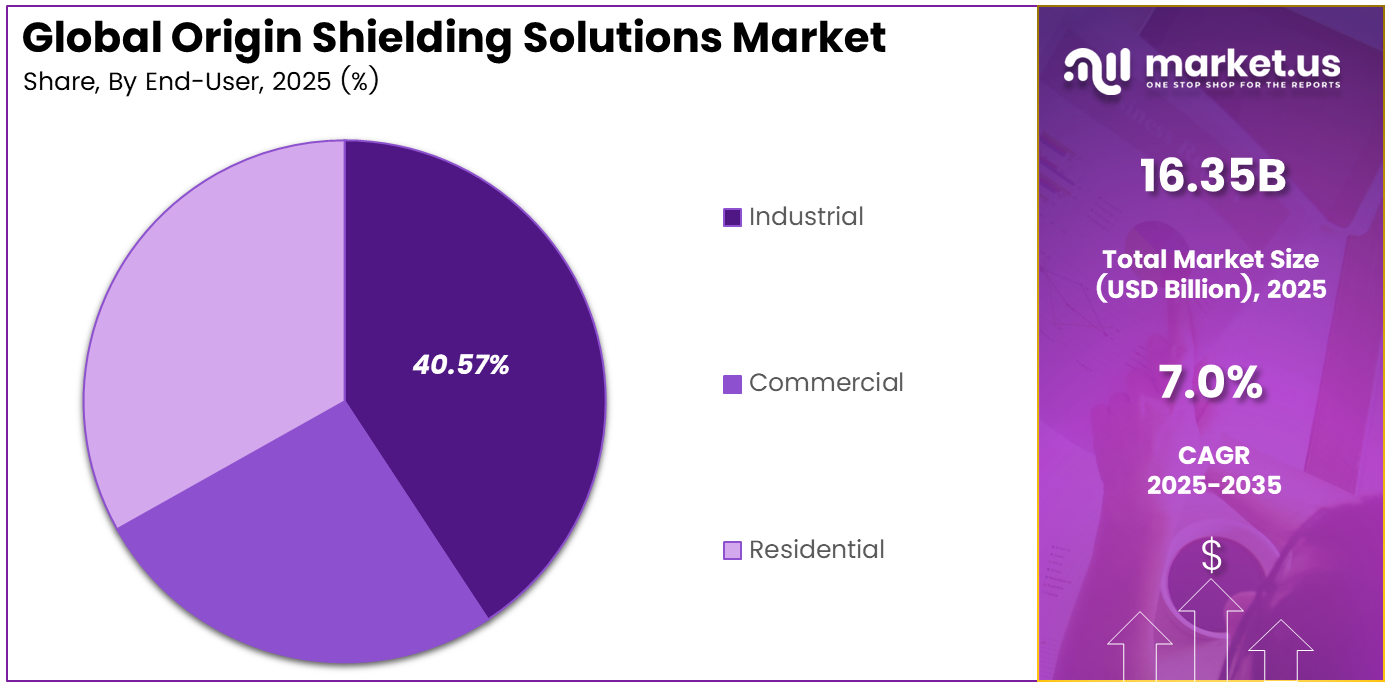
- In 2025, the Industrial segment held a dominant market position, capturing a 40.57% share of the Global Origin Shielding Solutions Market.
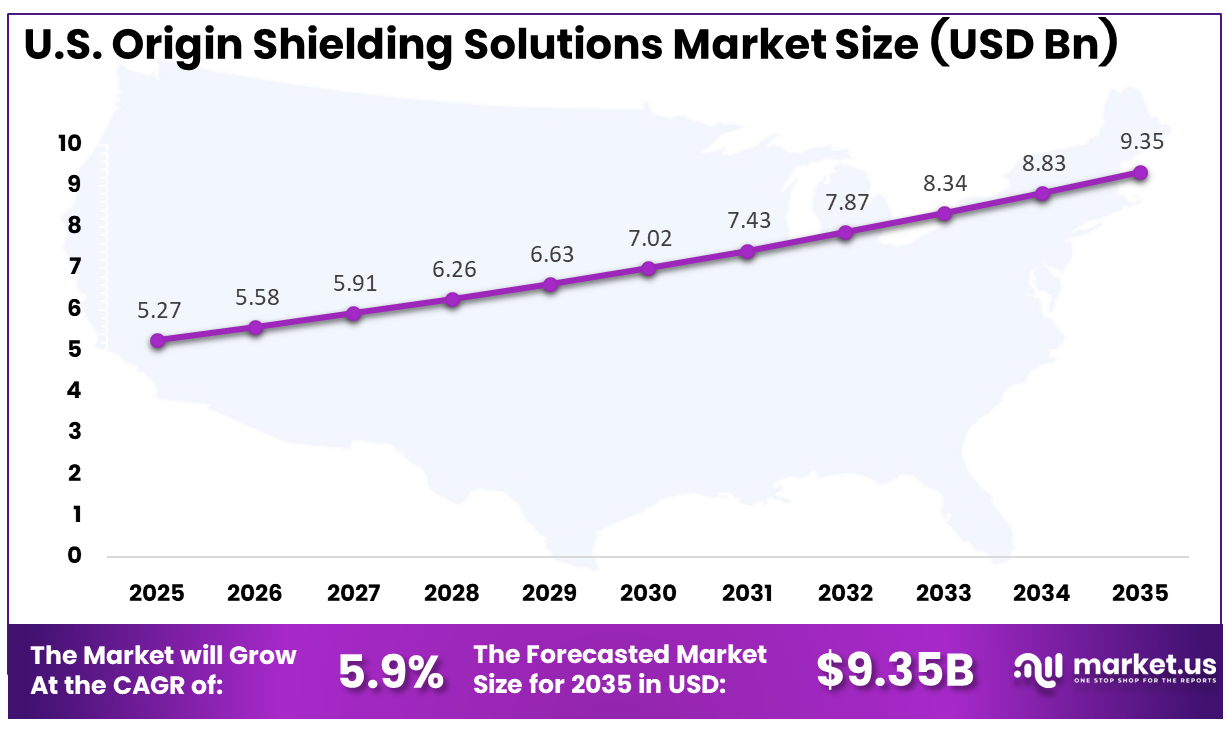
- The U.S. Origin Shielding Solutions Market was valued at USD 5.27 billion in 2025, with a robust CAGR of 5.9%.
- In 2025, North America held a dominant market position in the Global Origin Shielding Solutions Market, capturing more than a 37.8% share.
Role of Generative AI
Generative AI is acting as a support system for design teams working on origin shielding across complex environments. Around 71% of organizations already use these models in at least one function, with nearly 25% improvement in engineering productivity. This shift is helping teams accelerate early-stage design and reduce manual workload.
Engineers are using these tools to prepare simulation setups, draft technical notes, and summarize reports more efficiently. Workers are saving about 5.4% of weekly work hours, which builds strong efficiency over long development cycles. This capability supports faster iteration and improves overall design accuracy in shielding applications.
Investment and Business Benefits
Opportunities are emerging in advanced materials that offer high shielding performance with low weight and thickness. Technologies such as conductive polymers and nano coatings are gaining attention for specialized applications. Integration services like shielding rooms and barriers are also expanding. Asia Pacific presents strong potential due to industrial growth and increasing electronics and telecom production demand.
Origin shielding solutions help reduce warranty costs and downtime by preventing interference-related failures. Early investment improves certification success and lowers recall risks, supporting stable product launches. It also enhances product durability by reducing stress on components. Even a 1 to 2% improvement in uptime can deliver strong operational and financial benefits across industries.
Regional Analysis
In 2025, North America held a dominant market position in the Global Origin Shielding Solutions Market, capturing more than a 37.8% share, holding USD 6.18 billion in revenue. This dominance is due to the strong presence of advanced electronics manufacturing, defense systems, and healthcare infrastructure across North America. The region has high adoption of technologies such as 5G, electric vehicles, and industrial automation, which require reliable interference control. Strict regulatory standards and early integration of shielding in product design further support consistent demand for high-performance origin shielding solutions across multiple industries.
For instance, in February 2026, 3M strengthened its North American dominance in shielding and protection solutions by expanding its digital design ecosystem, using its new Ask 3M AI assistant and Digital Materials Hub to help U.S. electronics and auto OEMs simulate and select advanced EMI and shielding materials faster, accelerating product launch cycles.
U.S. Origin Shielding Solutions Market Size
The market for Origin Shielding Solutions within the U.S. is growing tremendously and is currently valued at USD 5.27 billion. The market has a projected CAGR of 5.9%. The market is growing due to the rising use of advanced electronics across defense, healthcare, telecom, automotive, and industrial systems. As devices become more compact and electrically complex, the need to control interference at the source becomes more important. Strong regulatory standards, higher demand for reliable system performance, and continued investment in high-frequency technologies are also supporting steady market growth across the country.
For instance, in February 2026, Leader Tech, based in the U.S., strengthened regional dominance in origin shielding solutions by expanding its catalog of board-level shields, fingerstock, and fabric gaskets for American defense, telecom, and industrial customers, emphasizing domestic engineering support and short lead times to win programs from offshore competitors.
Key Regions and Countries
North America
- US
- Canada
Europe
- Germany
- France
- The UK
- Spain
- Italy
- Russia
- Netherlands
- Rest of Europe
Asia Pacific
- China
- Japan
- South Korea
- India
- Australia
- Singapore
- Thailand
- Vietnam
- Rest of APAC
Latin America
- Brazil
- Mexico
- Rest of Latin America
Middle East & Africa
- South Africa
- Saudi Arabia
- UAE
- Rest of MEA
Product Analysis
In 2025, the EMI Shielding segment held a dominant market position, capturing a 45.2% share of the Global Origin Shielding Solutions Market. This dominance is due to the rising need to control electromagnetic interference at the source across modern electronic systems. As devices become more compact and complex, shielding is required to maintain signal stability and ensure smooth functioning in environments filled with multiple electronic components operating simultaneously.
EMI shielding also supports compliance with strict electromagnetic compatibility standards across industries. It helps prevent performance issues and reduces risks linked to interference in sensitive systems. As electronic density increases across sectors, the reliance on effective shielding solutions continues to grow steadily.
For instance, in April 2026, Laird has been focusing on EMI gaskets and board-level shields that also help manage heat in dense electronics, especially for data center and telecom hardware. This kind of dual-function design supports growth in EMI shielding products, because customers want fewer parts that can both protect signals and keep components cool in one step.
Application Analysis
In 2025, the Consumer Electronics segment held a dominant market position, capturing a 37.4% share of the Global Origin Shielding Solutions Market. This dominance is due to the widespread use of connected consumer devices that operate in signal-heavy environments. Smartphones, wearables, and home electronics require stable performance, making shielding an essential design element to avoid disruptions caused by interference from nearby electronic components.
The rapid growth of connected ecosystems has increased pressure on manufacturers to ensure reliable performance. Shielding helps improve product quality and user experience by maintaining signal clarity. As device usage expands across daily life, demand for effective shielding solutions remains consistently strong.
For instance, in December 2023, Laird rolled out new EMI shielding gaskets aimed at advanced data centers and 5G infrastructure, technology that quickly influences consumer devices using similar high-frequency chipsets. As these techniques move into smartphones, wearables, and home routers, consumer electronics become a major user of refined shielding solutions to keep fast wireless links stable.
Material Analysis
In 2025, the Metal segment held a dominant market position, capturing a 52.3% share of the Global Origin Shielding Solutions Market. This dominance is due to the strong conductive properties of metals, which provide reliable protection against electromagnetic interference. Metal-based shielding is widely used in enclosures and components where consistent performance and durability are required under demanding operating conditions across industries.
Metal materials also offer structural strength along with shielding efficiency, making them suitable for long-term applications. Their ability to handle high frequencies and harsh environments supports their continued use. As industries demand dependable protection, metal remains a preferred material for shielding solutions.
For instance, in June 2025, Parker’s new fluorosilicone EMI gasket combines metal-filled conductivity with improved flexibility and sealing performance. Developments like this keep metal-based solutions attractive because they show that traditional conductive fillers can be engineered into softer, more compliant parts, allowing metal-based materials to remain the default choice in many enclosures that need both mechanical sealing and strong shielding.
End-User Analysis
In 2025, the Industrial segment held a dominant market position, capturing a 40.57% share of the Global Origin Shielding Solutions Market. This dominance is due to the high reliance on stable and interference-free operations in industrial environments. Equipment used in factories and processing units must perform accurately, and shielding helps prevent disruptions that could impact system performance and production continuity.
Industrial systems often operate with multiple electrical and electronic components working together. Shielding ensures consistent performance and reduces the risk of errors or failures. As automation and precision systems expand, the need for reliable shielding solutions in industrial applications continues to increase.
For instance, in April 2025, the global vehicle inverter from Parker is designed for demanding industrial and transportation settings and includes built-in EMI filtering to protect sensitive controls. As more equipment in factories, fleets, and infrastructure becomes electrified and electronically controlled, these kinds of integrated solutions raise awareness of EMI risks and drive industrial users to specify more shielding in surrounding systems.
Key Market Segments
By Product
- EMI Shielding
- RFI Shielding
- Magnetic Shielding
- Others
By Application
- Consumer Electronics
- Automotive
- Aerospace & Defense
- Healthcare
- Telecommunications
- Others
By Material
- Metal
- Conductive Polymers
- Coatings & Paints
- Laminates
- Others
By End-User
- Industrial
- Commercial
- Residential
Emerging Trends
Generative AI adoption is moving from limited trials to regular use across industries. About 60% of organizations have implemented these tools, and more than one-third in sectors like IT and retail have fully integrated them into workflows. This trend is gradually extending into engineering and safety-focused design environments.
Another trend is the rise of agent-based systems that handle multiple tasks in a sequence. Enterprise AI adoption has increased from the mid 50s to nearly 80% within a year. These systems can generate shielding designs and prepare compliance documentation, reducing manual effort and improving workflow efficiency.
Growth Factors
The demand for origin shielding is supported by the rise of high-speed connectivity and dense electronic packaging across industries. Stricter performance standards in automotive, aerospace, and healthcare systems require better control over EMI and radiation. This increases the need for effective shielding solutions in every advanced electronic setup.
Adoption trends also play an important role in market expansion. Generative AI reached about 54.6% adult adoption within three years, with non-work usage near 49% and work-related usage above 37%. This rapid familiarity supports faster integration of advanced design tools in specialized fields like shielding solutions.
Market Dynamics
Drivers - Rising EMI RFI Exposure in Electronics
The growing use of advanced electronics across devices and systems has increased exposure to electromagnetic and radio frequency interference. As components become smaller and more powerful, interference risks rise, making shielding an essential part of system design to ensure stable and reliable performance.
Industries such as automotive, telecom, and healthcare rely on uninterrupted signal transmission for proper operation. Shielding helps protect sensitive components from unwanted signals and supports overall system efficiency. This increasing need for interference control continues to drive the demand for origin shielding solutions across applications.
For instance, in May 2025, 3M released EMI absorber sheets optimized for the 77 GHz band used in automotive radar, targeting advanced driver assistance systems that operate in crowded RF environments around vehicles. By tuning materials for these high frequencies, 3M is responding to rising EMI and RFI exposure as more radar, sensors, and wireless links sit close together in modern mobility platforms.
Restraint - High Cost
The cost of implementing effective shielding solutions remains a key restraint, especially for small and mid-scale manufacturers. Materials, design adjustments, and testing requirements can increase production expenses, making it challenging for some companies to adopt advanced shielding methods at early stages.
In addition, integrating shielding into complex designs often requires specialized expertise and additional validation processes. These factors can slow down adoption and extend development timelines. Cost sensitivity in competitive markets further limits the use of high-performance shielding solutions across certain applications.
For instance, in February 2026, ETS-Lindgren announced a state-of-the-art EMC and MIL-STD test facility for a global defense contractor, featuring multiple advanced semi-anechoic chambers. This kind of high specification laboratory depends on expensive RF shielding, absorbers, and infrastructure, underlining how the cost of robust electromagnetic protection and qualification can restrict similar investments to large defense or industrial players.
Opportunities - Lightweight and Flexible Shielding for New Applications
The demand for lightweight and flexible shielding materials is creating new growth opportunities in modern electronics. Devices such as wearables, electric vehicles, and portable medical systems require compact and adaptable solutions that do not add bulk while still providing effective interference control.
Innovations in materials such as conductive polymers and advanced coatings are enabling new applications across industries. These solutions offer design flexibility and improved performance in space-constrained environments. As product designs evolve, the need for adaptable shielding solutions is expected to expand further.
For instance, in November 2025, Henkel announced a new EMI shielding film at Productronica, positioned as a process-efficient alternative to metal housings for complex automotive electronics. The film format allows thinner, lighter assemblies and supports integration into modern electronic control units, illustrating how film-based and flexible shields are opening new design options in vehicles and other space-constrained applications.
Challenges - Regulatory Pressure
Regulatory requirements for electromagnetic compatibility are becoming more stringent across industries. Manufacturers must ensure that their products meet strict compliance standards, which require continuous testing, validation, and design improvements to control interference effectively from the source.
Meeting these standards can be complex, especially in multi-component systems where interactions are difficult to predict. Failure to comply can result in delays, redesigns, and additional costs. This regulatory pressure remains a key challenge for companies operating in the origin shielding solutions market.
For instance, in March 2025, ETS-Lindgren partnered with Multitel in Belgium to deliver a modular 3-meter RF-shielded EMC chamber tuned for the lab’s specific regulatory test needs. This project illustrates how evolving EMC standards and customer-specific compliance profiles create ongoing pressure for tailored test environments, making regulatory change a constant challenge for both shielded facility providers and device makers.
Key Players Analysis
One of the leading players, in February 2026, 3M expanded its EMI and RFI shielding portfolio with higher-conductivity tapes and films aimed at 5G base stations and EV power electronics, helping OEMs cut design time and compliance risk. The company is leaning on its U.S. labs to co-design custom shielding stacks with Tier-1 electronics manufacturers, reinforcing its role as a top North American origin shielding supplier.
Top Key Players in the Market
- 3M
- Parker Hannifin Corporation
- Laird Technologies
- Henkel AG & Co. KGaA
- Schaffner Holding AG
- ETS-Lindgren
- Rohde & Schwarz
- Tech-Etch Inc.
- Leader Tech Inc.
- Kitagawa Industries Co., Ltd.
- Holland Shielding Systems BV
- Chomerics (Parker Chomerics)
- EMI Solutions Inc.
- Intermark (USA) Inc.
- Würth Elektronik
- Others
Recent Developments
- In February 2026, Laird Technologies introduced its FlexShield Ultra series, an ultra-thin flexible EMI shielding film for wearables and foldable phones, delivering up to 75 dB attenuation at sub-0.1 mm thickness. This launch targets U.S. and Asian consumer device makers and underlines North America’s edge in advanced flexible shielding materials for compact electronics.
- In November 2025, ETS-Lindgren added a new line of turnkey 5G/6G test chambers with integrated RF shielding and over-the-air measurement capability for U.S. device labs. The systems are optimized for mmWave and automotive radar testing, and demand from North American certification houses is driving a solid order book, reinforcing the firm’s status in high-end origin shielding environments.
Report Scope
| Report Features | Description |
|---|---|
| Market Value (2025) | USD 16.35 Billion |
| Forecast Revenue (2035) | USD 32.16 Billion |
| CAGR (2026-2035) | 7.0% |
| Base Year for Estimation | 2025 |
| Historic Period | 2020-2024 |
| Forecast Period | 2026-2035 |
| Report Coverage | Revenue Forecast, Market Dynamics, Competitive Landscape, Recent Developments |
| Segments Covered | By Product (EMI Shielding, RFI Shielding, Magnetic Shielding, Others), By Application (Consumer Electronics, Automotive, Aerospace & Defense, Healthcare, Telecommunications, Others), By Material (Metal, Conductive Polymers, Coatings & Paints, Laminates, Others), By End-User (Industrial, Commercial, Residential) |
| Regional Analysis | North America (US and Canada), Europe (Germany, France, The UK, Spain, Italy, and Rest of Europe), Asia Pacific (China, Japan, South Korea, India, Australia, and Rest of APAC), Latin America (Brazil, Mexico, and Rest of Latin America), Middle East & Africa (GCC, South Africa, and Rest of MEA) |
| Competitive Landscape | 3M, Parker Hannifin Corporation, Laird Technologies, Henkel AG & Co. KGaA, Schaffner Holding AG, ETS-Lindgren, Rohde & Schwarz, Tech-Etch Inc., Leader Tech Inc., Kitagawa Industries Co., Ltd., Holland Shielding Systems BV, Chomerics (Parker Chomerics), EMI Solutions Inc., Intermark (USA) Inc., Wurth Elektronik, Others |
| Customization Scope | Customization at the segment and region/country levels will be provided. Moreover, customization can be tailored to the requirements. |
| Purchase Options | We have three licenses to opt for: Single User License, Multi-User License (Up to 5 Users), Corporate Use License (Unlimited Users and Printable PDF) |